
Brighten up your winter landscape
Are you looking out your window at a dull gray day -- and garden? Wondering when the roses will start blooming again? Welcome the winter showstoppers of our Mediterranean climate! We are so fortunate to live in an area with a myriad of options for colorful foliage, berries, blooms, fragrance, and habitat for wintering birds, bees, and other pollinators. Great news for those of us looking for a colorful, welcoming garden, and great news for our over-wintering birds, bees, and other pollinators. A true win win!
Quick start: add annuals
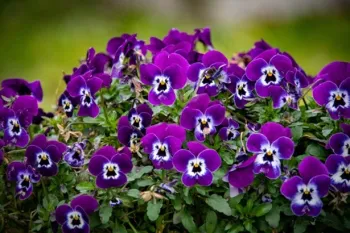
If you’re looking for a quick and easy way to brighten your garden with fabulous blooms, start with colorful annuals like pansies and violets. They are readily available in an array of colors, easy to plant, and require very little care other than regular water if rain is unavailable. Botanically speaking, pansies and violets are both from the Viola genus, but pansies have bigger, showier flowers – always with four petals pointing up and one down – and violets have smaller, more prolific blooms – with two petals up and three down.
Color every year: perennials and evergreens you can count on
These winter bloomers bring cheery color during the shortest days of the year.
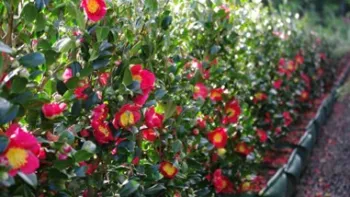
Sasanqua camellias prefer full sun or partial shade and can grow quickly 6 to 14 feet tall and 5 to 7 feet wide. They can be pruned to control size. Leaves are glossy and evergreen. Grown in the ground or containers, the plants make a bright colorful winter statement and are excellent cut flowers. Somewhat deer resistant, they can easily be grown into a hedgerow.
Cyclamen are familiar, hard-working winter bloomers. The Royal Horticultural Society refers to cyclamen as “the flower that wakes up just as most other plants go to sleep for the winter.” They are available in a variety of colors – white, pink, fuchsia, red -- and their leaves -- some variegated, heart-shaped, or ruffled - are charming. As summer heads our way, their corms go dormant, only to come to life when the weather cools and rain returns.
Hellebores, also known as Christmas or Lenten rose (Helleborus niger), have large evergreen leaves with flowers in a variety of colors. Plant in a shady spot in your garden for years of deer-resistant, low-water winter blooms. Beware – all parts of the plant may be toxic if ingested.
Hardenbergia is an evergreen vine that bursts into a proliferation of purple flowers in winter. It quickly twines its way 6 to 12 feet up and through fences and arbors.
Daphne sports soft pink blooms and a delectable fragrance that wafts through the garden. Daphne prefers part sun, regular water, and fertile, well-draining soil. Gardeners love daphne -- but deer do not.
Coral bells (Correa) are Australian shrubs with delightful, deer-proof blooms. This easy-care plant grows 2 to 3 feet tall and 4 to 5 feet wide. It performs in light shade and prefers well-draining soil.
Many California natives offer colorful winter flowers and berries. They are easy to grow, drought tolerant, and provide food and shelter for birds, bees, and other pollinators. Native plants have developed a symbiotic relationship with insects and birds that overwinter. Plants provide nectar, pollen, and seeds for nourishment. Insects, in return, provide help with pollination. These California natives shine in winter:
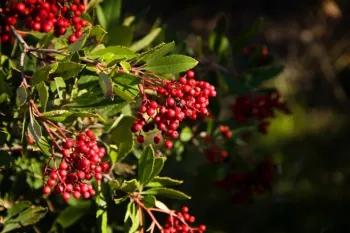
Ceanothus, also known as California lilac, is available as low groundcovers, mid-size shrubs, or low or multi-branched trees. Winter and early spring flowers range from bright blue, purple, pink or white. They are best planted in lean, native soil. Once established, avoid overwatering.
Toyon, also known as Christmas holly, is a magnet for many of our local bird species. Its bright red berries are a delight during the holidays.
Manzanitas are abundant in our open space preserves and neighborhoods. The first rains of the season trigger blooms. They are a very important source of pollen for birds and mammals.
Pop-ups: bulbs provide cheery color
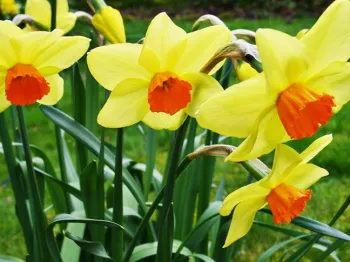
Many of the flowers that spring up from bulbs in winter are the quintessential harbingers of spring. The best part? You plant them once and they come back year after year – so easy!
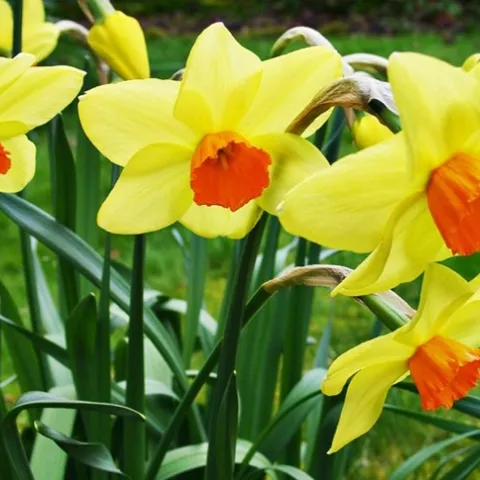
Daffodils are springtime darlings, but many emerge in late winter. As a bonus, deer don’t touch them and they make superb cut flowers.
Crocus is one of the first bulbs to emerge in winter. Short and tough, it bursts up during the darkest days of the year. Blooming in shades of purple, white, yellow, pale pink, and anywhere in between, crocus are cheerful additions to any garden.
Winter gardens can be beautiful – and colorful!
A winter garden filled with a variety of blooming plants and colorful seeds and berries will brighten even the gloomiest days.
Viburnum tinus: a hard-working, versatile, evergreen shrub
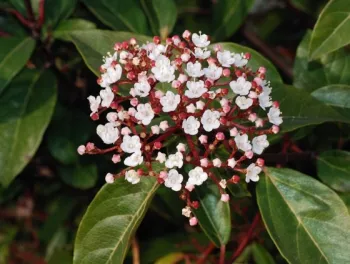
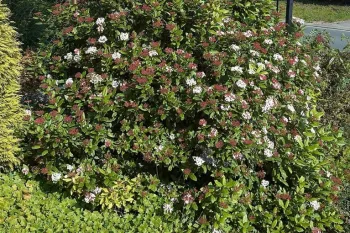
Viburnum tinus is a broadleaf evergreen woody shrub that grows 6-12 feet tall and up to 10 feet wide. It is deer, drought, and salt tolerant. Showy, fragrant flowers bloom from November to spring, much to the delight of butterflies, birds, and bees. The flowers appear in clusters, the deep pink buds and white flowers often appearing at the same time.
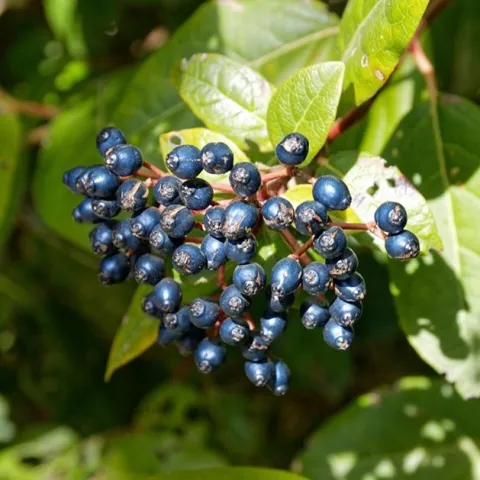
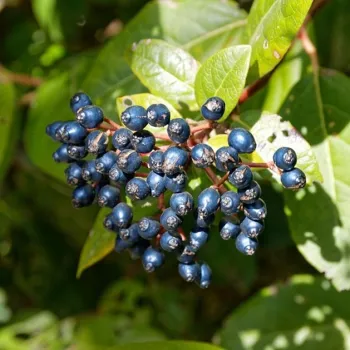
The fruit is also a food source for wildlife – the seed pods are metallic blue through summer, morphing to black as they mature. The 2 to 3-inch leaves are lustrous, dark green, oval, leathery, and slightly rolled at the edges. New stems emerge an alluring wine red. This easy-care plant is native to the Mediterranean areas of Europe and North Africa.
How to grow Viburnum tinus
This lovely shrub is suitable for all areas in Marin County in full sun or part shade, although it prefers some shade where summers are hot and long. It also appreciates rich soil and regular moisture – but it tolerates drought once fully established. Viburnum tinus can be pruned to whatever shape is desired. Watch for aphids, thrips, spider mites, and scale. (Learn more about managing invertebrate pests.) Mildew can be also a problem if grown near the ocean.
Versatility: a major selling point
Viburnum tinus has dense foliage right to the ground, which makes it a great choice for a hedge, screen, small tree, stand-out flowering shrub, and even a clipped topiary shape. It is used in a variety of landscape themes including butterfly, cottage, pollinator, and winter gardens.
What’s in a name?
The common name for Viburnum tinus is laurustinus or laurustine. The word “laurustinus” is Latin for “laurel-like tinus,” referencing its evergreen foliage that resembles a laurel tree.
Many Viburnum to choose from
Viburnum tinus is just one member of the viburnum (Viburnaceae) family. There are more than 150 other species of viburnum, both evergreen and deciduous. Here are a few cultivars to consider:
‘Viburnum tinus ‘Robustum’ – This cultivar has coarser and rougher leaves, less pink in the flowers, and more resistance to mildew. It makes an excellent small, narrow tree.
‘Viburnum tinus ‘Spring Bouquet’ – This plant has slightly smaller and darker green foliage and is fairly compact, topping out at about 6 feet. It is a good choice for hedges.
Viburnum tinus ‘Spirit – This cultivar has slimmer foliage, grows to about 6 feet, and tends to have a compact habit. It’s a good choice for low hedges.
Here’s more on these and other viburnums to consider.
Growing Lettuce Year-Round

Lettuce is generally considered to be a cool-season annual, but with a little advanced planning and some judicious plant selection, Marin gardeners can enjoy home-grown lettuce throughout the year. Our temperate climate makes it possible to modify the growing conditions for lettuce and enable the plants to thrive in all seasons. That’s good news for salad lovers!
EXTERNAL IMAGE
Seasonal Challenges for Growing Lettuce
Lettuce grows best in 45-to-73-degree temperatures. Heat above 80 degrees causes most varieties to bolt (produce flowers) and become bitter. Temperatures below freezing often result in plant damage. Additionally, the shorter winter daylight hours slow or pause growth.
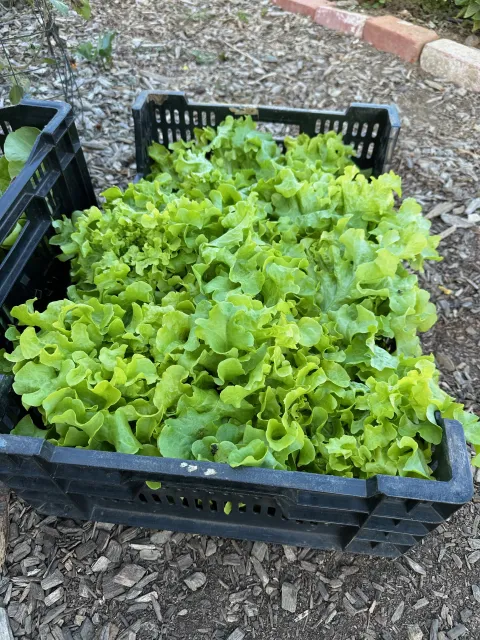
Volunteers in the Edible Demo Garden like a challenge, so learning how to grow a steady crop of lettuce in every season was an ideal project. Lettuce has become a popular crop at the Indian Valley Organic Farm & Garden. Although the success of the project was evident quantitatively in the over 260 heads of lettuce harvested since July 1, 2025, the qualitative gains, in terms of knowledge and experience, are immeasurable. Some key strategies identified for lettuce growing success include selecting the best varieties, succession planting, and managing environmental conditions.
Selecting the Best Varieties
Lettuce varieties are divided into four categories: crisphead, butterhead, looseleaf, and romaine. Crisphead is the iceberg lettuce found in grocery stores. It takes longer to develop and is difficult to grow in hot climates. It’s not a popular choice for home gardeners and is not a variety grown at the Edible Demo Garden.
Butterhead lettuce, also called bib lettuce, is more heat-tolerant. Varieties of butterhead that have thrived in the Edible Demo Garden are ‘Red Cross’ and ‘Aunt Mae’s Bibb’. Both are heat-tolerant and slow to bolt. ‘Red Cross’ has bright red and green leaves making it especially appealing in summer salads.
Loose-leaf lettuces include the “cut and come again” varieties with different leaf shapes, some described as oak leaf-shaped. They can be harvested by taking the outer leaves and leaving the central leaves to mature for future picking. ‘Smile’ is a bright green oakleaf variety that has performed particularly well in the Edible Demo Garden. Other loose-leaf varieties grown in the garden are ‘Morgana’ and ‘Bijella’. ‘Muir Summer Crisp’ is a dense, wavy-leafed variety that is exceptionally heat-tolerant and slow to bolt.
Romaine lettuce, such as ‘Little Gem’ also grows well in the Edible Demo Garden but takes longer to mature and is not as heat-tolerant as other types. As a result, it is not as productive in the garden as the butterhead and loose-leaf varieties.
Succession Planting
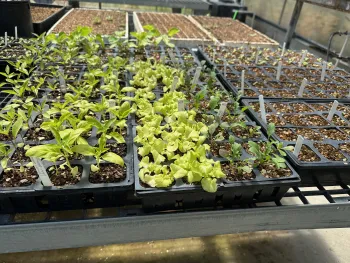
A year-round lettuce harvest requires always having lettuce growing in different stages. That means starting seeds indoors or direct sowing in beds at the same time mature lettuce is being harvested. A volunteer day in the Edible Demo Garden might involve sowing lettuce seeds in cells to germinate in the greenhouse, planting the starts that are now ready in the garden beds, and harvesting the fully grown heads of lettuce for distribution in community-supported agriculture boxes. Intervals for succession planting vary according to the crop, but sowing seed every two weeks is about right for lettuce.
Managing Environmental Conditions
Lettuce requires proper watering and protection to thrive. Frequent, light watering is important for shallow-rooted lettuce. Too little water will stunt and toughen the plants, and too much water causes root rot. Mulching around the plants helps maintain moisture and keeps the leaves off the ground.
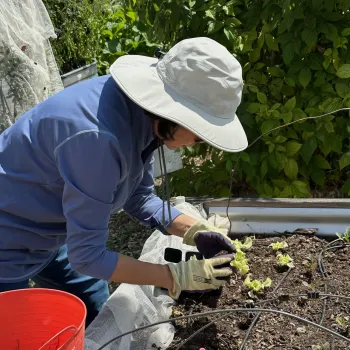
Protection from heat and pests can be challenging. Lettuce appreciates some shade in the summer, so planting it next to taller plants or using shade cloth can reduce the chances of it bolting. Animals and insects love lettuce too. In the Edible Demo Garden, lettuce beds are covered in protective netting to deter hungry birds, rabbits, and other critters. Mesh wire is placed under the beds to stop invasions from below. Even that didn’t prevent gophers from tunneling through the wood on the side of one of the beds and feasting on a few heads of lettuce. The protective netting also provides some shelter from the sun and flying insects. Aphids, earwigs, and slugs can still be a problem, so it pays to be vigilant and remove them as soon as they are discovered.
Click here for more information on growing lettuce:
https://ucanr.edu/site/uc-marin-master-gardeners/documents/lettuce
Check out our new YouTube video: