What to Do Off-Season in the Edible Garden

Putting the garden to rest
Thanks to Marin's mild winter weather, home gardeners can grow vegetables year-round. But you may choose to give the garden (and yourself) some rest and rejuvenation once you've harvested your last summer-fall crop. Here are two options for putting the edible garden to bed before you kick back in your easy chair and flip through seed catalogs.
Two basic options for your edible beds:
> Grow cover crops
> Straw-covered manure layer
Option one: GROW COVER CROPS

Cover crops are plants grown primarily to improve soil. Planted when traditional garden crops are not present, they enrich soil and provide numerous other benefits. Cover crops are often referred to as a “green manure.”
Advantages
• Build soil fertility
• Increase soil organic matter
• Suppress weeds
• Protect soil from wind and water erosion
• Provide habitat for beneficial insects and earthworms
• Loosen soil without digging, as roots reach down deeper than any shovel
• Fix nitrogen in the soil. Research shows that legume crops, especially vetch, are the best for nitrogen fixing.
• Suppress some harmful soil-dwelling nematodes: Mustard plants do this naturally.
• Provide aesthetic addition to winter gardens.
Disadvantages
• May require watering, at least until fall rains keep soil evenly moist.
• Cutting down the crop and digging it into the garden bed is work.
• Patience is required while the chopped material breaks down in the planting bed. Alternatively, put greens in the compost pile.
TIMING: when to plant and cut down a cover crop
Planting cover crop seed at the right time is important for success.
September or October: Sow cover crop. To enhance the soil for spring edibles, avoid planting cover crops after November.
February or early March: When cover crops are 25-50% in flower, cut them down, chop them up, and dig the greens into the soil 3 to 6 weeks prior to planting. The buried material will decompose and provide nutrients and organic material to the soil while increasing biological activity, water infiltration, and soil tilth. Shredded cover crop may also be added to your compost pile instead of digging it into the bed.
Example: Plant cover crop on October 1, cut down on March 1, plant tomatoes and other spring crops on April1-15.
Any time of year: Plant a cover crop at any time to enhance a tired bed, as long as the crop planting is consistent with the growing season.
HOW TO PLANT a cover crop:
• Inoculant: Some UCCE (University of California Cooperative Extension) Farm Advisors recommend inoculating legume seeds prior to planting to effectively fix nitrogen. Legumes work with bacteria called Rhizobium that live on their roots, and allow the plant to fix nitrogen into the soil. Buy inoculant where you buy cover crop seeds.
• Planting depth is based on seed size. In general, the larger the seed, the more soil cover it requires. Follow instructions on seed package and the suggestions below.
• Rake the soil smooth, removing any significant debris from a previous crop.
• Broadcast the seed at the recommended rate for the plant type.
• Cover the seed with soil to the recommended depth for the plant type.
• Water if necessary and keep moist until rains begin.
WHAT TO PLANT
Choose a cover crop based on your goals:
Improve soil structure
Plant deeply rooted plants and/or plants with large biomass such as barley, rye, and daikon radish.
Build soil microbial biomass
(fungi, bacteria and other microbes): Plant Phacelia.
Protect the soil from erosion
Plant grasses, mustard, and radish.
Suppress weeds
Plant grasses, mustard, and radish.
Attract beneficial insects
Plant mustard and radish.
(These plants may also attract undesirable insects such as cucumber beetles and stink bugs).
Increase nitrogen
Plant vetch and other legumes.
Seeding for the season
Common Cover Crops for California are included in the chart below. Once you’ve identified the desirable crop, check with local nurseries or online seed suppliers for availability.

Option two: LAYER OF MANURE COVERED WITH STRAW

A rice straw-covered layer of manure is another way of boosting soil.
Advantages
• Works slowly over the winter to enrich soil
• Attracts earthworms
• Feeds legion of beneficial microbes needed for healthy spring crops
• One-and-done deal; there is nothing to cut down in spring like there is with a cover crop.
Disadvantages
• Sourcing, transporting, and shoveling manure
• A smelly wait for a couple of days for the barnyard aroma to dissipate
HOW TO LAYER IT UP
• Pile on 2 or more inches of herbivore-generated manure (horse, chicken, cow, goat, llama and rabbit are all equally good (preferably from animals that have not been treated with antibiotics or other pharmaceuticals).
• Top it with a fluffy layer of rice straw (often available inexpensively at horse or farm supply stores) or dry leaves three times as deep as the manure layer. The straw stays neat-looking for months, and thick layers of organic material smother most weeds.
• Winter rains keep the pile moist, attracting earthworms and helpful decomposers.
• Straw and leaves hold in moisture and prevent rain from compacting the soil.
• In spring, turn the composted manure and straw into the top layer of soil before planting.
BACK TO EDIBLES
> What Edible Gardens Need
> Best Choices for Marin
> How to Prepare
> How to Plant
> Edibles in Containers
> Planting Calendar
> Grow & Care Sheets for Vegetables, Herbs & Fruits
> Tips & Techniques
> How to Maintain
> Fruit Trees
> Top 20 Edible Garden Problems
> Cover Crops & Soil Enhancements in the Off-season
> Conserving Water
•••••••••
Visit our EDIBLE DEMO GARDEN at IVC Organic Farm & Garden
December 2023: Caring for the Soil
After the fall harvest was over, it was time to clean up and replenish the soil in the Edible Demo Garden. Healthy soil is fundamental to the success of the next season’s crops. Even in beds that are temporarily fallow, the soil needs to be nurtured and protected. In November, volunteers were busy with three major soil-boosting activities - spreading compost, adding mulch, and planting cover crops.
Why add compost?
The value of compost cannot be overestimated. Most edible crops are heavy feeders and leave the soil depleted of nitrogen and other essential nutrients after they are harvested. Adding a layer of compost to the soil is an earth-friendly way to help restore those nutrients and support good soil structure. Since compost is decomposing organic matter, it needs time to make the nutrients available to plants. In the Edible Demo Garden, compost is applied to all the garden beds prior to planting the next season’s crop.
What is the purpose of mulch?
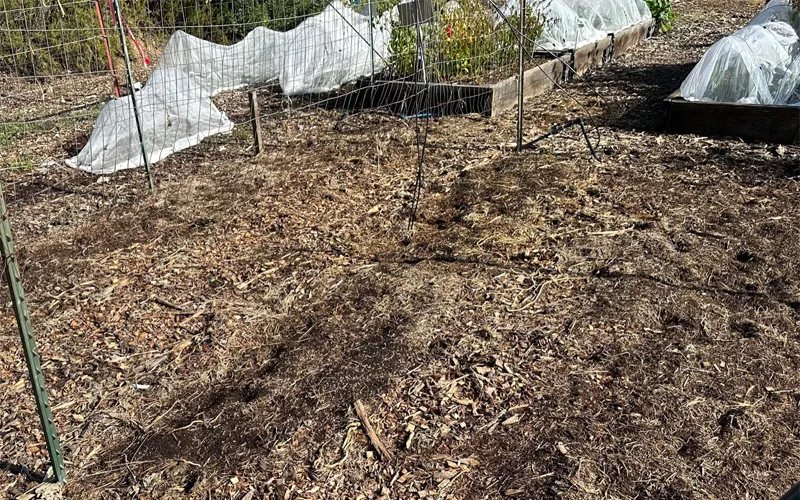
In late fall, Edible Demo Garden volunteers take apart the straw bales used to grow warm season vegetables. The used straw becomes recycled mulch. Initially, the straw was considered suitable as compost material, however, subsequent testing found it to be low in nitrogen. Although much nitrogen was added to the bales during the growing season, most of it was either taken up by the plants or washed out by watering and rain.
Why plant cover crops?

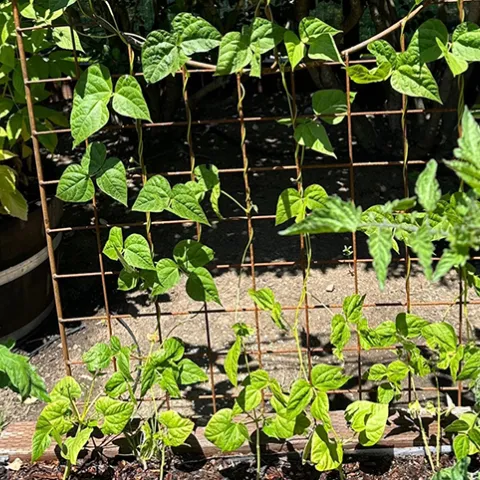
For several years Edible Demo Garden volunteers have been cultivating a large garden area known as “the back 40”. Planting a cover crop of fava beans in the fall is one of the strategies for improving the poor soil in that area. Before the fava beans could be planted in November, some light tilling of the soil was necessary to improve the penetration and decomposition of the four wheelbarrows full of compost spread by the volunteers. Prior to planting, the bean seeds were soaked in an inoculant containing rhizobacteria to maximize their nitrogen fixation effects.
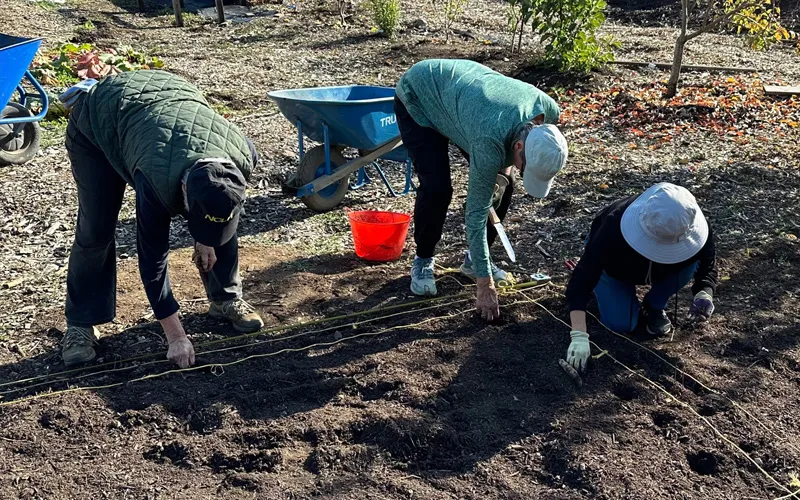

Paying careful attention to spacing and depth requirements, 150 inoculated fava bean seeds were planted in the back 40 by the volunteers. Some watering will be necessary until the rains begin, but a good crop of green manure should be available to nourish the soil in the spring.
For more information on building healthy soil, click here.
October 2023: An Abundance of Squash
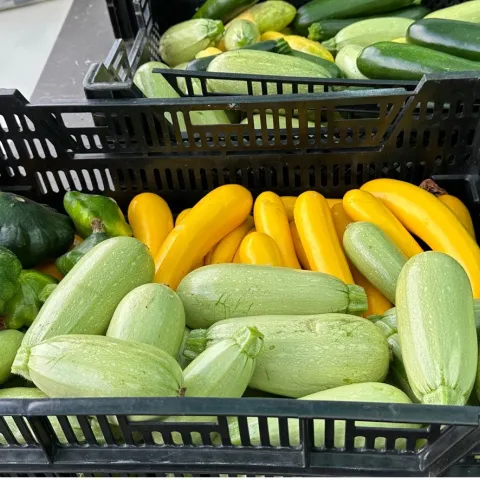

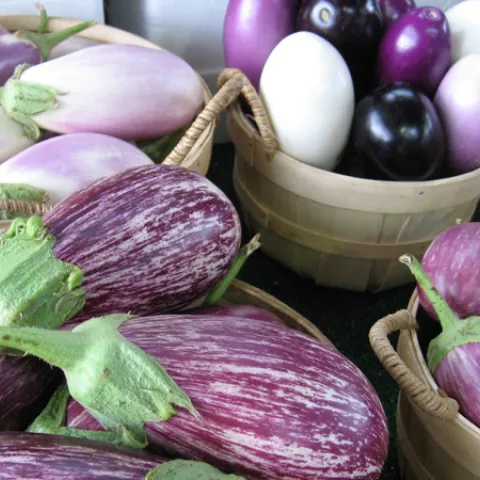
The summer harvest was in full swing in the Edible Demo Garden in September. Volunteers harvested beans, tomatoes, cucumbers, eggplant, peppers, and lots of summer squash. Although the summer squash planted in the straw bales got off to a slow start due to cool weather and creature damage, it caught up quickly. Pounds of yellow fin and magda squash were harvested throughout the summer. An estimated 45 pounds of squash were picked just last month. Soon the winter squash will be ready for harvest and the yield promises to be just as good.
How can you tell when squash is ready for harvest?
The timing of the harvests for summer and winter squashes differs in relation to the maturity of the developing fruit. Summer squash (zucchini, patty pan, yellow, crookneck) is picked before it is fully mature, and the rind hardens. Winter squash (pumpkin, butternut, acorn, delicata) should be allowed to fully mature on the vine. Here are some general harvesting guidelines for each type.

- Summer Squash: The smaller the squash the more tender and tastier it will be. Pick straight and crookneck varieties when they are 2 inches or less in diameter and 6 to 8 inches long. Pick patty pan or scallop types when they are 3 to 4 inches in diameter. Because summer squash matures very rapidly after pollination, it is important to pick often before they get too large. When summer squash become too large, hard, and seedy, they sap strength from the plant and reduce production. Sometimes finding the developing squash before they get too large is challenging. It’s easy to miss one among the vines only to find an oversized one that got away.
- Winter Squash: In contrast to summer squash, winter squash should stay on the vine until it is at maximum size and the shell is hard and dull in color. Wait until the color on the stem changes from green to brown, then the squash is ready for harvest. When it comes to winter squash, it is better to leave them on the vine too long than not long enough. If the vines are dying, it’s time to harvest.
To sum it up - harvesting summer squash requires vigilance and harvesting winter squash involves patience!
General Harvesting Rules:

- Harvest in the early morning hours – produce harvested in the morning tends to stay crisp and fresh longer. Plants retain moisture overnight and veggies picked during the heat of the day are more likely to wilt.
- Be gentle when harvesting – If the vegetable is not easily picked, use a knife, scissors, or pruner. Summer squash can be harvested with regular pruners, but heavy pruners or a sharp knife is best for harvesting winter squash. Leaving a short stem attached prolongs storage life. Leave 2 to 4 inches of stem intact on winter squash. Handle summer squash gently to prevent wounds to the skin.
- Pick frequently to prolong the harvest – Keep in mind that a plant’s goal is to reproduce. When fruit is allowed to fully mature, then it signals to the plant that there is no need to continue flowering and fruit production will diminish.
For more information on growing summer and winter squash visit our webpage!
August 2023: In Praise of Rhubarb
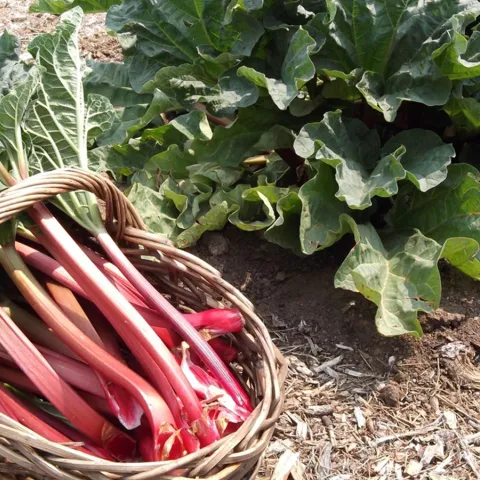
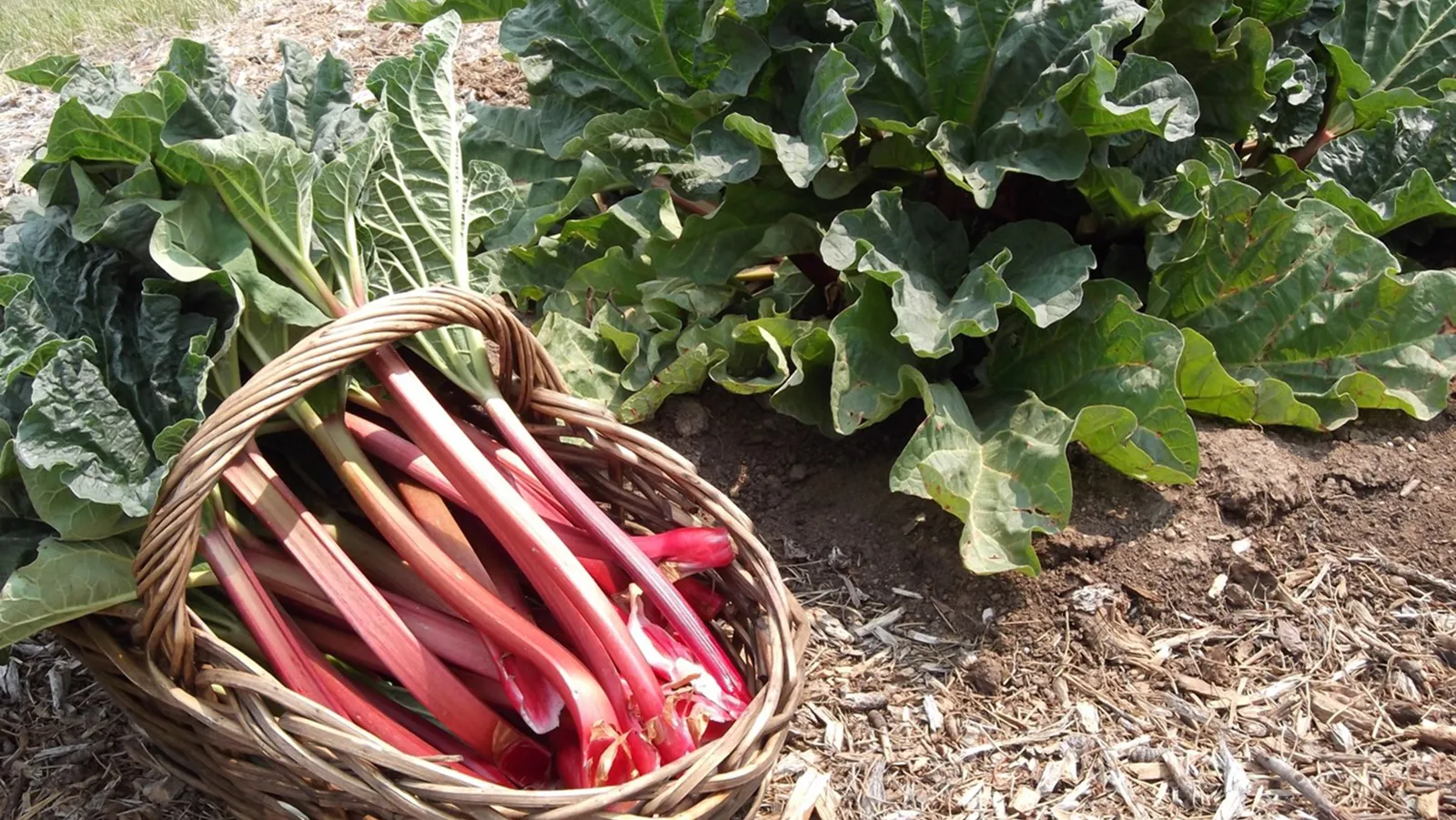
What is Rhubarb?
Rhubarb is a vegetable that is often prepared and eaten as fruit. The leaf stalks, or petioles, are the edible part of the plant. Originating in Siberia and China, rhubarb is a member of the Polygonaceae family, a grouping of herbaceous perennial plants which also includes buckwheat and sorrel. It was first used by the Chinese for medicinal purposes but has been cultivated for its unique tart sour taste for centuries.
Nutritionally, rhubarb is an excellent source of vitamin K. It is also high in vitamin C, calcium, and antioxidants. Eaten alone, it is low in calories, but it is often combined with fruits or sweeteners to counterbalance its tartness. The classic combination is rhubarb and strawberries often mixed as a pie filling. In fact, rhubarb’s use in baking has earned it the label of “ple plant”.
Like many edible plants, rhubarb contains oxalic acid, and this may contribute to its taste. However, oxalic acid is much more highly concentrated in rhubarb leaves, and it is at a level considered to be poisonous. Only the leaf stems should be harvested for food.
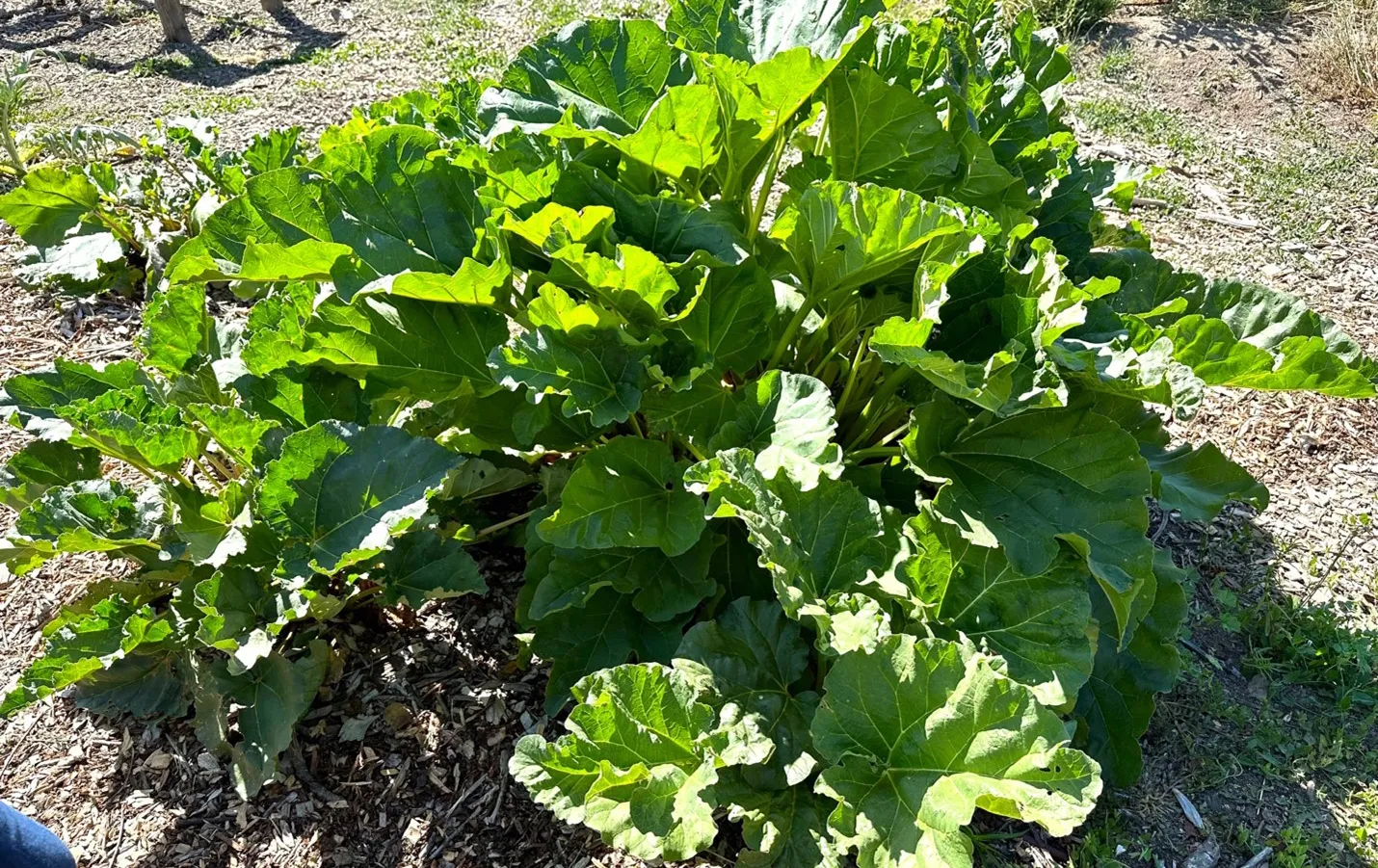
Rhubarb plants are large perennials and can grow for 5 to 10 years before they need to be divided. Rhubarb also needs space. Plants typically grow 3 feet tall and up to 6 feet wide. Therefore, choosing the right place to plant it is important. Rhubarb can also double as an ornamental landscape plant, so it doesn’t need to be confined to a designated vegetable garden.
Rhubarb grows best in full sun with some partial shade where summers are hot. It grows vigorously from early spring to midsummer and then goes dormant. It doesn’t mind cold or shade in winter when it is dormant, and it needs some winter chill to stimulate new growth and produce the thickest and reddest leaf stalks.
Fertile, well-drained soil with a pH of 6.0 to 6.8 is best for growing rhubarb. In areas with less-than-ideal soil conditions, the soil should be amended deeply enough prior to planting to accommodate the roots and prevent future drainage problems.
How to Grow Rhubarb
- Planting - Rhubarb grows from rhizomes and is started as rootstock or a division of an existing plant. Plant crowns 1 to 2 inches below the surface in soil that has been mixed with compost. Keep soil moist but not soggy.
- Fertilizing – Organic fertilizer along with compost should be added annually in the spring.
- Watering – Rhubarb needs regular water but once established, it is hardy enough to tolerate some drought conditions.
- Harvesting – It’s recommended to wait at least until the second season of growth before harvesting. Remove only a few stalks per plant in the spring of the first harvest. More stalks can be removed in the following seasons, but never more than a third of the leaves on the plant. Harvest the thickest stems when the leaves have just opened. Gently pull or twist the stems to remove them. Cutting the stems may leave a stub that will rot. The leaves should be removed from the stems as soon as they are harvested.
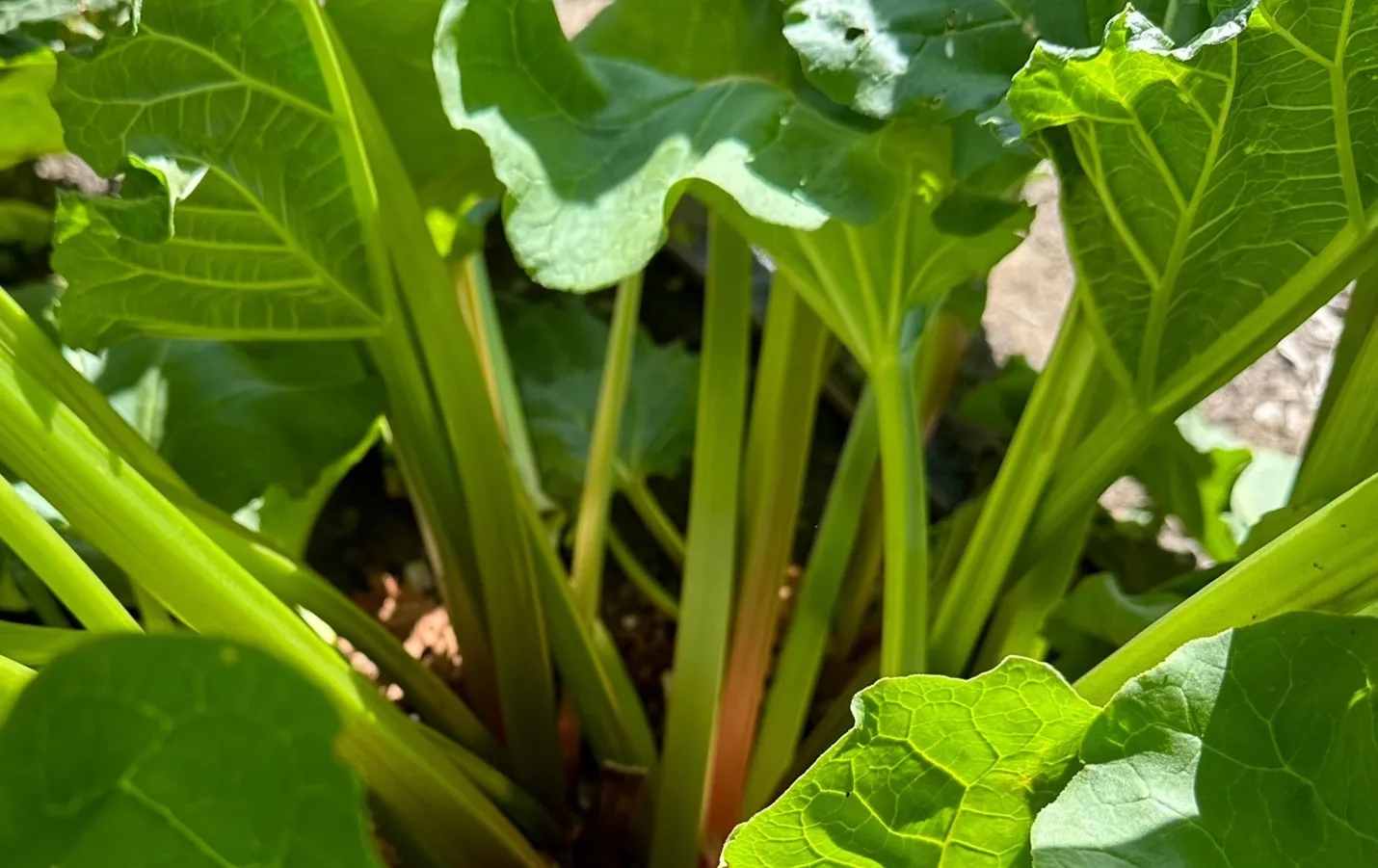
- Pests – Healthy plants attract few pests. Aphids, flea beetles, and leafhoppers can cause problems if plants are stressed. The area around the plants should be kept free of weeds as rhubarb does not grow well in a weedy environment.
Rhubarb Varieties
Not all rhubarb varieties have bright red stems. There are flavorful green varieties and others with red speckled stalks. In the milder Bay Area climate, some of the red varieties will produce paler stems since more chill time is needed for the deep red color. Varieties with low chill requirements are best suited to the region.