How to Plant Your Edible Garden

Take care to plan out your edible garden before diving in. Consider any theme or general approach to your garden, how your plants will be organized, how to invite pollinators, and whether you'll be planting your crops from seeds or starts. Most importantly, be sure you plant at the correct time. Here's how to manage it all.
APPROACH: Getting started
There are many ways to grow edibles, whether incorporated in the ornamental landscape or in a separate area of the garden.
Edible landscape
Use edibles in place of ornamentals in your landscape or integrate them within existing ornamentals. Blueberries and artichokes are beautiful ornamental shrubs. Blackberries, asparagus and raspberries make a nice hedgerow. Herbs make a lovely border.
Theme gardens
Edible flowers, ratatouille or salad niçoise garden, tea or salsa garden, etc.
Planting space & relative square foot value
• If space is tight: High-yield per square foot plants
Herbs, parsley, carrots, and beets provide the greatest yield per square foot. In other words, you get the most produce from the smallest amount of space. If space is tight, these edibles are good choices.
• If space is not an issue: Low-yield per square foot plants
Winter squash, sweet corn, watermelon. and pumpkin have the least yield per square foot. Grow these if space is not an issue or if you don't mind edible vines creeping through your ornamental beds.
Others crops are somewhere in between.
GROUPING PLANTS: How to organize your edible garden
Use the guidelines below to create a planting plan for your edible garden.
MOST IMPORTANT: Hydrozones and plant spacing

Hydrozones
Place edibles with similar water needs together. Plants with similar root depth have similar water requirements.
• Most edible plants are shallow rooting (approximately 12 inches or less). Examples include lettuce, arugula, basil, chives, garlic, kale, mustard greens, and some carrots.
• Deeply rooting plants include artichokes, asparagus, parsnips, rhubarb and tomatoes.
• Most annuals need one inch of water per week and up to two inches in hot weather. Learn how to calculate an inch of water.
• Tomatoes need less water after fruit has set.
• Perennial herbs need less water after they're established.
Plant spacing
Place crops according to size at maturity or according to spacing suggestions. Vegetables harvested before full maturity, such as beets or greens, may be placed more closely.
Plant placement
Consider:
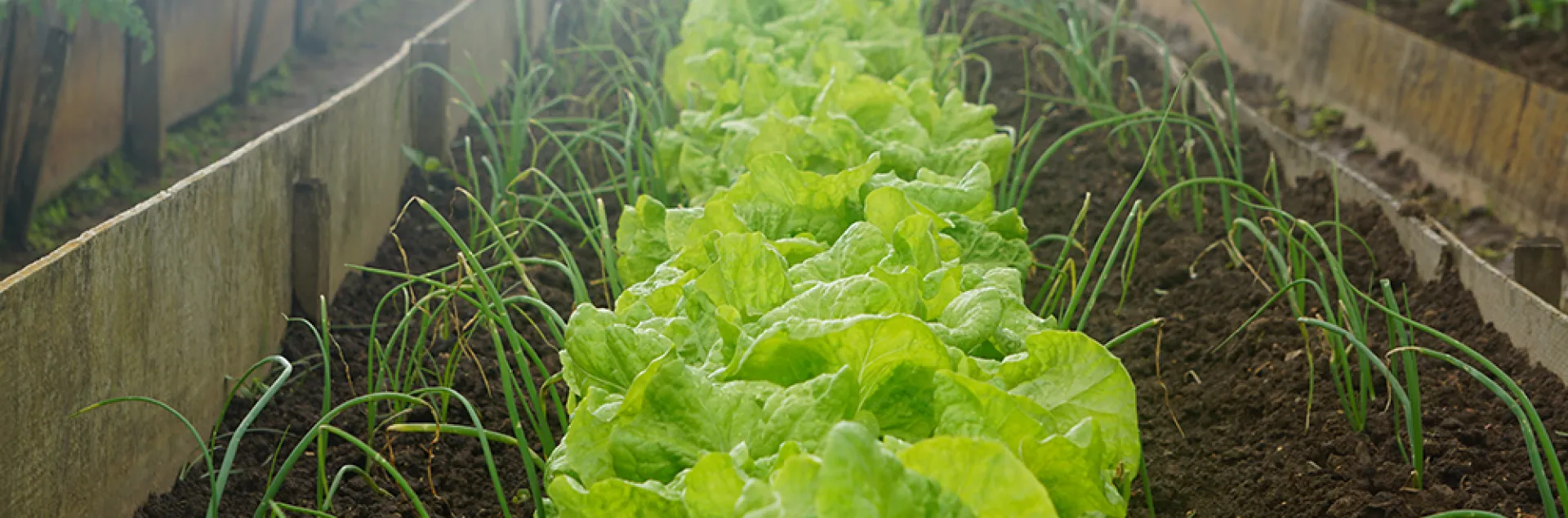
• Shade: Place taller plants on the north side of your bed/garden so they will not shade shorter plants. Plant crops that enjoy light shade, such as lettuce, in the shadow of taller plants.
• Ease of access: Group shorter plants near the front of beds so they're easy to reach.
Rotation
Group plant families together for easier seasonal crop rotation.

Frost-sensitive plants
Place frost-sensitive plants such as peas and citrus in protected areas near a structure, fence, or in an otherwise protected spot. Use cold frames to get seedlings started outdoors.
Perennials
If space allows, grow perennials such as asparagus, artichokes, berries, herbs, fruit trees, sunchokes, and walking collards in separate beds or containers.
POLLINATORS: how to attract them

If not for pollination, our food gardens would be lovely, under-productive patches of green. In fact, pollination accounts for one out of every three bites of food we eat. That said, the need for pollination varies by crop:
| Require no pollination | Carrots, kale, and other edibles, which we eat before pollination occurs |
| Self-pollinating | Beans, peas and tomatoes |
| Wind-pollinated | Beets, chard, and corn |
| Require pollination | Brassicas, cucumbers, melons, okra, pumpkins, squash and many fruit trees Pollinated by hummingbirds, bees and other insects, and in their absence, humans! |
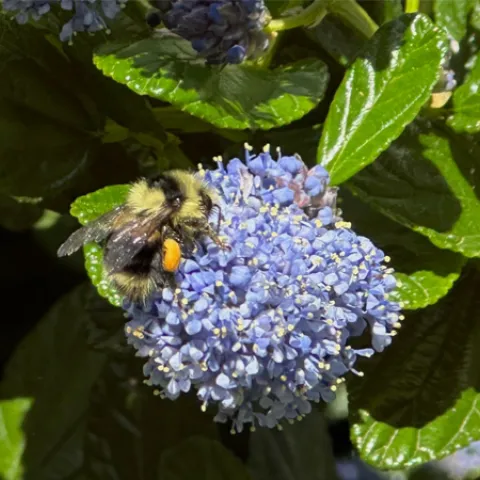
Use our lists of Plants for Bees, Hummingbirds, and Butterflies. These plants are easy to grow, bloom heavily, and are good company for edible crops. They create spots of color, texture, and scent. The result is so much more than an edible garden. It is a resilient, sustainable, fascinating ecosystem. Learn more about habitat gardening, pollination, and pollinators.
KNOW YOUR SOIL TEMPERATURE: Guidelines for warm & cool season crops
Edible crops are not only sensitive to air temperatures; they are also sensitive to soil temperatures. Whether planting seeds or starts make sure soil temperature is adequate:
Warm season crops need soil temperature at 60 to 65 degrees.
Cool season crops need soil temperature at about 40 degrees.
How to take your soil's temperature
• Use an instant read thermometer, the kind used in the kitchen. Insert it into the soil about 3 inches deep.
• The best time to check soil temperature prior to planting seeds and seedlings is in the morning because this will be the coolest soil temperature of the day. If you want to know the warmest soil temperature, check the soil in late afternoon.
To raise soil temperature
• Cover the bed for a few days with a dark material, such as heavy weed cloth.
Planting: Seeds or Starts?
When planting your garden, you have a choice between planting seeds or starts. Most gardens include plants propagated from both seeds and starts.
What are Starts?

Starts are plants you buy at the nursery or grow yourself from seed.
HOW TO PLANT STARTS • Harden off: If you have grown your own starts, be sure to harden them off for about a week before planting in the garden by leaving the plants outside each day for longer and longer periods of time but bringing them in at night. Starts purchased from a nursery are already hardened off. |
SEEDS: Growing your own starts

Follow directions on seed packets and decide if you are going to start the seed indoors in a container or direct sow into the garden.
Benefits of growing edibles from seed:
• Variety: Starting with seed reveals a world of vegetables that you will never find in the market or nursery.
• Cost: Growing from seed is less expensive than buying starts.
• Sharing: You can exchange different varieties with friends.
• Disease resistance: Growing from seed reduces the risk of introducing diseases into your garden.
• More control over timing: This can help when rotating crops or doing succession planting.
| HOW TO SOW SEEDS INDOORS or in a cold frame outdoors • Begin 3-6 weeks before planting into the garden. • Use a fine textured seeding mix • Use any kind of container that is at least 2 inches deep and drains. • Fill the container or flat with seeding mix. • Level out. • Place seeds more densely than recommended on the seed packet, as some will not germinate. • Once the seedlings are about 1-inch high, thin with scissors, giving each seedling 2 inches of space all around. • When the seedling has at least 2-3 true leaves, feed with fish emulsion diluted to half the standard strength. (Seeding mix does not usually contain nutrients since the seed uses nutrients stored in the seed.) • Transplant in the spring after danger of frost or according to the recommended planting time. |
Seed types to sow indoors or in a cold frame:
• Smaller seeds are usually started in a flat in a protected environment (indoors or out) and transplanted after a full-set of leaves has formed and the plants have been hardened off (gradually exposed to outdoor elements). An exception are small seeds that mature quickly, such as lettuce and arugula, which may be directly sown into the garden.
• Large seeds such as beans, peas or squash may be started indoors and transplanted to provide a head start on the growing season.
• Medium size seeds such as those for eggplants, tomatoes and peppers are started indoors and transplanted outdoors.
| HOW TO SOW SEEDS DIRECTLY into the garden • Plant large seeds the depth recommended on the seed packet (usually about the length of the seed). • Scatter small seeds on the surface of the bed, then top lightly with soil. • Thin with scissors to recommended planting spacing when seedlings are 1 to 2 inches tall. • Cover with tulle to protect from birds. |
Edible crops to sow directly by seed into the garden:
• Large seeds: beans, pumpkins, squash, peas
• Root crops: beets, carrots, parsnips, radishes, turnips
• Quickly maturing seeds: braising mix, lettuce, microgreens
TIMING: when should you start growing?
In the edible garden, this is a critical question that could mean the difference between success and failure. Check online for information on specific plants, or use our planting calendar and our grow sheets as a guide.
BACK TO EDIBLES
> What Edible Gardens Need
> Best Choices for Marin
> How to Prepare
> How to Plant
> Edibles in Containers
> Planting Calendar
> Grow & Care Sheets for Vegetables, Herbs & Fruits
> Tips & Techniques
> How to Maintain
> Fruit Trees
> Top 20 Edible Garden Problems
> Cover Crops & Soil Enhancements in the Off-season
> Conserving Water
•••••••••
Visit our EDIBLE DEMO GARDEN at IVC Organic Farm & Garden