mg-logo
UC Marin Master Gardeners

Invertebrate Pests

Invertebrate pests – insects, spiders and mites, snails, and slugs

Image
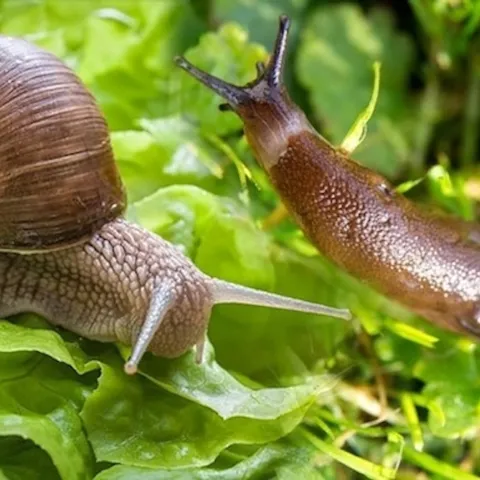
Snails can mow down new transplants in one night. Photo: Pexels


An invertebrate is any animal without an internal backbone including insects, spiders, mollusks, crustaceans, and worms. 
 

Insects (Arthropods) 

• Have three main body segments, three pairs of walking legs, and antennae 
• Live in the air, on and in soil, and in water
• Majority are harmless or even beneficial; less than 1% are considered pests 
• Aid in the production of fruits, seeds, and vegetables by pollinating blossoms
• Improve soil’s physical condition by burrowing throughout the surface layer 
• Some parasitize or prey on harmful insects
• Serve as food sources for birds, fish, mammals, reptiles, and other animals

> Ants
> Managing Ants in the Home
 

> More on Ants
> Managing Aphids
> Earwigs
> Scale insects
> Common types of Thrips
> Centipedes & Millipedes
> Sowbugs & Pillbugs
> Identifying and managing Yellowjackets
 
Spiders and mites (Arachnids)

• Have two main body segments, four pairs of walking legs, and no antennae
Spiders are generally beneficial because of the large number of insects they eat
 

Snails and slugs (Mollusks)

• Move by gliding along on a muscular “foot” 
• The “foot” constantly secretes mucus that helps them move and later dries to form the silvery slime trail

> More on Snails & Slugs
 
> BACK TO PROBLEMS
> GARDEN PESTS:
> Vertebrates
> Diseases
Primary Image
Scale insects
UC Marin Master Gardeners: Document

Scale

Adult scales are immobile with coverings that are one twenty-fifth to one-quarter inch long. Immature scales are small slow-moving bodies called crawlers that have legs which eventually drop off. There are two main groups of scale insects — soft and armored. Soft scales have a more rounded and convex…
View Document
Primary Image
snails and slugs
UC Marin Master Gardeners: Document

Snails & Slugs

Both snails and slugs are members of the mollusk phylum and are similar in structure and biology, except that slugs lack the snail's external spiral shell. These mollusks move by gliding along on a muscular “foot.” This muscle constantly secretes mucus, which facilitates their movement and later dries to…
View Document
Primary Image
Thrips
UC Marin Master Gardeners: Document

Thrips

 Thrips are tiny, slender insects with hairs on their wing margins. They are less than one-twentieth inch long and their color varies depending on the species and life stage.Thrips hatch from eggs and develop through two feeding and two non-feeding stages before developing into adults.Most pest…
View Document