
Why a Tiny Bite Can Have Big Consequences
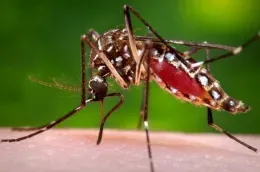
A whining hum fills your left ear. A slight sensation on the back of your neck followed by a faint pinch of pain. SMACK! A broken and twisted long-legged insect and a small smear of red blood on your hand. Soon, the itching and swelling will start. You shrug; it’s mosquito season after all, and it’s the price you pay to enjoy this barbecue with friends. Did you realize, however, that you may have just contracted a mosquito-borne illness? Mosquitoes are more than mere nuisances; they transmit disease to hundreds of millions of people every year! For this reason, they are justifiably considered the most dangerous animal on the planet. So, how can we protect ourselves from bites and prevent mosquito-borne illnesses from affecting our communities?
Understanding Mosquito Biology
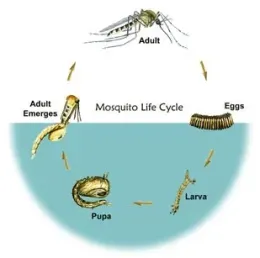
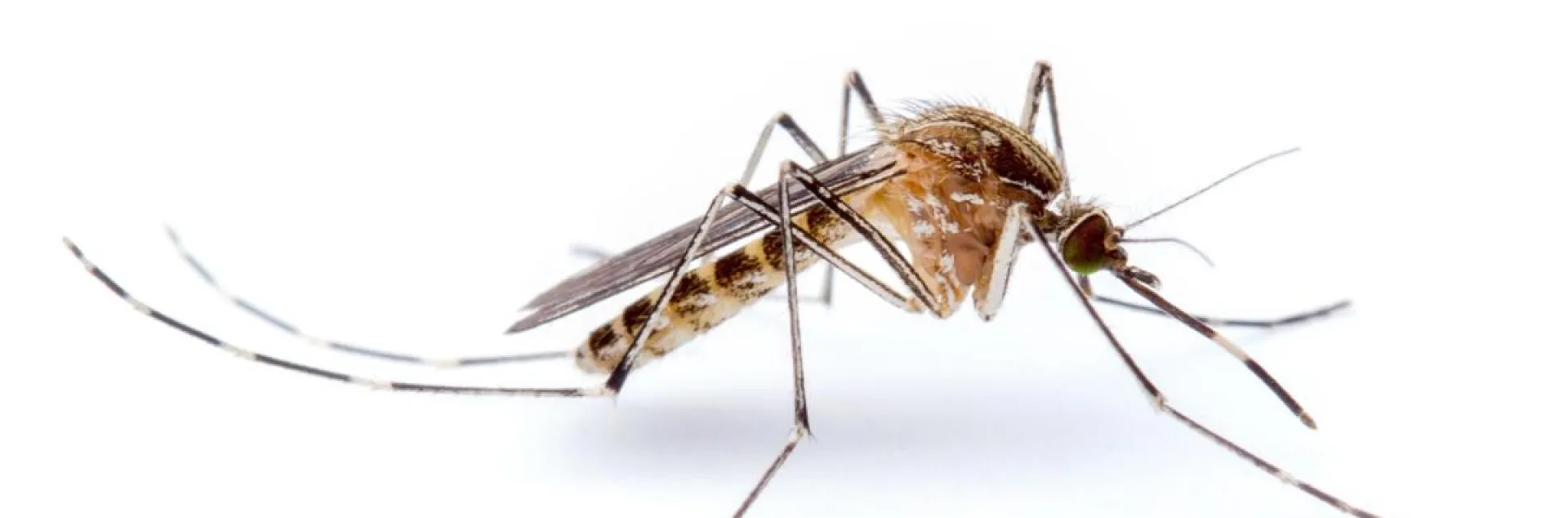
Mosquitoes are small flies (Diptera: Culicidae) with slender bodies, long legs, and piercing-sucking mouthparts. Female mosquitoes drink blood from vertebrate animals, including humans, while male mosquitoes drink plant nectar, honeydew, and other sugary liquids. Blood-feeding (“biting”) by female mosquitoes, which is required to develop and nourish their eggs, often leads to swelling, itching, and localized dermatitis, but it can also transmit pathogens such as malaria (a protozoan), dog heartworm (a nematode), and viruses such as dengue, yellow fever, zika, chikungunya, encephalitis, and West Nile. After feeding, females lay eggs in, on, or near standing water. These eggs hatch into “wigglers”, wriggling aquatic larvae that filter the water to feed on bacteria, algae, fungi, and plankton. Once mature, the larvae pupate into nonfeeding “tumblers” that metamorphose into winged adults, emerging from the water to fly away and continue the cycle. Wigglers and tumblers must come to the surface to breathe air, so you’ll often see them moving up or down in the water column. With warming temperatures and standing water resulting from the wet winter, springtime is mosquito season in California.
Diseases Spread by Mosquitoes
The most common mosquito-borne illness in California is West Nile virus disease (WNV); at least 113 people were infected in 2025, and 11 people died from the infection. WNV is vectored by Culex “house mosquitoes”, which breed in wetlands, rice fields, unsealed septic tanks, and abandoned swimming pools. These mosquitoes are common targets of California’s mosquito and vector control districts, which aim to control developing larvae before they can emerge as adults.
New species and new disease risks
Two invasive species of mosquito, Aedes aegypti and Aedes albopictus, commonly called the “yellow fever mosquito” and the “tiger mosquito”, have now established themselves in many parts of California. In the SF Bay Area, the yellow fever mosquito has recently been detected in San Jose, Livermore, and Antioch. These mosquitoes are different from Culex mosquitoes in that they will utilize very small volumes of water as larval breeding habitats. That means they can easily breed in containers like buckets, cups, saucers, bird baths, plastic toys, old tires, rain capture systems, and clogged gutters. Consequently, Aedes mosquitoes are commonly produced on residential properties (your backyard!) where mosquito and vector control districts have limited abilities to control them. These “container-breeding” mosquitoes frequently feed during the day, especially “biting” legs and lower regions of human bodies. More importantly, they vector serious viral diseases such as dengue, yellow fever, chikungunya, and Zika, sometimes killing more than 100,000 people per year globally. Help manage these invasive species by contacting your local mosquito or vector control district if you’re experiencing “ankle-biter” mosquitoes during the day or if you discover mosquito larvae living in small containers.
Prevention
Eliminating Mosquito Breeding Sites
The most effective strategy for prevention of mosquitoes and the diseases they transmit is to eliminate larval development sites: eliminate standing water by emptying or draining containers, filling flooded areas or containers that cannot be drained, properly maintaining gutters and downspouts, properly screening rain barrels and cisterns, and properly maintaining fountains and water gardens.
Protecting Yourself from Bites
We can also prevent mosquito bites and mosquito-borne illnesses by avoiding places and times of day when mosquitoes are active, wearing long pants and long sleeves, and using insect repellents recommended by the USA Centers for Disease Control and Prevention: active ingredients DEET, picaridin, oil of lemon eucalyptus, and IR3535.
Biological and Chemical Control Options
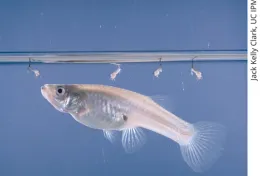
Some larval (aquatic) habitats that cannot be drained or dried can be populated with mosquitofish, Gambusia affinis, predatory fish known to consume mosquito larvae; these can often be obtained from your local mosquito or vector control district. Aquatic habitats can also be treated with the bioinsecticide Bti, the insect growth regulator methoprene, or the insecticide spinosad. Ensure that all product label requirements and guidelines are met and followed when using these pesticides. Consumer products targeting adult mosquitoes may provide some temporary control (at best), but these insecticides may produce significant negative effects on nontarget animals and the environment.
References and More Information
Learn more about mosquitoes and mosquito management.
Learn about Aedes mosquitoes in California.
See current distributions of Aedes mosquitoes in California. [LINK removed]
Dr. Andrew Sutherland is a Cooperative Extension Advisor: Urban Integrated Pest Management (San Francisco Bay Area) and a Board Certified Entomologist.