

Do I Need to Do Something?
A Season of Observation
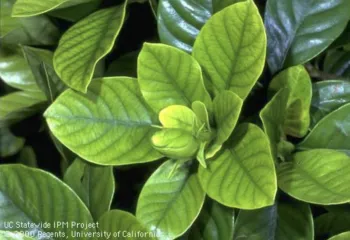
As the growing season unfolds, many gardeners begin taking a closer look at their plants, wondering whether everything is thriving as it should. Spring is often the time of year to determine whether a little help might be needed to keep our plants healthy. Knowing what the plant should normally look like makes it easier to recognize when something is amiss. Problems may be caused by fungi, bacteria, or viruses, but they can also be caused by environmental conditions such as too much or too little water, too much or insufficient sunlight or a lack of essential nutrients.
Soil conditions play an important role
Soil types vary by location, as do nutrient levels, pH (best between 6.5 and 7), and salinity. Even when nutrients are present in the soil, an imbalance can prevent plants from absorbing them. In addition to nutrients, check for good drainage, which prevents root damage, and check for excess salinity.
Fertilizer: Finding the Right Balance
Fertilizer can help a plant grow strong and healthy when the right type and amount are used. However, too much or not enough of any nutrient can cause a plant to struggle. Deficiencies can cause a plant to have smaller leaf size, leaf chlorosis (yellowing), necrosis (death of plant tissue), and die-back. Too much of a nutrient can cause plant weakness, leaf burn, and increased susceptibility to insect pests and disease.
Reading Your Plants: What Leaves Can Tell You
- To determine what a plant needs, examine the leaves:Is the leaf shape typical?
- Is the leaf color correct?
- Are the leaves old or new?
- Are leaves yellow between the veins?
- Are there any brown spots or other symptoms on the leaves?
Testing your Soil
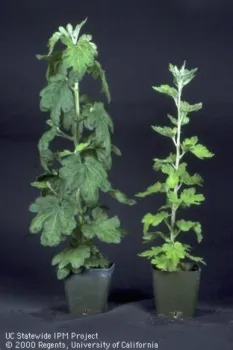
Spring is a good time to test your soil to determine what nutrient levels are available to your plants. A simple home soil test can check the pH level and three primary nutrients plants need: nitrogen, phosphorus, and potassium.
Nitrogen and Iron
Nitrogen and iron are the most common deficiencies causing yellowing of foliage. This can show up in different parts of the plant. If there is a nitrogen deficiency, it will show on older leaves first. There will be a lack of growth, and the leaves might be light green or yellow, but some plants might display red and purple leaves. Too much nitrogen causes lush growth, which attracts pests like aphids.
An iron deficiency may be found in young leaves, which will be light green with narrow green veins. Symptoms will get worse in cool, wet weather.
Other common factors
Fungi, bacteria, viruses, and insects can also cause problems in plants.. Correctly identifying the cause is important to address the problem effectively. Fungal diseases spread when excessive rain occurs after new growth appears. Some fungi spread through rain or irrigation but cannot spread during dry weather. Some can overwinter in infected leaves, twigs, and branches, and then spread during spring rains, infecting new leaves and branches as they emerge.
Insects and mites can cause leaves to develop stippling—tiny pale or yellow spots that give the leaf a speckled or dusty appearance. This occurs when pests pierce the leaf surface and suck out plant juices.
Spider mites are a common cause of stippling. As their feeding continues, leaves may turn yellow, dry up and fall off. Not all spider mites make webs, and because they are very small, they may be hard to see. Mites typically start feeding on the underside of leaves and move to the upper side. They thrive in hot, dusty conditions. Insecticidal soaps and neem oil can control it, starting with spraying the underside of leaves. Insecticides are usually not very effective against mites.
Rose leafhopper is another pest that can cause stippling. Stippling is on the underside of leaves and their damage is larger than mite damage, but without webbing. Insecticidal soaps are effective for controlling leafhoppers.
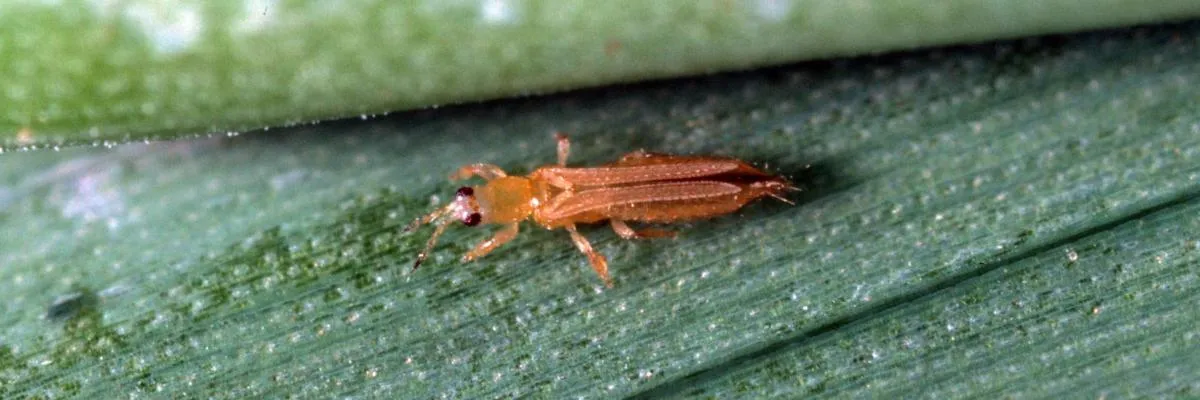
Thrips are pests that can distort roses. These tiny insects embed themselves in blossoms, where they feed on developing petals, which can cause brown streaks on the petals or lead to distorted flowers. Roses planted too close together seem to have the most problems with thrips. Insecticidal soaps may be less effective, as thrips hide inside the bud.
Another common problem is powdery mildew. This is a gray or white substance on top of leaves, which can weaken the plant. Downy mildew is similar, but found on the bottom of leaves and stems. Powdery mildew typically occurs when leaves become wet then exposed to warm weather.
References:
UC IPM/ Home, garden, turf, and landscape pests
UC IPM Pest Notes Library
UC IPM's Plant Problem Diagnostic Tool
Seasonal Landscape IPM Checklist
Return to News to Grow By