
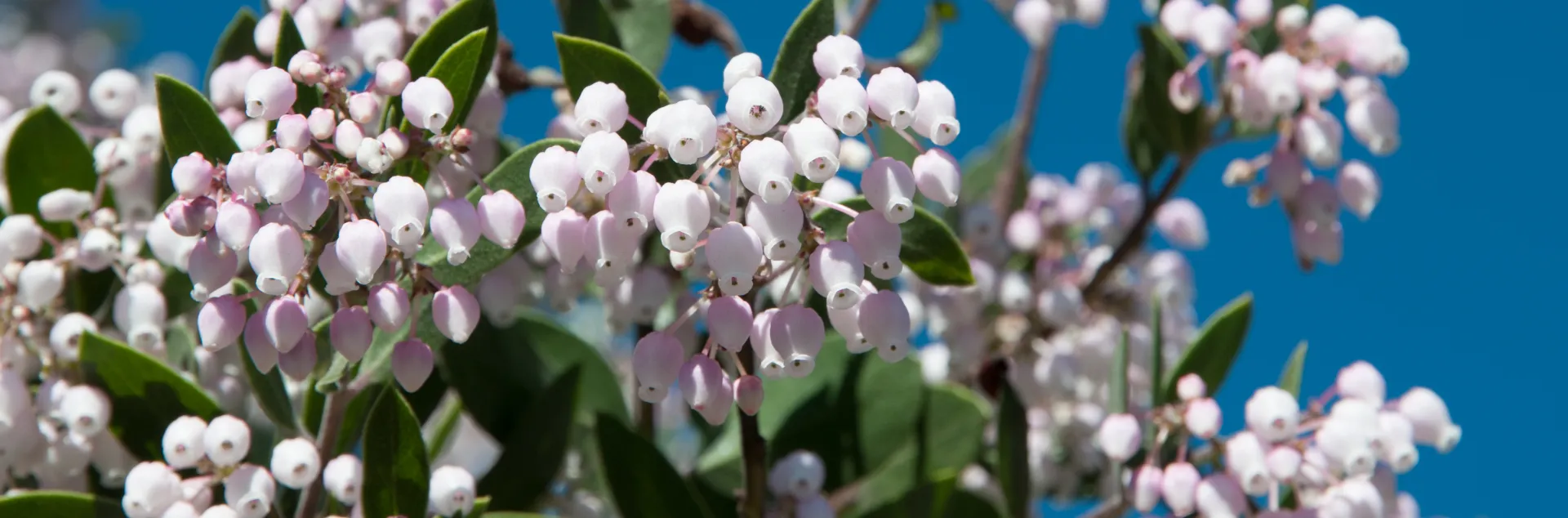
Plants native to California are adapted to our Mediterranean climate, which is characterized by cool, rainy winters and warm, dry summers. Therefore, the primary growing season for many species is winter, when it is moist. And the dormant period for many natives is then in the summer, when it is hot and dry.
Why prune?
General pruning techniques are the same for natives as non-natives. And the reasons to prune are also similar. There are many reasons to prune a native shrub or tree, such as:
- Control the size, i.e., the height and/or width of the plant
- Remove dead branches
- Remove branches that are rubbing against each other
- Improve the aesthetics of the plant
Pruning techniques
The California Native Plant Society has a series of articles titled Pruning Native Plants. Here are some of the recommendations from that series (see Pruning Native Plants Part 2 for more details):
- Tip pruning: shortening a small stem or twig that is up to a quarter inch in diameter, in order to control growth.
- Thinning cuts
When to Prune
In general, perennial plants are best pruned when they are dormant (although there are exceptions to that rule). This can mean, depending on the species, that California natives are pruned on a different schedule than non-native plants, as the natives are generally dormant in the summer.
The timing of native plant pruning can be quite different from non-native pruning, because the native plants are generally dormant in the summer, rather than in the winter. But the time to prune is dependent on the plant family. Pruning Native Plants Part 1 goes into detail about the timing of pruning, with the main advice being:
“Prune when the tree (or any woody plant) is dormant — AND when it is just about to start pushing out new growth.”
There are exceptions to summer dormancy, and Pruning Native Plants Part 4 discusses winter dormant (such as pines and coast redwoods) or winter deciduous trees (such as trees in the Acer family (maples), and the Rose family), all of which should be pruned in the winter.
Species Specific Timing
The article from the UC Marin Master Gardeners titled ‘Pruning Natives’, has species-specific information, which is summarized below, in order of recommended pruning time.
January
- Serviceberry (Amelanchier utahensis)
- Prized for: Berries; upright structure.
- Blooms on: Old wood
- What to prune: It is best to thin canes from the bottom of the plant. Avoid heading cuts at mid-cane. They may produce “witches broom”, i.e., sprout lots of new growth at the end, causing a proliferation of broom-like, crowded new growth.
- Spice Bush (Calycanthus occidentalis)
- Prized for: Lush foliage, red flowers, and seedpods.
- Blooms on: New wood
- What to prune: One approach is to keep the plant full by tip pruning only. Alternatively, a plant can be trained as a small, multi-trunk tree by using thinning and re-leadering cuts to select the strongest trunk members.
- Toyon (Heteromeles arbutifolia)
- Prized for: Bright red berries in November and December.
- Blooms on: Old wood
- What to prune: Prune for structure in August or September, although this will sacrifice berries for that year. Where there are multiple, crossing stems, remove the small ones (going all the way to the base and making a smooth cut). Remove old stems if they are dying. Toyon will die if frequently coppiced. Toyon is also susceptible to fire blight. Remove diseased branches and throw them in the trash. Do not place them in the green waste or compost.
- Timing:
- January: If interested in the berries, prune in January.
- August or September: If not interested in the berries
Winter or Early Spring
- Vine Maple (Acer circinatum)
- Prized for: Leaf detail and graceful structure.
- Blooms on: New wood
- What to prune: Use thinning cuts to reveal the structure. Pluck leaves in dense areas.
- Timing:
- Winter or very early spring (Ideal: February).
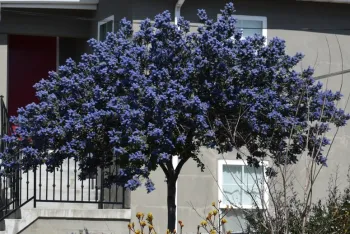
- California Lilac (Ceanothus spp.)
- Prized for: Dense flower cover and dark green leaves.
- Blooms on: Both old and new wood.
- What to prune: One approach is to lightly shear or tip-prune the top to maintain a desired size. Alternatively, thinning cuts may be used to open the structure, but be careful. Ceanothus back bud sparingly. Furthermore, ceanothus do not seal their pruning cuts well. Avoid cuts larger than one inch in diameter. Make structural cuts on smaller branches, ideally when the plant is younger.
- Timing:
- Prune after bloom - in the spring, after the rains have ended. Ceanothus is susceptible to apricot canker if pruned in wet weather.
Note: The plant may have two or more bloom cycles – first on old wood, and the second on new wood laterals.
- Prune after bloom - in the spring, after the rains have ended. Ceanothus is susceptible to apricot canker if pruned in wet weather.
- Coffeeberry (Rhamnus californica)
- Prized for: Deep green foliage.
- Blooms on: n/a
- What to prune: Use small thinning cuts and tip pruning to establish the structure and to control the form. Structure may not be clearly evident for up to five years after planting. Do not use heading cuts. Pull dead leaves by hand. Coffeeberry do back bud, which means that pruning can stimulate new growth on the plant.
- Timing:
- After the winter bloom, and the berries have faded.
- Can be lightly pruned all year.
June - July
- Currant, Gooseberry (Ribes spp.)
- Prized for: Flowers and dark green foliage.
- Blooms on: Old wood
- What to prune: Use thinning cuts to reveal the structure of the plant. The stems are not long-lived. Therefore, taking out only new stems could shorten the life of the plant. Keep the new stems that are growing in a desired direction and remove the others at the base. However, note that removing too many stems at once could kill the plant.
- Timing:
- June, July; early Summer, after the winter bloom and the spring growth.
August - October
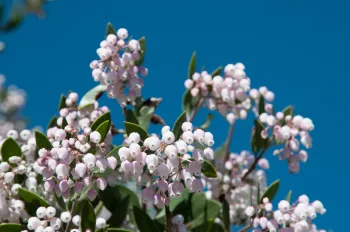
- Manzanita (Arctostaphylos spp.)
- Prized for: Delicate flowers and leaves, twisting trunk and branches, and shiny red bark.
- Blooms on: Old wood.
- What to prune: Manzanita rarely back bud. Use thinning and releadering (removing a portion of a branch where two or more branches split, to reduce the height, width, or density of a plant) cuts sparingly to reveal the structure and detail of the plant. Never use heading cuts.
- Timing:
- August, September, and October, before flower buds emerge.
- Flowers form after the summer dormant season on old wood and bloom from early winter to spring.
- Berries remain through the spring and summer
- Redbud (Cercis occidentalis)
- Prized for: Mass of pink flowers, as well as their twisting branches and trunk.
- Blooms on: Old wood
- What to prune: Use thinning cuts to reveal the branch and trunk structure, which is striking in the winter.
- Timing:
- August – October
Summary
The methods of pruning native plants may feel familiar to pruning non-native plants, but their timing can be very different. Understanding these seasonal needs is important for keeping your native plants healthy, beautiful, and thriving.
Resources
Pruning Natives: A detailed article about pruning native plants, with links to specific plants, published by the UC Marin Master Gardeners.
Pruning Native Plants: A detailed article about pruning techniques, as well as timing, for native plants, published by the California Native Plant Society.
Pruning Fundamentals: A detailed explanation of pruning in general, including explanations about the distinction between plants that flower on new wood versus old wood, and how that will determine how to prune. Published by the UC Marin Master Gardeners.