
Plants are astonishing! Even in their highly vulnerable state of immobility, they are capable of developing defenses to outside forces that threaten them. Around 500 million years ago, land plants first appeared and were small and moss-like, lacking true roots and stems. They required moist environments, mostly growing in bogs.
After about 100 million years of lying low, plants developed internal vascular systems of tubular structures that provided them with the ability to grow upright and transport water throughout their above-ground parts. This allowed them to escape the bogs and colonize drier areas.
As we march into spring and close in on the California dry months, we will be looking to fire up our hoses and irrigation systems to water our gardens. Free water delivery, also known as the rainy season, will no longer provide that much-needed water.
This article is a celebration of the resourcefulness and ingenuity of plants with respect to the various methods they’ve developed to hold on to their precious water, without which they would perish.
Before we explore the creative water-holding methods plants have developed, let’s first look at how water enters and exits plants. As shown in the graphic below, water enters the soil by either rainfall or irrigation. Then the plant draws the water upward through its roots and into its stems and leaves.
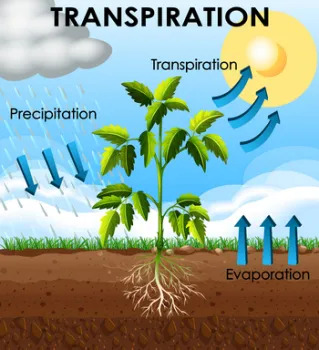
The process of water leaving the plant is called transpiration. Sometimes transpiration is likened to perspiration in humans. When we sweat, water exits our body through sweat glands, and it cools us while it rests on our skin.
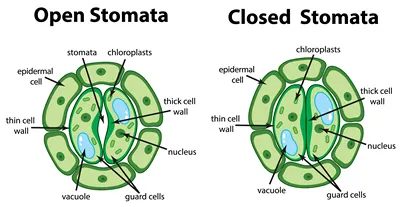
For plants, there are microscopic pores called stomata that are found mostly on the outer layer (epidermis) of the underside of leaves. These pores open to allow water to exit. Like perspiration, the water that transpires from the plant helps cool it.
The sun provides the pumping power that drives the cycle of water moving from the soil, upward through the plant’s tissues, and out through the leaves. The plant releases water vapor and oxygen molecules, while at the same time allowing carbon dioxide to enter the leaves as the water is exiting.
Here's the gripping part of the story.
Plants require water year-round. And in California, which has wet winters and dry summers, it’s common for plants to live in dry soil for seven months out of the year. It is well known that California has a mediterranean climate. But it is not so well known that it has the driest Mediterranean climate in the world. Since they can’t get up and move to a site with more water, California native plants, like plants from other mediterranean climates, have developed strategies to hold on to their water as tenaciously and as long as possible.
Dawn Kooyumjian, Volunteer Coordinator for the UC Master Gardener Program of Contra Costa County, teaches about how plants retain their water to make them less susceptible to drought. There’s a link at the end of this article to a webinar talk she gave in 2020 on this very subject. Dawn talks about two main strategies plants employ to hold on to water. One strategy is drought-resisting, and the other is drought-evading.
The following plant characteristics are very often present in plants that resist drought:
- Tough, leathery leaves that resist dehydration
- Waxy coating on leaves
- Often evergreen
- Stomata regulate the frequency and duration of opening, staying more closed to keep water from escaping
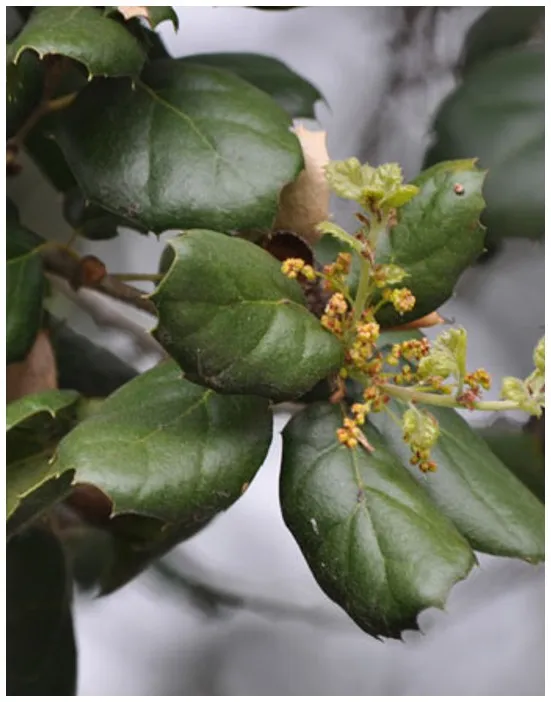
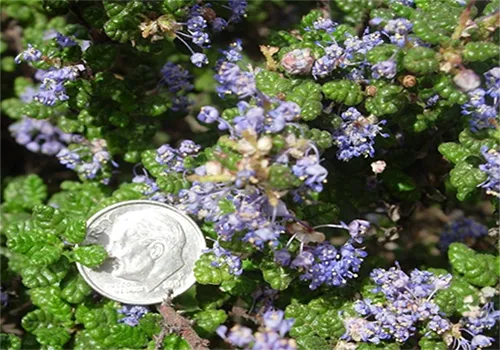
The plants that resist drought usually do so using methods whereby they prevent water loss by manipulating their leaves in some way. Most plants are made up of about 80-95% water by weight. Herbaceous, succulent, and soft-tissue plants often contain 90-95% water. Leaves are the site where transpiration happens. So, it makes sense that the methods of resisting water loss are usually associated with the leaves of the plants.
The following are more examples of strategies plants have developed to reduce the release of water from their leaves.
- Fuzzy, hairy, or velvety leaves
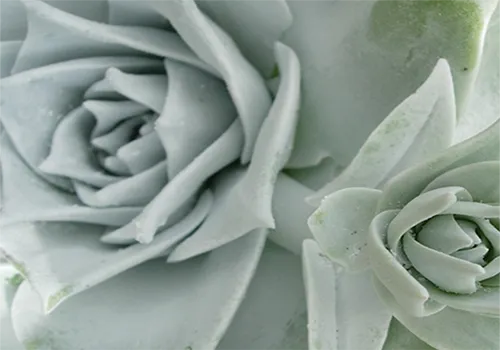
- Bluish or gray-colored leaves
- Fewer stomata on the leaves
- Covered with greyish, bluish, or whitish waxy coating
- Covered with a chalky (farinose) powder
- Tiny leaves
- Larger leaves in the spring; new leaves in the summer are smaller (known as seasonal dimorphism)
- Water storage in stems instead of leaves
- Changing leaf orientation with respect to the position of the sun throughout the day
Some plants use methods to avoid drought. The following are some of these strategies.
- Bulbs with underground food and water storage can remain dormant in the ground for years
- Summer deciduous, i.e., losing their leaves in the summer
- Annual plants that complete their entire life cycle in a year
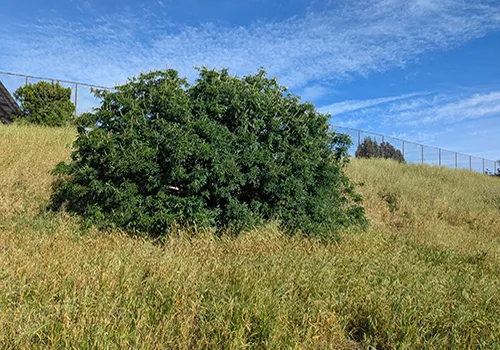
It seems that plants are consummate survivors. This is fortunate for us and all creatures on this planet, as we could not survive without them. And the native plants that have adapted to our long dry seasons in California are the perfect partners for populating our gardens. They have proven themselves worthy with their tenacity, adaptability, and resiliency. These drought resistors and evaders are excellent role models for water conservation in the landscape. Show us how it’s done, plants!
References: Watch this video: Plant Adaptations to Mediterranean Climates,presented by Dawn Kooyumjian