

Seed starting is an economical way to have healthy plants
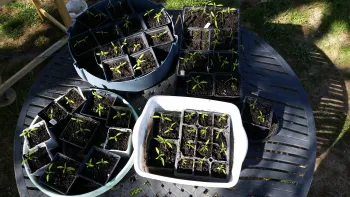
Late winter, cold nights, teasing sunshine; it’s an opportunity to get a jumpstart on summer vegetables, herbs, and flowers. Seed starting is an economical way to have healthy plants for our summer and fall gardens.
When starting plants from seed, the first thing to know is your last frost date. In our area there are so many growing zones and microclimates. The standard farmer’s advice is to plant after Mother’s Day. But this varies depending on altitude, sun exposure, hills and valleys.
Next, read the seed package. You get valuable information, such as:
- Number of weeks to start before last frost
- Temperatures for sprouting
- Depth to plant the seeds
- Number of days for germination
- Indoor vs direct seeding (some seeds, like carrots, don’t do well starting indoors and transplanting later)
- Seed preparation (sweet peas, for instance, may need to be soaked overnight)
- Date on seed package to check for freshness.
Reliable online information is helpful as well.
Begin by making sure that everything is clean! This may be the most important step in avoiding fungus and damping off (where the stem dies at the base). Start with good, fresh compost, potting soil, or starting mix. Organic, with its beneficial microbes, is preferred. Add vermiculite or perlite to aid in water retention as well as aeration. Mix 2 parts of good compost with 1 part vermiculite or perlite. This light, healthy mixture provides moisture, oxygen and nutrients.
Containers can vary from 1- to 4-inch pots, egg cartons, reused food containers or propagation trays. All need good drainage holes. Fill with compost mixture, lightly settled. Plant seeds (1 or 2 to each small pot) at the recommended depth (generally, plant seeds 2 times the depth of their size). Tamp lightly to secure them. Put pots into a flat tray and fill with ½ inch of water, preferably rain water. Tap water can inhibit germination. Watering from beneath will avoid disturbing just-planted seeds. Maintain a level of water to provide consistent moisture. Do not let them dry out.
Cover with plastic covers, or plastic wrap to maintain humidity until seeds germinate.
You may need heating pads to maintain a stable temperature. Peppers, for instance, prefer temperatures of 70 degrees or more. Using a south-facing sunny window with good exposure or the top of a refrigerator can provide warmth. Alternately grow-lights can prevent baby plants from becoming leggy and thin stemmed (avoid burning the leaves).
Plant labels are important. As you plant each pot or seed tray, be sure to record the seed type and planting date (i.e. Brandywine tomato 3/1/26). Time passes and memory will not suffice. Add the expected germination date as well.
For the first few weeks, fertilizer is not necessary. After the second true leaves appear, you may need to transplant to a larger container.
Starting seeds indoors extends the growing season by at least a month. This is extremely valuable if your microclimate is located in a shorter growing season in our foothills.
Author and photographer Nancy Bliss is a University of California Cooperative Extension Master Gardener of Tuolumne County. UCCE Central Sierra Master Gardeners can answer home gardening questions, from rainwater tanks to drought-resistant plants. Call 209-533-5912 in Tuolumne County, 209-754-2880 or fill out our Ask a Master Gardener questionnaire