UC ANR is committed to providing an accessible and inclusive web experience for all users. If you encounter an accessibility barrier or need content in an alternative or remediated accessible format, please contact anraccessibility@ucanr.edu.
The University of California, Davis, prides itself on teaching, research and public service. A few faculty members excel at all three (they're called triple threats) and distinguished professor James R. Carey of the UC Davis Department of Entomology and Nematology is one of them.
They are two who make a difference. Native pollinator specialist Robbin Thorp, emeritus professor of entomology, received the 2015 Distinguished Emeritus Award and Hugh Dingle, emeritus professor of entomology, received an Edward A.
"Where do bees get red pollen?" we were asked. "We've seen bees packing blood-red pollen at the entrance to a hive." Well, one flower that yields red pollen is rock purslane (Calandrinia grandiflora). It's a drought-tolerant perennial, a succulent.
Lots of youngsters received teddy bears as holiday gifts. But native pollinator specialist Robbin Thorp, emeritus professor of entomology at UC Davis, received a teddy bear, too. Of sorts.
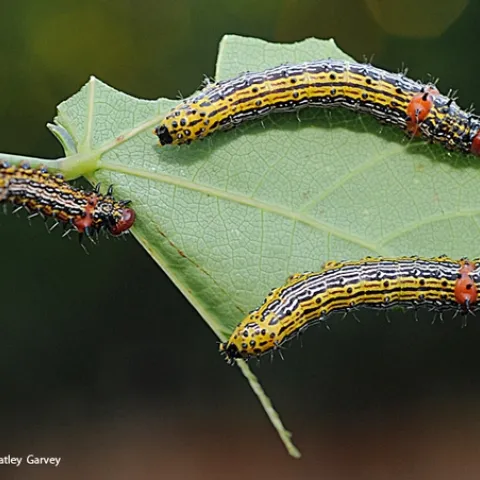
What's that? When award-winning photographer Teresa Willis of Vacaville encountered a red caterpillar on a dirt road at about 6000 feet in a canyon north of Paradise Valley, Nev., she did what photographers do--she captured an image of it.
It's a honey of a book. Honey bee expert Norman Gary, emeritus professor of apiculture at the University of California, Davis, is the author of a newly published book on beginning beekeeping titled Honey Bee Hobbyist: The Care and Keeping of Bees.
Many beekeepers keep bees, but Norman Gary wears them. Gary, who received his doctorate in entomology (apiculture) from Cornell University, served as a professor at the University of California, Davis for 32 years, retiring in 1994.
The female Greater Wax Moth (Galleria mellonella) is a sneaky creature. She flies around bee hives at night and when the opportunity presents itself--as it often does--in she goes to lay her eggs. The egg hatch into larvae, which munch and crunch just about everything in sight.
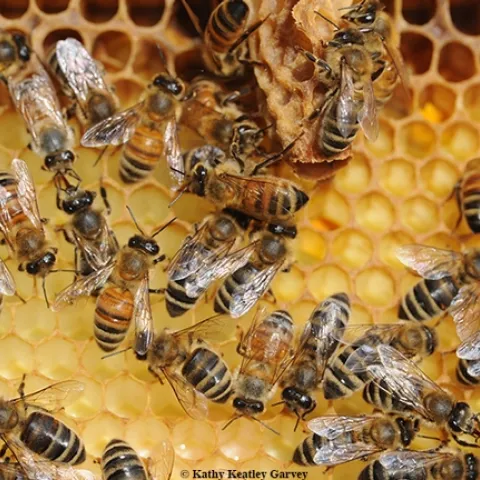
What's not to love about a baby bee? At one day old, the worker (female) bees are exquisite little creatures. Helpless, really. They can neither flee nor fight; they cannot fly and they cannot sting. No venom. That will come later. They're all big eyes, fluffy hair and downy softness.