UC ANR is committed to providing an accessible and inclusive web experience for all users. If you encounter an accessibility barrier or need content in an alternative or remediated accessible format, please contact anraccessibility@ucanr.edu.
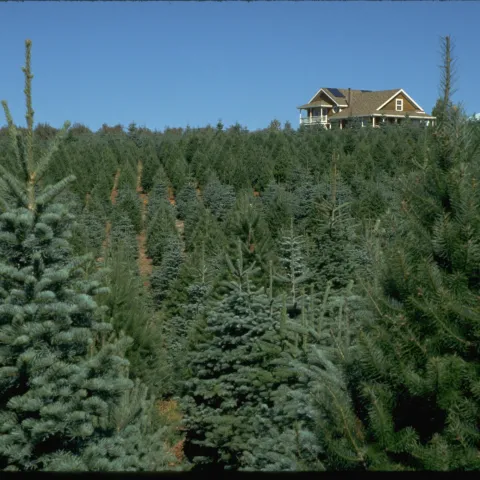
Christmas tree production has become a lucrative farming business in the foothills attracting more and more growers. The Emeritus Advisor, Lynn Wunderlich, has previously had worked with farms to determine more resilient species and completed a Christmas Tree Cost Study 2005.
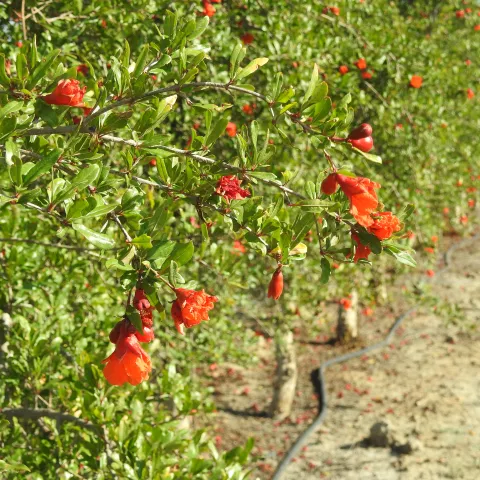
Pomegranates grow naturally as a bushy shrub or as a small tree-if trained, they may grow 15 to 20 feet high. The tree is deciduous in interior and desert regions, but in coastal areas may lose only a portion of its leaves in winter.
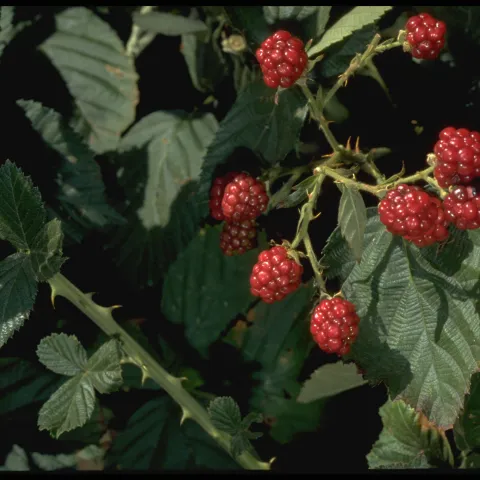
Raspberry and Blackberry, Fruit & Nuts Research & Information Center, UC Davis Blackberry varieties do best on sunny slopes. They should be planted 4 to 5 feet apart in rows 10 feet apart and canes trained on 4 foot high, 2 wire trellis. Raspberry plantings do best on cool North slopes.
Access to agricultural resources, cost studies, pest management, and post harvest information relevant to growers, shippers, marketers, carriers, distributors, retailers, processors, and consumers of fresh horticultural crops is linked to on this page.
The foothills of the Sierra Nevada have a diversity of growing regions. Throughout the region, farmers have been successful in growing many different types of agricultural commodities.
Utilizing the expansive network of UCCE Master Gardener Volunteers to provide guidance to small parcel owners, local jurisdictions, NGOs, home owners associations, and interested others on revegetation/reforestation after tree mortality in the Sierra Nevada.
Agenda and Logistics Flyer Abstracts on Coping with Climate Change in the Sierran Systems, Incline Village, Nevada. The Tahoe Basin and Climate Change: Coping with Climate Change in Sierran Systems: Incorporating Climate into Land and Resource Management and Developing Adaptation Strategies.