UC ANR is committed to providing an accessible and inclusive web experience for all users. If you encounter an accessibility barrier or need content in an alternative or remediated accessible format, please contact anraccessibility@ucanr.edu.
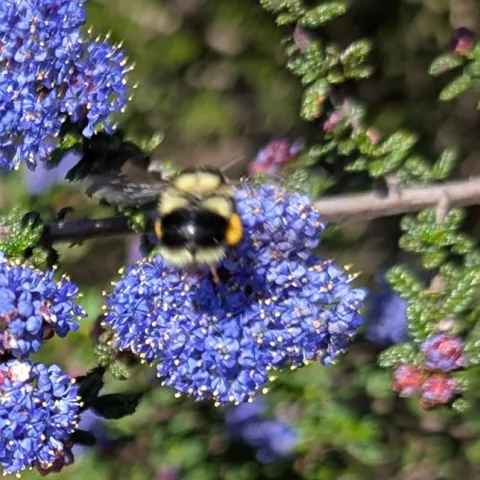
Ceanothus is a large genus of diverse, versatile and beautiful North American species in the buckthorn family, Rhamnaceae. Many are native to California, some endemic to Sonoma County. The genus includes over 60 shrubs, prostrate or mounding, often from 1-6 ft. high, although native C.
Known as chaparral broom, or more commonly coyote brush, Baccharis pilularis is part of the sunflower family (Asteraceae), even though it looks nothing like a sunflower.
Garrya elliptica, commonly called silktassel or coast tassel bush, is prized for its catkinslong, pendent flowersthat cascade from branch tips among dense, green leaves in winter when little else is in bloom. This substantial, long-lived, shrub is also attractive when not in flower.
Calamagrostis x acutiflora, commonly called feather reed grass, is a dramatic ornamental grass useful in mass plantings or as a strong vertical accent in a perennial bed.
Perovskia is neither Russian nor sage; rather, it is native to southwestern and central Asia, Afghanistan to Tibet. It is a member of the Lamiaceae (mint) family, as are the true sages in the genus Salvia. It was probably first called sage because its crushed foliage smells sage-like.
Some oreganos are meant to savor and season foods while others are meant to admire. Originating in areas around the Mediterranean Basin, both types have identical cultural needs and do well in Sonoma County with its similar climate.
Helianthemum nummularium, commonly called sunrose, is one of the very few low-growing, sun-loving, evergreen shrubs for the garden. Plants reach about 1 ft. tall but spread 2-3 ft. wide.
Of all of the California native plants suitable for garden use, the genus Arctostaphylos, commonly called manzanita, is one of the most adaptable. (Manzanita means little apple in Spanish, so named for the small fruits.
Hellebores are easy-to-grow perennials treasured in Sonoma Countys Mediterranean climate for a profusion of winter and early spring blooms that keep gardens flowering year-round.