UC ANR is committed to providing an accessible and inclusive web experience for all users. If you encounter an accessibility barrier or need content in an alternative or remediated accessible format, please contact anraccessibility@ucanr.edu.
Sharpen your pruners with a file regularly. Photo: L Stiles Good tools need regular care to keep them working properly and safely. Cleaning your tools is also important to prevent the spread of disease-causing pathogens.
When it comes to creating defensible space, the significance of proper plant and landscape maintenance cannot be overemphasized. Poorly maintained landscapes can easily become fire hazards regardless of which plants are grown.
> How they work > Where pesticides come from > What's in them > Toxicity levels > Types of pesticide formulations Many people associate pesticides only with synthetic chemicals, but a pesticide is any material used to control, prevent, kill, suppress, or repel pests.
> Reading pesticide labels > Before you start > Using & storing garden chemicals > Keeping pesticides out of our waterways > Disposing of pesticides & fertilizers If a pesticide is needed, select one that is: Effective against your pest Poses the least risks to human health and the environment Co...
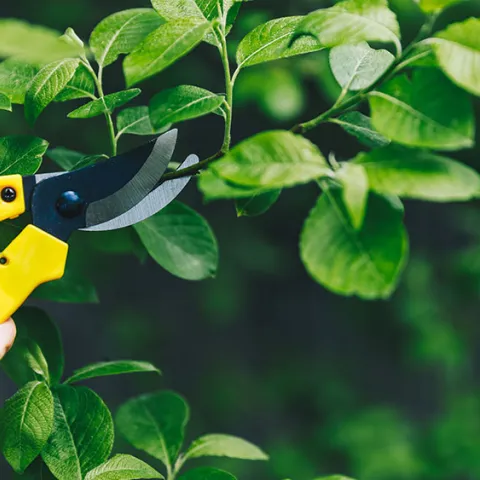
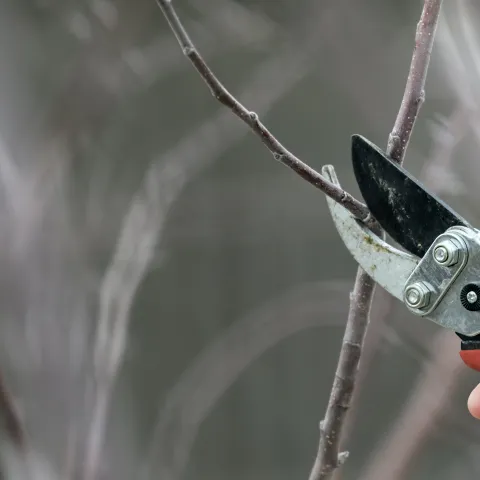
Here are recommended tools and basic pruning techniques for maintaining the health of a plant and for accentuating key attributes, such as leaves, bark, branch structure, flowers, fruit, or other desirable characteristics. Bypass pruners or shears BYPASS SHEARS Bypass shears are like scissors.
Because pruning cuts are wounds, it is important to make cuts in a manner that increases the likelihood that the wounds will seal and maintain the health of the plant.
Hydrangea. Photo: Annie Spratt, Unsplash This section covers flowering trees and shrubs that have been introduced to Marin and other California counties as a result of European contact. These tend to enter dormancy when days shorten and temperatures cool.
Toyon. Photo: PxHere Native plants are plants that grew in Marin and other California counties before European contact. Non-native plants are plants that have been introduced to Marin and other California counties as a result of European contact.
> Three zones of defensible space > Guidelines for plant spacing > Woodpiles, decks, tanks, & other fire hazards > Choosing plants for a fire-smart landscape > Fighting fire on a slope > Fire-smart home landscape design examples To create defensible space, think about your garden in three zones.