A Natural Solution for California's Herds: African Catfish Peptides

California's cattle producers and agricultural communities are all too familiar with the rising challenge of antibiotic resistance, making common bacterial infections harder to treat in livestock. But imagine a future where we could tackle these infections with a natural, powerful alternative. Our research points to just that: antimicrobial peptides (AMPs) found in African catfish.

We're really excited about these peptides because African catfish thrive in pathogen-rich freshwater, naturally producing these robust immune compounds in their skin mucus as a defense. This natural origin makes them highly appealing alternatives to synthetic drugs.

Predicted Safety and Potent Action

One of the most compelling aspects of these AMPs is their predicted safety for mammals. Our initial computer analyses suggest that various catfish AMPs are generally recognized as safe (GRAS). We predict they'll be absorbed in the human intestine without causing liver, brain, or heart toxicity. Furthermore, lab tests on a promising peptide, NACAP-II, confirmed it was non-hemolytic, meaning it didn't damage rabbit red blood cells—a strong indicator of its potential safety for mammalian cells.

Beyond safety, these peptides demonstrate effectiveness against problematic bacteria. One study revealed NACAP-II's strong activity against Extended-Spectrum Beta-Lactamase (ESBL)-producing Escherichia coli—a critical concern for both animal and human health due to its resistance to many common antibiotics. Another peptide, ACAP-IV, also showed antibacterial activity against E. coli and Staphylococcus aureus. We believe these AMPs work by directly disrupting bacterial cell membranes, a mechanism that makes it harder for bacteria to develop resistance compared to how they resist traditional antibiotics.


farmer kneeling among rows of newly planted seedlings
Site - County Office

Riverside County

Across California, the University of Californias 64 Cooperative Extension offices are local problem-solving centers. We are the bridge between local issues and the power of UC research. Our county-based staff is part of the community we live and work in the areas we serve.
View Site
Beatriz 2_post-fire recovery workshop.jpg
Site - County Office

Los Angeles County

UC Cooperative Extension develops and implements community-based educational programs that address the critical needs of the county's diverse and multiethnic population.
View Site
Master Gardener Great Tomato Plant Sale at Our Garden
Site - County Office

Kern County

*New Director Spotlight*Leonel Jimenez My name is Leonel Jimenez, and I am the Area Director for the University of California Cooperative Extension (UCCE) in Kings, Kern, and Tulare Counties.I am a first-generation American of Mexican descent and a direct product of my community, having been born…
View Site
Master Gardener Great Tomato Plant Sale at Our Garden
Site

Integrated Weed Management

**Update coming in 2019. Please feel free to browse the site as is and check back for updates. Thank you.** Integrated Weed Management Information coming soon. You can explore all of the Yellow Star Thistle options currently available.
View Site
Demonstration Garden Native Plant Bed
Site

UC Master Gardeners of Placer County

Save the Date: 39th Annual Mother's Day TourSunday, May 10, 2026, 10:00 am to 4:00 pm, Rain or ShineMaster Gardeners of Placer County strive to present accurate, impartial information to local gardeners, so they have the knowledge to make informed gardening decisions in regard to plant choices, soil…
View Site
A group of beef cattle grazing in a meadow
Site - County Office

San Benito County

UC Cooperative Extension San Benito County provides research-based programs in agriculture, natural resources, 4-H youth development, and community education.
View Site
Cover Crop Field
Site - County Office

Mariposa County

Across California, the University of Californias 64 Cooperative Extension offices are local problem-solving centers. We are the bridge between local issues and the power of UC research. Our county-based staff is part of the community we live and work in the areas we serve.
View Site
Site

California Nematology Workgroup

What Are Nematodes? Nematodes are predominantly tiny aquatic roundworms that thrive in nearly all environments on Earth. They are the largest group of multicellular species in the animal kingdom, making up about four-fifths of animal life on Earth. Some species are parasites of humans or animals.
View Site
UC Master Gardeners of Placer County: Article

California Native Plant List at the South Placer Fire Station 18

April 2, 2026
This list represents the native plants planted at the South Placer Fire Station 18 in December 2025 that are generally available, low in water use, and easy to grow in the garden.Common NameBotanical NameSizeFlower ColorWestern RedbudCercis occidentalis10-20’H x 10-15’W Bright PinkPigeon Point Coyote…
View Article
Climate Smart Agriculture in San Diego County: Page

2025 Workshop Details

Voluntary Conservation and Land Management Assistance WorkshopWednesday, March 26, 2025, 4:00PM - 6:00 PMIn-person: San Diego County Farm Bureau, 420 S Broadway, Escondido, CA 92025Sponsors: County of San Diego, University of California Agriculture and Natural Resources, Resource Conservation District of…
View Page
Primary Image
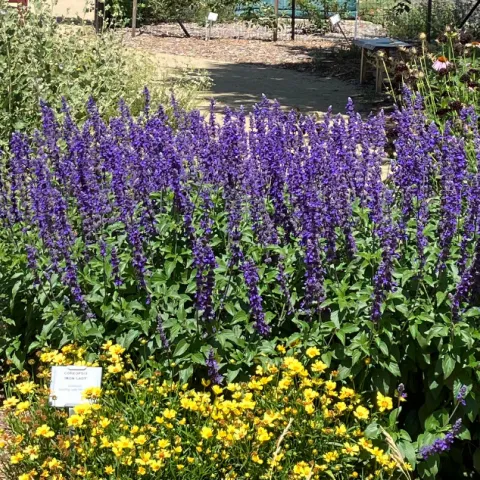
Purple salvia blossoms atop green foliage.
UC Master Gardeners of Tuolumne County: Article

Central Sierra: Salvias - Easy Plants for Your Foothill Garden

April 2, 2026
By Angela Johnson
Salvias - Easy Plants for Your Foothill GardenBy Nancy Piekarczyk, UC Master Gardener Volunteer in Tuolumne County You want your yard to look nice—even if you think you’re not the greatest gardener, or you don’t want to pay for lots of water, or you don’t have much time. One of the best “easy” foothill…
View Article
Primary Image
Mauve colored lenten rose blossoms with green leaves.
UC Master Gardeners of Tuolumne County: Article

Central Sierra: In Praise of the Lenten Rose

April 2, 2026
By Angela Johnson
In Praise of the Lenten Roseby Jim Bliss, UC Master Gardener Volunteer in Tuolumne County Winter can be a cheerless, colorless time, especially in the garden. Fortunately, there is hope in the garden during this bleak time (even though this winter has seemed mostly like spring). Looking for a little…
View Article
UC Master Gardener Coordinators: Page

Copyright Guidelines

OverviewAs both creators and users of images, presentations, videos, and illustrations it is important that we understand how to responsibly use them under US copyright law. Copyright, a form of intellectual property law, protects original works of authorship including literary, dramatic, musical, and…
View Page
Primary Image
Small plant pots filled with soil and a pumpkin seed.
UC Master Gardeners of Tuolumne County: Article

Central Sierra: Economies of a Seed

April 2, 2026
By Angela Johnson
Economies of a Seedby Julie Silva, UC Master Gardener in Tuolumne County, CA Are you a combination of both picky and frugal? Do you know exactly what you want and enjoy hunting for the best price? Are you not satisfied with the choices on the shelves? Going shopping anywhere today makes all of us feel…
View Article
Primary Image
Syrphid fly on flower

April Fool! It's a Syrphid Fly!

April 1, 2026
By Kathy Keatley Garvey
 It's April Fool's Day and a good time to ask: "How many of you have been fooled thinking a syrphid fly is a bee?"To the untrained eye, everything that lands on a flower is a bee! However, syrphid flies, also known as hover flies or flower flies, are easily distinguished for honey bees:Syrphid…
View Article