
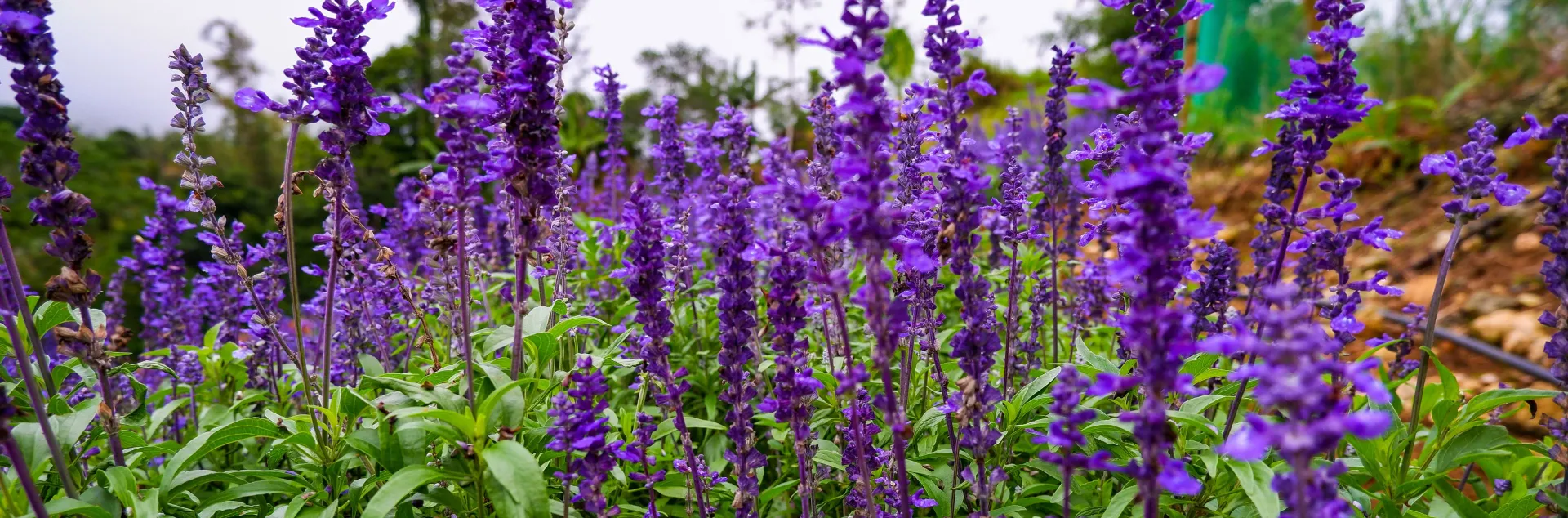
Salvias - Easy Plants for Your Foothill Garden
By Nancy Piekarczyk, UC Master Gardener Volunteer in Tuolumne County
You want your yard to look nice—even if you think you’re not the greatest gardener, or you don’t want to pay for lots of water, or you don’t have much time. One of the best “easy” foothill plants for you is autumn sage, Salvia greggii. These tough plants are usually available for very little money at various local garden group plant sales. For instance, the Tuolumne County Master Gardener plant sale is on Saturday, May 2nd at the demonstration garden on campus at Cassina High School (the Dome).
Once established, salvia needs almost no water. They’re hardy in USDA zones 6-9, have green foliage all year unless you’re in a very cold area, grow from 2-3 feet tall, are available in many flower colors and bloom in the fall. The only maintenance they need is to be cut back once in the fall after they’ve finished blooming.
If you buy a plant at one of the local plant sales, put it in the ground making sure excess water can drain away in the winter. Salvia will need to be watered to become established, which may take several months. Once a week watering should be plenty after the first few weeks. Water about every 2 weeks after it starts growing well.
If you have no automatic irrigation system and want to use the smallest amount of water, fill a 1-gallon plastic milk jug while waiting for water to warm up for something else. Puncture low on the jug with a push pin. Place the jug so that at least part of the water goes on the soil where the salvia is planted, but some of it goes out away from the original soil so both the current roots and the area adjacent to them are watered. When the jug is empty put the push pin back in the hole and bring it back in to refill for the next watering. This works very well to conserve water for any plants far from a spigot.
After the first year, in most of the county, salvia may only need to be watered in August/September. It is native to the desert southwest from Texas to Mexico and is adapted to monsoon conditions which is why it blooms in the fall. If you have very sandy or decomposed granite soil, which does not hold very much water, more frequent but less volume watering may be required.
The only other thing you need to do to keep this plant looking healthy over time is to cut it back significantly. After it stops blooming in the late fall, cut it to six to eight inches tall. The following year, it will branch into a low growth form. This prevents it from becoming woody and dense in the center, reducing a fire hazard.
Cleveland sage, Salvia clevelandii, is a 3-foot-tall bush that blooms in spring with blue flowers on 6-inch stalks above the plant. It’s hardy in USDA zones 8 and above. No irrigation is required once established and the only activity required is to remove dead flower stalks. It is established much like autumn sage except that, since it is a California native, it does not need extra water in August/September.
‘Bee’s Bliss’ sage is a full sun ground cover with grey foliage and racemes of blue flowers in early spring in zones 7-9. It will spread by runners to eventually cover a very large area and would be a good candidate for banks. It can easily cover an area of 20 square feet, but it would take a significant period of time to achieve that coverage. It is not very hard to control and is not spread by seed, only by runners. If you want more plants, they’re easy to dig up and move to additional areas. Once established it requires only winter rain.
Another very nice plant for USDA zones 8-10 is white sage, Salvia apiana. It makes a great focal point and looks good all year (below heavy snow areas). The trick to growing this salvia is to plant it in an area with good drainage (loves slopes) as soon as the rains start in the fall.
Nancy Piekarczyk is a University of California Cooperative Extension Master Gardener of Tuolumne County. UCCE Central Sierra Master Gardeners can answer home gardening questions, from rainwater tanks to drought-resistant plants. Call 209-533-5912 or fill out our questionnaire online. Want to learn more about UC Master Gardeners? Visit our webpage , find us on Facebook, or on the radio at kaad-lp.org or 103.5 FM on Motherlode Community Radio.