
California's cattle producers and agricultural communities are all too familiar with the rising challenge of antibiotic resistance, making common bacterial infections harder to treat in livestock. But imagine a future where we could tackle these infections with a natural, powerful alternative. Our research points to just that: antimicrobial peptides (AMPs) found in African catfish.
We're really excited about these peptides because African catfish thrive in pathogen-rich freshwater, naturally producing these robust immune compounds in their skin mucus as a defense. This natural origin makes them highly appealing alternatives to synthetic drugs.
Predicted Safety and Potent Action
One of the most compelling aspects of these AMPs is their predicted safety for mammals. Our initial computer analyses suggest that various catfish AMPs are generally recognized as safe (GRAS). We predict they'll be absorbed in the human intestine without causing liver, brain, or heart toxicity. Furthermore, lab tests on a promising peptide, NACAP-II, confirmed it was non-hemolytic, meaning it didn't damage rabbit red blood cells—a strong indicator of its potential safety for mammalian cells.
Beyond safety, these peptides demonstrate effectiveness against problematic bacteria. One study revealed NACAP-II's strong activity against Extended-Spectrum Beta-Lactamase (ESBL)-producing Escherichia coli—a critical concern for both animal and human health due to its resistance to many common antibiotics. Another peptide, ACAP-IV, also showed antibacterial activity against E. coli and Staphylococcus aureus. We believe these AMPs work by directly disrupting bacterial cell membranes, a mechanism that makes it harder for bacteria to develop resistance compared to how they resist traditional antibiotics.
Central Sierra: Spring Shrubs Bring Alluring Fragrance to the Air
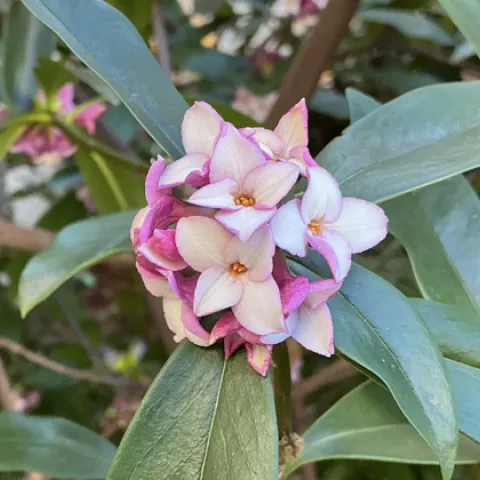
Scents of Spring Shrubs
Ahhhh…Spring! Our California foothills spring flowering shrubs are not only stunning to look at but also provide alluring fragrances. In planning for the future, here are some of the most fragrant early blooming spring shrubs that you can add to your garden, which provide the promise that winter will soon be ending.
Let’s start with common Lilacs, Syringa vulgaris. There is nothing quite like the air being perfumed by these springtime favorites. They are also loved for their toughness and reliability. Once established, these shrubs can live for over 100 years. The floral stems are great for cutting and bringing inside to enjoy. Pollinators, such as butterflies, seek out lilacs. The blooms usually come in a fluffy variety of purple colors, pale to very dark. There are also varieties of white, cream, and pink.
Even though it is not in the same botanical family as common Lilacs, you may want to consider getting California Wild Lilac, Ceanothus spp. A native, drought tolerant, fragrant, perennial shrub, it can also act as a ground cover. This beloved native shrub turns the California hillsides blue. They do well in infertile conditions, have natural nitrogen fixing abilities and do not need feeding. They appreciate our Mediterranean climate. Bees and butterflies love them!
Who could resist the early blooms and fragrance of the Sweet Box plant, Sarcococca? Its tiny white flowers, with vanilla scent, fills the air for weeks in February and March. Dark green leafed, this evergreen ornamental shrub is outstanding. It thrives in partial shade, is tolerant of tree roots, low irrigation, and does well in a large container. Another plus, deer don’t seem to like really them.
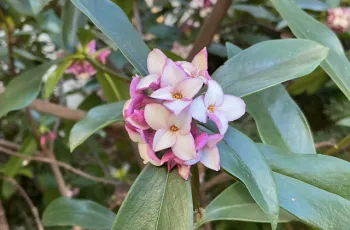
The intoxicating scent of Winter Daphne, Daphne odora, will make guests at your spring garden say, “What smells so good?” Clusters of the scented pink and white flowers open gradually, but when they do, you immediately know Daphne is blooming. The fragrance is exquisite. Good drainage is key in successfully growing this shrub. Add ample compost to lighten the soil, so it will drain quickly. Ideal in large pots, situate it in partial shade near your door, so you can enjoy its delightful floral perfume as you are leaving or coming home.
Once established, the luscious four-petaled, citrus scented white blooms of the native California Mock Orange, Philadelphus lewisii, can beautifully frame a garden gate or trellis. This native plant was discovered and collected in 1806 by Lewis & Clark during their famous overland expedition to the West. It is a tough, drought tolerant shrub that needs little supplemental water. The early season nectar supports pollinators including bees, birds, and insects. The arching woody branches provide nesting cover for birds. Easy to grow, plant in full or partial sun, using average garden soil.
If one of your gardening goals is to experience a scent-sational, springtime yard, consider adding some of these uniquely fragrant shrubs. The moment you get a delightful whiff, you’ll wonder how you ever lived without them.
This article by UC Master Gardener of El Dorado County Pauline Atkins originally appeared in the Mountain Democrat in March 2026.