A Natural Solution for California's Herds: African Catfish Peptides

California's cattle producers and agricultural communities are all too familiar with the rising challenge of antibiotic resistance, making common bacterial infections harder to treat in livestock. But imagine a future where we could tackle these infections with a natural, powerful alternative. Our research points to just that: antimicrobial peptides (AMPs) found in African catfish.

We're really excited about these peptides because African catfish thrive in pathogen-rich freshwater, naturally producing these robust immune compounds in their skin mucus as a defense. This natural origin makes them highly appealing alternatives to synthetic drugs.

Predicted Safety and Potent Action

One of the most compelling aspects of these AMPs is their predicted safety for mammals. Our initial computer analyses suggest that various catfish AMPs are generally recognized as safe (GRAS). We predict they'll be absorbed in the human intestine without causing liver, brain, or heart toxicity. Furthermore, lab tests on a promising peptide, NACAP-II, confirmed it was non-hemolytic, meaning it didn't damage rabbit red blood cells—a strong indicator of its potential safety for mammalian cells.

Beyond safety, these peptides demonstrate effectiveness against problematic bacteria. One study revealed NACAP-II's strong activity against Extended-Spectrum Beta-Lactamase (ESBL)-producing Escherichia coli—a critical concern for both animal and human health due to its resistance to many common antibiotics. Another peptide, ACAP-IV, also showed antibacterial activity against E. coli and Staphylococcus aureus. We believe these AMPs work by directly disrupting bacterial cell membranes, a mechanism that makes it harder for bacteria to develop resistance compared to how they resist traditional antibiotics.

Register now! May 7, 2026 field day at UC Davis

April 20, 2026
By Mark E Lundy
The agenda for the 2026 UC Small Grains and Alfalfa/Forages Field Day is set and registration is now open.May 7th, 2026 7:30 AM - 1:30 PM at the UC Davis Field Facility Continuing Education Units (CEU) and lunch are available. Register here: https://surveys.ucanr.edu/survey.cfm…
View Article
UC Master Gardener Program of Contra Costa County: Article

Guide to Growing Tomatoes - Common Tomato Disorders

April 18, 2026
By UC Master Gardener Program of Contra Costa County
Tomato Growing Tips (Part 2 of 2)Here are some of the more common tomato disorders that result from nonliving (abiotic) causes often attributable to environmental or cultural factors, or simply to the plant’s genetic makeup. ProblemsBlossoms fall off, plant fails to set fruit.Probable causes: Night…
View Article
Primary Image
Urban treescape
Napa Master Gardener Column: Article

Planting for the Future - Selecting Trees for Climate Change

April 18, 2026
By Gail Pavlosky, UC Master Gardener of Napa County.Urban trees provide shade, improve air quality and help moderate temperatures in California’s cities. Yet as climate change brings hotter weather and longer periods of drought, many commonly planted tree species may struggle.  In a recent lecture, Dr…
View Article
UC Master Gardeners of Tulare and Kings County: Article

Nutsedge or Nutgrass Can Drive You Nutty!

April 18, 2026
By Rosie Bonar, UC Master Gardener of Tulare/Kings County
Nutsedge is a common weed that can be found in lawns, gardens, and flower beds of the Central Valley and throughout California. It is sometimes referred to as nut grass, although it is not a grass. The saying "sedges have edges" will help you differentiate between a grass and a sedge. Description …
View Article
Event Primary Image
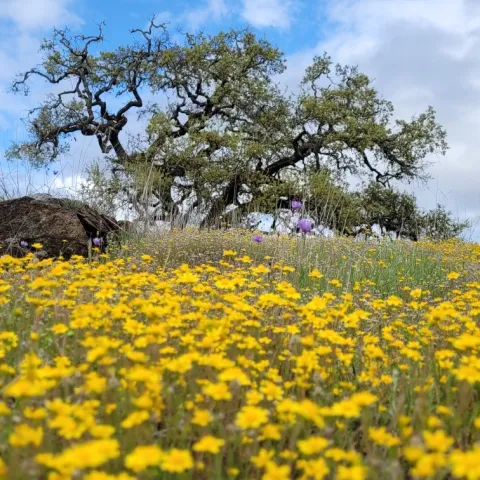
Spring wildflowers in grassland and oak tree
Hopland Research and Extension Center: Event

Workshop: Identifying and Appreciating the Native and Naturalized Grasses of California

Event Date
May 29, 2026

This class is now full.Grasses are Fun and Challenging to Identify!Build your skills:Understand California’s grassland ecologyFamiliarize yourself with grass-specific terminologyIdentify grasses by using the Jepson eFlora dichotomous keyRecognize the basic groups and common speciesBuild a “collection” of…
Hopland Research and Extension Center
View Event
Primary Image
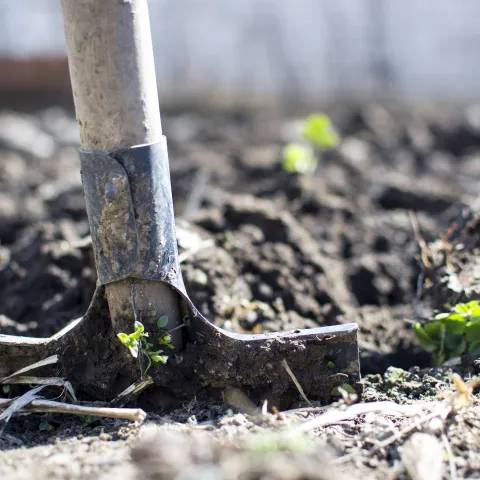
Shovel with the shovelhead buried in dirt.
UC Master Gardeners of Tuolumne County: Article

Digging for Gold in Tuolumne County

April 18, 2026
Shopping for a new home is exciting. More square footage, bedrooms, baths, a huge kitchen, nicer appliances, and floor coverings will add to your family’s comfort. However, there is something very important that has been forgotten, the Shovel Test.What is the shovel test? There are inspections, forms,…
View Article
Primary Image
""
UC Master Gardener Coordinators: Article

Coordinators Monthly Newsletter - April 2026

April 17, 2026
By Barbra Braaten
This month's coordinator newsletter features a program spotlight on award-winning projects from the Search for Excellence, a resource spotlight on accessibility, and a training spotlight on statewide evaluation. We also highlight upcoming trainings and events in the "What's Happening" section. Read the April…
View Article
Primary Image
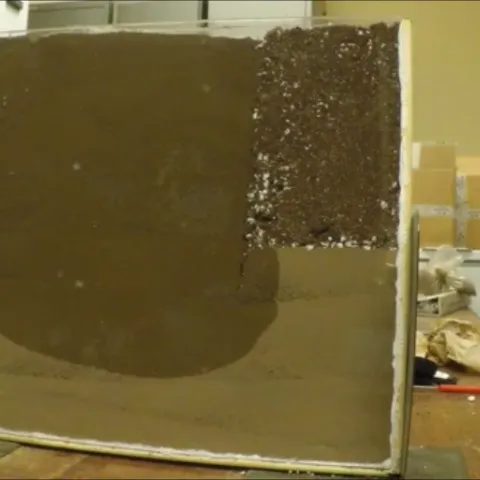
Water moving through soil
Topics in Subtropics: Article

LEACH! Avocados and Most Coastal Crops Affected By Salt

April 17, 2026
By Ben A Faber
High value coastal crops are prone to salt damage from salts in well waters, and in low rainfall years they are especially so. Avocado is especially prone to salt damage.  And the flowering period is one of the most sensitive.   Flowers are competing with leaves that have been hanging on for a…
View Article
Primary Image
""
UC Master Gardener Coordinators: Article

Coordinators Monthly Newsletter - March 2026

April 17, 2026
By Barbra Braaten
This month’s coordinator newsletter features a program spotlight on Lake County Tribal Health, a resource spotlight on plant sales and payment processing, and a training spotlight on avoiding conflict of interest. We also highlight upcoming trainings and events in the “What’s Happening” section. …
View Article