A Natural Solution for California's Herds: African Catfish Peptides

California's cattle producers and agricultural communities are all too familiar with the rising challenge of antibiotic resistance, making common bacterial infections harder to treat in livestock. But imagine a future where we could tackle these infections with a natural, powerful alternative. Our research points to just that: antimicrobial peptides (AMPs) found in African catfish.

We're really excited about these peptides because African catfish thrive in pathogen-rich freshwater, naturally producing these robust immune compounds in their skin mucus as a defense. This natural origin makes them highly appealing alternatives to synthetic drugs.

Predicted Safety and Potent Action

One of the most compelling aspects of these AMPs is their predicted safety for mammals. Our initial computer analyses suggest that various catfish AMPs are generally recognized as safe (GRAS). We predict they'll be absorbed in the human intestine without causing liver, brain, or heart toxicity. Furthermore, lab tests on a promising peptide, NACAP-II, confirmed it was non-hemolytic, meaning it didn't damage rabbit red blood cells—a strong indicator of its potential safety for mammalian cells.

Beyond safety, these peptides demonstrate effectiveness against problematic bacteria. One study revealed NACAP-II's strong activity against Extended-Spectrum Beta-Lactamase (ESBL)-producing Escherichia coli—a critical concern for both animal and human health due to its resistance to many common antibiotics. Another peptide, ACAP-IV, also showed antibacterial activity against E. coli and Staphylococcus aureus. We believe these AMPs work by directly disrupting bacterial cell membranes, a mechanism that makes it harder for bacteria to develop resistance compared to how they resist traditional antibiotics.
Primary Image
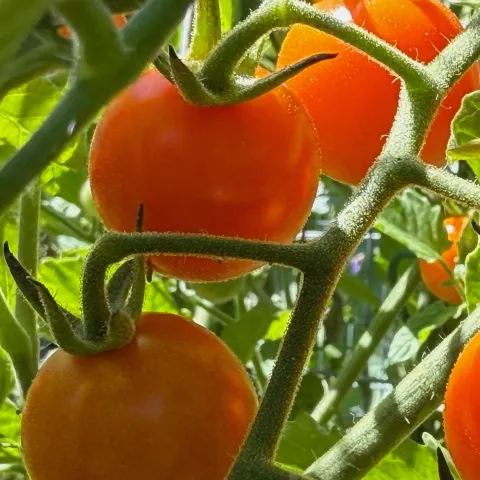
sungold cherry tomatoes growing on a tomato plant
UC Marin Master Gardeners: Article

Tomato time!

April 13, 2026
 Some people wait all year for a holiday.  Me, I wait all year for tomatoes in my garden.  Just the smell of the plant gives my heart wings.  Once they are in the ground, I talk to them daily to encourage fruit.  A blossom is cause for celebration.  It’s…
View Article
Event Primary Image
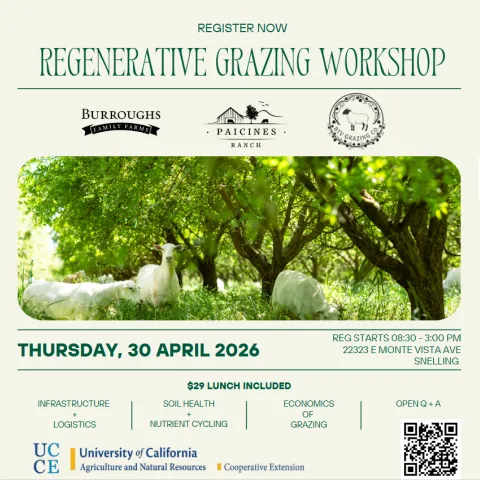
Regenerative Grazing Workshop flyer
Merced County Cooperative Extension: Event

Regenerative Grazing Workshop

Event Date
Apr 30, 2026

The workshop will teach about regenerative grazing with topics on livestock management considerations for grazing in orchards, economics of integrating livestock, soil health and nutrient cycling considerations of grazing, and more. 
Merced County Cooperative Extension
View Event
UC Master Gardeners of Placer County: Article

Seed Distance Chart

April 13, 2026
Vegetable Cycle Pollination Pollinator Isolation Distance Seed Longevity Saving Ease Direct Trans Notes Bean A Self   100’ 2-3 yrs easy D Lose vigor rapidly. Soybean A Self   100’ 2-3 yrs easy D   Beet/Chard B Cross Wind ½ mi 3-5 yrs * D Beets cross with chards. Broccoli/Kale/Cauliflower B…
View Article
Primary Image
water
Stanislaus County: Article

Evapotranspiration Report - 04/09/2026

April 13, 2026
By Sandi L Gudino
Please find the attached document to provide the previous week’s estimated water use report in terms of evapotranspiration for almonds, peaches, walnuts, established vineyard, alfalfa, and pasture in Stanislaus County. This report may be used as a guide in your irrigation schedule for the…
View Article
UC Rice Blog: Article

Stem Rot Monitoring Guidelines for the Mid Boot Stage

April 13, 2026
By Luis A Espino
Stem rot is a common rice pathogen present in all fields. The pathogen produces resting structures called sclerotia that survive in the soil after harvest. The sclerotia germinate in the spring and the pathogen infects tillers at the water level approximately when plants reach panicle initiation (45 to 50…
View Article
Primary Image
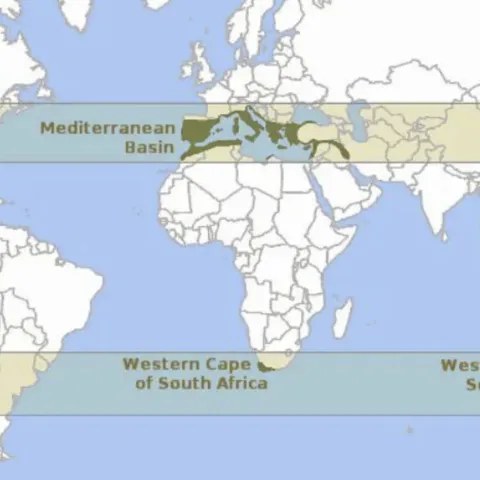
Map of the Mediterrean Climate areas
Over the Fence (Alameda County): Article

Decoding the mysteries of microclimates in Alameda County

April 12, 2026
By Patsy Babbitt
Have you ever wondered why you can't seem to grow beefsteak tomatoes in your Alameda City garden even though your friend in Livermore gets huge and wonderfully tasty ones? A big part of the answer relates to the different microclimates of each city. The University of California Agriculture and Natural…
View Article
Cooperative Extension Ventura County: Page

Afterschool and Enrichment Programs

Afterschool and Enrichment Programs4-H Afterschool and School Enrichment Programs is a special focus area within the California 4-H Youth Development Program. We partner with community youth-serving agencies to support quality afterschool environments. We provide support to existing …
View Page
UC Master Gardener Program of Contra Costa County: Event

Our Garden Talk - The Good, the Bad and the Bug-ly - OG2026

Event Date
Jun 24, 2026

Our gardens are alive with an abundance of small invertebrates, many of which play a crucial role in maintaining the health and balance of our home ecosystem. While these organisms are often seen as pests, sometimes prompting the use harsh chemicals for control, there are environmentally friendly…
UC Master Gardener Program of Contra Costa County
View Event