A Natural Solution for California's Herds: African Catfish Peptides

California's cattle producers and agricultural communities are all too familiar with the rising challenge of antibiotic resistance, making common bacterial infections harder to treat in livestock. But imagine a future where we could tackle these infections with a natural, powerful alternative. Our research points to just that: antimicrobial peptides (AMPs) found in African catfish.

We're really excited about these peptides because African catfish thrive in pathogen-rich freshwater, naturally producing these robust immune compounds in their skin mucus as a defense. This natural origin makes them highly appealing alternatives to synthetic drugs.

Predicted Safety and Potent Action

One of the most compelling aspects of these AMPs is their predicted safety for mammals. Our initial computer analyses suggest that various catfish AMPs are generally recognized as safe (GRAS). We predict they'll be absorbed in the human intestine without causing liver, brain, or heart toxicity. Furthermore, lab tests on a promising peptide, NACAP-II, confirmed it was non-hemolytic, meaning it didn't damage rabbit red blood cells—a strong indicator of its potential safety for mammalian cells.

Beyond safety, these peptides demonstrate effectiveness against problematic bacteria. One study revealed NACAP-II's strong activity against Extended-Spectrum Beta-Lactamase (ESBL)-producing Escherichia coli—a critical concern for both animal and human health due to its resistance to many common antibiotics. Another peptide, ACAP-IV, also showed antibacterial activity against E. coli and Staphylococcus aureus. We believe these AMPs work by directly disrupting bacterial cell membranes, a mechanism that makes it harder for bacteria to develop resistance compared to how they resist traditional antibiotics.

Primary Image
Headshot of Robyn Barker
UC Master Food Preserver: Article

Spotlight: Robyn Barker, 2025 MFP Volunteer (April 2026)

April 11, 2026
 Living in California has given me a deep appreciation for food, gardening, and seasonality. Fresh produce is available year-round, from winter citrus to summer berries and the abundance of warm-season vegetables that follows. Gardening here makes it possible to experience food not just…
View Article
Cooperative Extension Ventura County: Page

Teens as Teachers Program

Teens as Teachers Character Development in Action | Ventura County 4-HIn Ventura County 4-H, character isn’t something we just talk about—it’s something young people practice.Our Teens as Teachers program is a core part of our character development initiative, designed to help youth grow into confident,…
View Page
Cooperative Extension Ventura County: Page

4-H Program Models

4-H Program Models  4-H Community Clubs: Organized in local communities and are open to all youth and families. They provide opportunities for youth to learn valuable skills with lifelong benefits and contribute to their communities through “hands-on” 4-H Project Proficiencies guided by appointed 4…
View Page
Cooperative Extension Ventura County: Page

Contact Ventura 4-H

Community Education Specialist IIJanet GarciaKey Responsibilities: Volunteer coordination, support, supervision  County 4-H Program policy and complianceProgram growth and expansionContact: jangarc@ucanr.edu 4-H Youth Development AdvisorMelissa Guillen EXTERNAL IMAGEMelissa serves as…
View Page
UC Master Gardeners of Tulare and Kings County: Article

What Gardening Means to Us

April 11, 2026
Gardening is a meaningful way to cultivate self-love. It's like meditation – a time to be still and listen to the sounds of the outdoors and to your own voice. This soil on our earth nourishes plant roots and gardeners alike. Getting hands dirty in soil is just plain healthy for many of us. It can be a…
View Article
4-H in Santa Barbara County : Page

4-H Program Models

4-H Community Clubs: Organized in local communities and are open to all youth and families. They provide opportunities for youth to learn valuable skills with lifelong benefits and contribute to their communities through “hands-on” 4-H Project Proficiencies guided by appointed 4-H adult volunteers. 4-H…
View Page
Primary Image
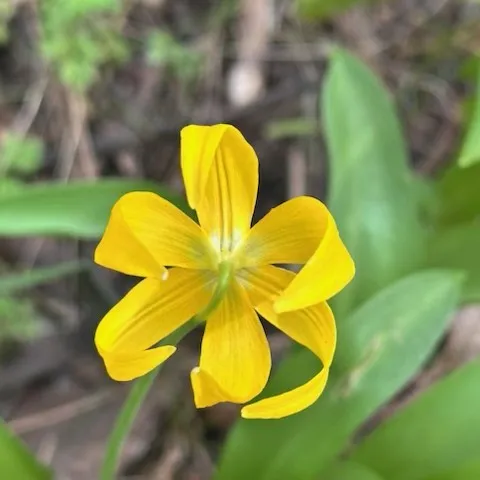
Close-up photo of a Tuolumne Fawn Lily.
UC Master Gardeners of Tuolumne County: Article

Lilies of the Field in Tuolumne County

April 11, 2026
“Consider the lilies of the field, how they grow; they toil not, neither do they spin: And yet I say unto you, that even Solomon in all his glory was not arrayed like one of these.”*  Whether you follow pagan, Jewish, or Christian (in historical order) traditions, spring is here with its…
View Article
Primary Image
Deer browsing on a tree
Fresno Gardening Green: Article

Deer resistant plants - truth or fiction?

April 10, 2026
By Robert M Timm
Is there such a thing as a deer-proof plant? Perhaps … but there are a variety of reasons deer may choose to ignore or consume specific plant species at a particular time and place.  Certain plants native to California (and elsewhere) have evolved natural defenses against being eaten by browsing…
View Article