
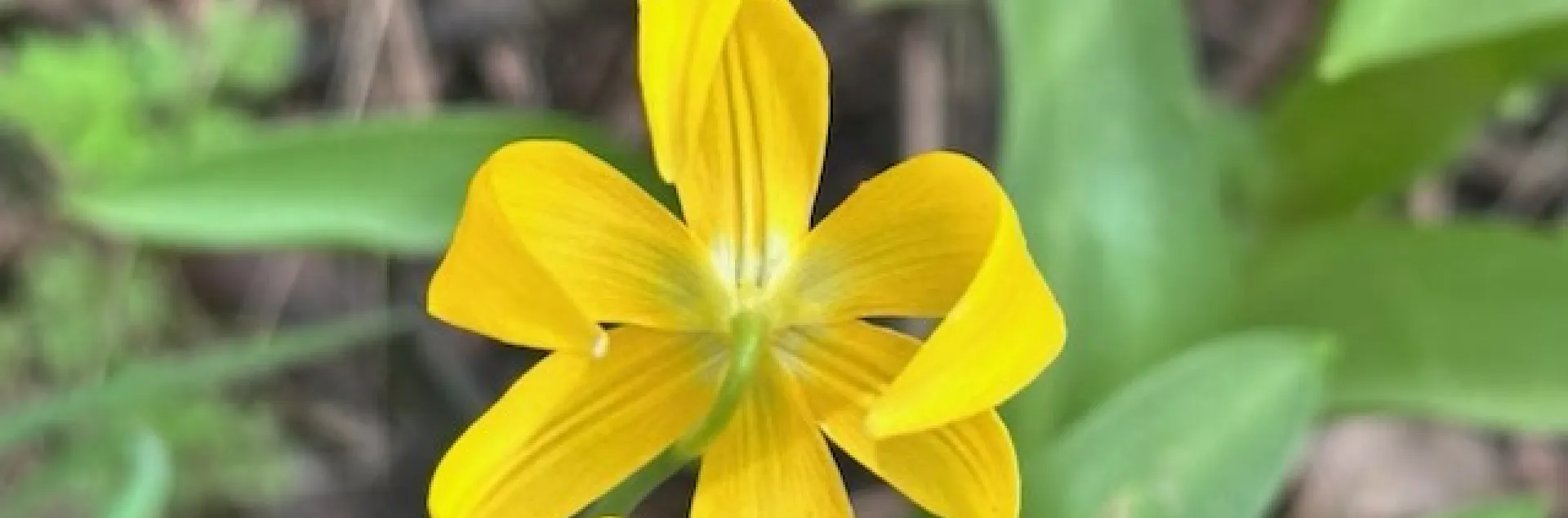
“Consider the lilies of the field, how they grow; they toil not, neither do they spin: And yet I say unto you, that even Solomon in all his glory was not arrayed like one of these.”* Whether you follow pagan, Jewish, or Christian (in historical order) traditions, spring is here with its celebration of rebirth. And lilies—both cultivated and wild—are springing up to herald the season.
To quote the Sunset Western Garden Book, “The lily family (Liliaceae) contains hundreds of species of ornamental plants, as well as such vegetables as asparagus and the whole onion tribe.” Members of the Liliaceae family include cultivated spring tulips; Calochortus species such as the beautiful Mariposa lilies, tiny star tulips, and fairy/globe lanterns; and members of fritillaria such as checker lilies and brown bells.
But we will not try to tackle all 600-plus species of lilies. Today, our focus is on some of the most beautiful lilies you may encounter, both in cultivation and in the wild.
Stores are full of Easter lilies (Lilium longiflorum), those fragrant white trumpet flowers that symbolize purity and renewal. Forced to bloom in time for Easter, L. longiflorum can be planted outdoors after its flowers fade. The plant may rebloom in the fall; in subsequent years, don’t be surprised if it blooms in midsummer, its natural bloom time.
Asiatic hybrid lilies bloom in spring and summer (June and July) in beautiful colors without fragrance. Their flowers tend to be smaller on shorter stems. In contrast, Oriental lilies, such as “stargazer” bloom in August and September. The tall stems (over four feet) support huge, gorgeous, fragrant flowers. By the way, “stargazer” got its name because the flower faces the sky rather than being pendant or horizontal like many lily blossoms.
The uncommon Tuolumne fawn lily (Erythronium tuolumnense) is a beautiful, delicate, pale-yellow, foot-tall bloom endemic to Tuolumne County (it exists nowhere else). It is currently blooming in wooded areas of the foothills in ponderosa pine forest. If you are lucky enough to know of a hiking trail that will take you to the Tuolumne fawn lily, you are lucky enough! (Check with your favorite member of the California Native Plant Society).
Tiger and leopard lilies bloom with bright, eye-catching shades of orange-to-red-orange flowers with various brown-to-purple spots. Sierra tiger lily (Lilium parvum), also known as alpine lily, is native to western mountains, especially the Sierra Nevada. Leopard lily (Lilium pardilinum) blooms below 6000’ elevation in the central/northern Sierra while Sierra lily (Lilium kelleyanum) blooms above 6000’ in the central/southern Sierra.
Washington lily (Lilium washingtonianum) can grow up to six feet tall with large, white, fragrant flowers. Native to the Cascade Range and the Sierra Nevada, it is named for Martha Washington (not the state). Look for them to be blooming from late June to early July in open forest at mid-to-higher elevations.
One note of caution: Even though some vegetables belong to the lily family, most lilies are extremely poisonous to cats. Easter, tiger, stargazer, Asiatic and day lilies are all poisonous, including their pollen and any water in the vase. Use caution. Keep your cats and lilies separated.
* King James Version of the Bible, Matthew. 6:28-29, from the Sermon on the Mount.