A Natural Solution for California's Herds: African Catfish Peptides

California's cattle producers and agricultural communities are all too familiar with the rising challenge of antibiotic resistance, making common bacterial infections harder to treat in livestock. But imagine a future where we could tackle these infections with a natural, powerful alternative. Our research points to just that: antimicrobial peptides (AMPs) found in African catfish.

We're really excited about these peptides because African catfish thrive in pathogen-rich freshwater, naturally producing these robust immune compounds in their skin mucus as a defense. This natural origin makes them highly appealing alternatives to synthetic drugs.

Predicted Safety and Potent Action

One of the most compelling aspects of these AMPs is their predicted safety for mammals. Our initial computer analyses suggest that various catfish AMPs are generally recognized as safe (GRAS). We predict they'll be absorbed in the human intestine without causing liver, brain, or heart toxicity. Furthermore, lab tests on a promising peptide, NACAP-II, confirmed it was non-hemolytic, meaning it didn't damage rabbit red blood cells—a strong indicator of its potential safety for mammalian cells.

Beyond safety, these peptides demonstrate effectiveness against problematic bacteria. One study revealed NACAP-II's strong activity against Extended-Spectrum Beta-Lactamase (ESBL)-producing Escherichia coli—a critical concern for both animal and human health due to its resistance to many common antibiotics. Another peptide, ACAP-IV, also showed antibacterial activity against E. coli and Staphylococcus aureus. We believe these AMPs work by directly disrupting bacterial cell membranes, a mechanism that makes it harder for bacteria to develop resistance compared to how they resist traditional antibiotics.
Primary Image
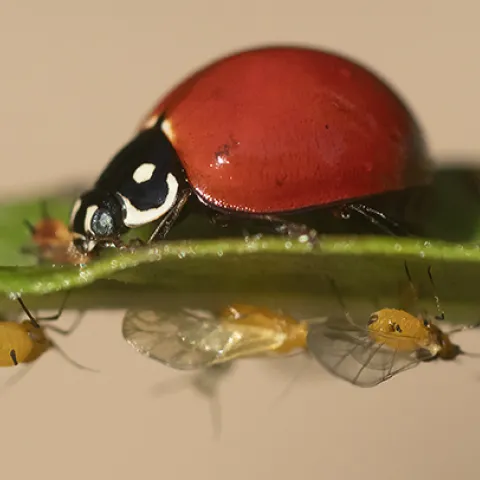
Lady beetle eating aphid. (Photo by Kathy Keatley Garvey)

The Aphid Eaters

March 20, 2026
By Kathy Keatley Garvey
 All hail the aphid eaters!Lady beetles, aka ladybugs, emerge in spring from winter hibernation, and do so with voracious appetites. Is your rose bush drawing aphids? Bring on the beetles.  The lady beetle eats some 50 aphids a day--what some may call "a 50-course meal." In it lifetime, it can…
View Article
Event Primary Image
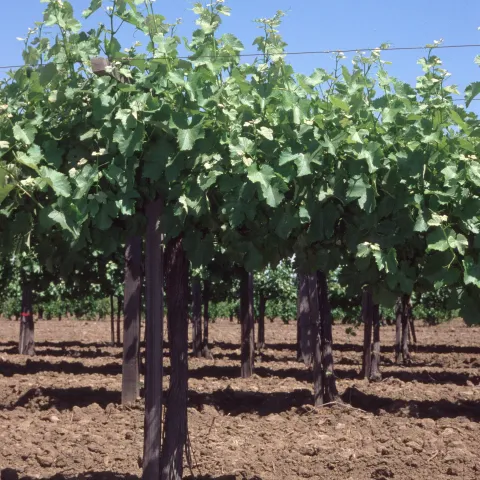
Row of grapevines in a vineyards. Beginning of blossoming period.
UC Ag Experts Talk Webinar Series: Event

Webinar: Impact of Grapevine Nursery Cultural Practices on Trunk Diseases

Event Date
May 13, 2026

This webinar is part of the UC Ag Experts Talk series. Dr. Philippe Rolshausen, Professor Cooperative Extension Specialist in Subtropical Horticulture with the Dept. of Botany and Plant Sciences at UC Riverside, will give a general overview of production methods and disease certification program for…
UC Ag Experts Talk Webinar Series
View Event
ANR Contracts & Grants Updates: Article

Western SARE R&E, AFRI Rapid Response, and Cal Fire Request for Proposals

March 20, 2026
By Kendra T Rose
Western Sustainable Agriculture Research and Education (SARE) 2026 Research and Education (R&E) Grant Program This grant program involves scientists, agricultural producers, and others using interdisciplinary approaches to advance sustainable agriculture at local and regional levels. With the…
View Article
Primary Image
water
Stanislaus County: Article

Evapotranspiration Weekly Report 3/19/26

March 20, 2026
By Sandi L Gudino
Please find the attached document to provide the previous week’s estimated water use report in terms of evapotranspiration for almonds, peaches, walnuts, established vineyard, alfalfa, and pasture in Stanislaus County. This report may be used as a guide in your irrigation schedule for the…
View Article
Primary Image
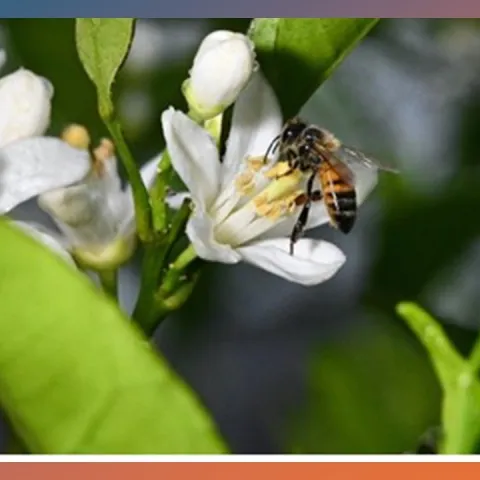
A bee foraging on citrus bloom
Citrus IPM News: Article

Citrus Bloom Declared Across San Joaquin Valley: What It Means for Thrips Management

March 19, 2026
By Sandipa Gautam
Citrus Bloom Declared Across San Joaquin Valley: What It Means for Thrips ManagementCitrus bloom has now been declared across the major growing regions of the San Joaquin Valley, with the first bloom observed in Kern County (March 12–19), followed closely by Fresno County (March 14–19) and Tulare County …
View Article
Primary Image
Creating a new species of spider with modeling clay.

They Created 'New Species' of Spiders

March 19, 2026
By Kathy Keatley Garvey
 Future arachnologists? Maybe! Artists? Definitely!Children and adults alike created "new species" of spiders when they worked with modeling clay at the Bohart Museum of Entomology's recent open house, themed "Eight-Leg Encounters." All arachnids, including scorpions,  spiders, and ticks, have…
View Article