A Natural Solution for California's Herds: African Catfish Peptides

California's cattle producers and agricultural communities are all too familiar with the rising challenge of antibiotic resistance, making common bacterial infections harder to treat in livestock. But imagine a future where we could tackle these infections with a natural, powerful alternative. Our research points to just that: antimicrobial peptides (AMPs) found in African catfish.

We're really excited about these peptides because African catfish thrive in pathogen-rich freshwater, naturally producing these robust immune compounds in their skin mucus as a defense. This natural origin makes them highly appealing alternatives to synthetic drugs.

Predicted Safety and Potent Action

One of the most compelling aspects of these AMPs is their predicted safety for mammals. Our initial computer analyses suggest that various catfish AMPs are generally recognized as safe (GRAS). We predict they'll be absorbed in the human intestine without causing liver, brain, or heart toxicity. Furthermore, lab tests on a promising peptide, NACAP-II, confirmed it was non-hemolytic, meaning it didn't damage rabbit red blood cells—a strong indicator of its potential safety for mammalian cells.

Beyond safety, these peptides demonstrate effectiveness against problematic bacteria. One study revealed NACAP-II's strong activity against Extended-Spectrum Beta-Lactamase (ESBL)-producing Escherichia coli—a critical concern for both animal and human health due to its resistance to many common antibiotics. Another peptide, ACAP-IV, also showed antibacterial activity against E. coli and Staphylococcus aureus. We believe these AMPs work by directly disrupting bacterial cell membranes, a mechanism that makes it harder for bacteria to develop resistance compared to how they resist traditional antibiotics.
Primary Image
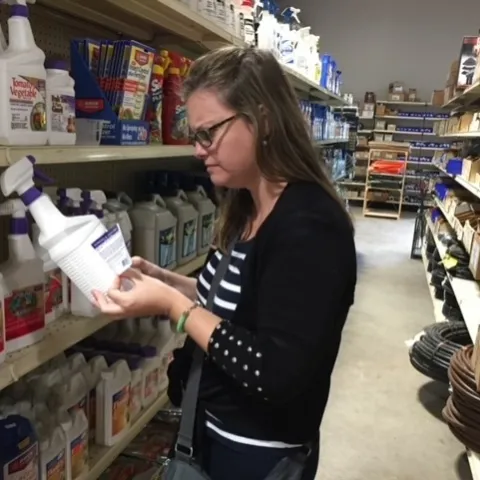
Reading a pesticide label, photo by Natalie Schellman.
The Stanislaus Sprout: Article

Neonicotinoid Pesticides No Longer Available

January 16, 2025
By Anne E Schellman
As of January 1, 2025, pesticides containing neonicotinoids will not be available for sale in retail nurseries and garden centers in the state of California. In addition, this group of pesticides cannot be possessed or used by unlicensed applicators.
View Article
UC Weed Science (weed control, management, ecology, and minutia): Article

Best Practices for Using Glufosinate in Hops

January 16, 2025
By Brad Hanson
Reposted from the "Weeders of the West" blog with author's permission. Marcelo Moretti summary of research on glufosinate best practices in hops (direct link to article). -Brad Posted by jenna.osiensky | January 9, 2025 Marcelo L.
View Article
Primary Image
Distinguished emeritus professor of entomology, Robbin Thorp (Aug. 26, 1933-June 7, 2019), detected more than 80 species of bees in the garden. This image was taken in April 2011. (Photo by Kathy Keatley Garvey)
Bug Squad: Article

No Bumble Bee Winner Yet

January 15, 2025
By Kathy Keatley Garvey
Update: No bumble bee winner yet. No announcements as of today regarding the winner of the fifth annual Robbin Thorp Memorial First-Bumble Bee-of-the-Year Contest, sponsored by the Bohart Museum of Entomology.
View Article
Primary Image
Daniel Swain
Blog - Forest Research and Outreach : Article

Climate scientist Daniel Swain joins UC ANR

January 15, 2025
By Grace N Dean
Daniel Swain joined University of California Agriculture and Natural Resources on Nov. 1 as a climate scientist in the California Institute for Water Resources.
View Article
Primary Image
photo by Michelle Schlegel

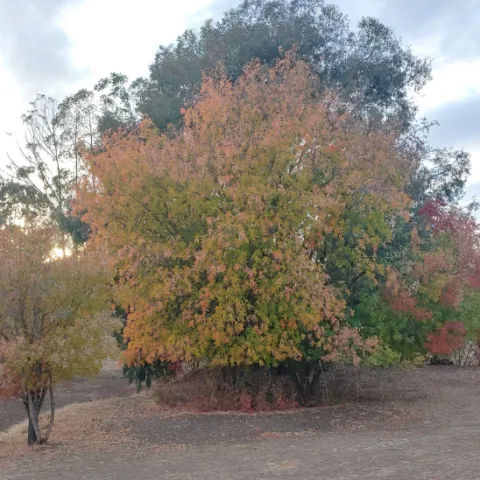
Mt. Atlas Mastic Tree

January 15, 2025
For years I thought this tree at our seasonal pond, was a Brazilian pepper (Schinus terebinthifolia). Finally, I decided to look more closely into its identity. A Brazilian pepper is, of course, one of the topmost invasive species, mostly where there is plenty of water, like Florida and Texas.
View Article
UC Weed Science (weed control, management, ecology, and minutia): Article

Stinknet spreads because it’s a difficult weed

January 15, 2025
By Chris J McDonald
Stinknet (Oncosiphon pilulifer) is an annual weed spreading aggressively in the southwestern US. This species was first found in North America the early 1980's in Southern California and it continues to spread aggressively in California and Arizona and a few populations have been found in Nevada.
View Article
Livestock & Range: Article

Rustici Rangeland Science Symposium on February 18

January 15, 2025
By Devii R Rao
The 2025 Rustici Rangeland Science Symposium is set for February 18, 2025 at the UC Davis Activities and Recreation Center (ARC). Founded in 2012, the Rustici Rangeland Science Symposium is a signature event that honors the legacy of Russell L. Rustici and his collection of rangeland endowments.
View Article
Livestock & Range: Article

RFP for MidPen Grazing Leases

January 15, 2025
By Devii R Rao
Midpeninsula Regional Open Space District (MidPen) has released a Request for Proposals (RFP) for five grazing units in San Mateo County. The District invites qualified livestock operators to submit a proposal for one or more of the listed grazing units.
View Article
Article

Report cybersecurity incidents to IT within 24 hours

January 15, 2025
By Michael Hsu
Dear ANR Community, As part of a directive from UC President Drake, UC ANR must report all significant cybersecurity incidents to the Office of the President. To meet this requirement, it is mandatory to report any cybersecurity incidents to the IT department within 24 hours of detection.
View Article