A Natural Solution for California's Herds: African Catfish Peptides

California's cattle producers and agricultural communities are all too familiar with the rising challenge of antibiotic resistance, making common bacterial infections harder to treat in livestock. But imagine a future where we could tackle these infections with a natural, powerful alternative. Our research points to just that: antimicrobial peptides (AMPs) found in African catfish.

We're really excited about these peptides because African catfish thrive in pathogen-rich freshwater, naturally producing these robust immune compounds in their skin mucus as a defense. This natural origin makes them highly appealing alternatives to synthetic drugs.

Predicted Safety and Potent Action

One of the most compelling aspects of these AMPs is their predicted safety for mammals. Our initial computer analyses suggest that various catfish AMPs are generally recognized as safe (GRAS). We predict they'll be absorbed in the human intestine without causing liver, brain, or heart toxicity. Furthermore, lab tests on a promising peptide, NACAP-II, confirmed it was non-hemolytic, meaning it didn't damage rabbit red blood cells—a strong indicator of its potential safety for mammalian cells.

Beyond safety, these peptides demonstrate effectiveness against problematic bacteria. One study revealed NACAP-II's strong activity against Extended-Spectrum Beta-Lactamase (ESBL)-producing Escherichia coli—a critical concern for both animal and human health due to its resistance to many common antibiotics. Another peptide, ACAP-IV, also showed antibacterial activity against E. coli and Staphylococcus aureus. We believe these AMPs work by directly disrupting bacterial cell membranes, a mechanism that makes it harder for bacteria to develop resistance compared to how they resist traditional antibiotics.
Primary Image
Landscape with New Melones Lake in Spring
Blog

The Confluence

The Confluence is the blog of the California Institute for Water Resources (CIWR) within University of California Agriculture and Natural Resources. We cover timely topics of water management in California, highlighting innovative research and voices. CIWR's mission is to integrate California's research…
View Blog
Primary Image
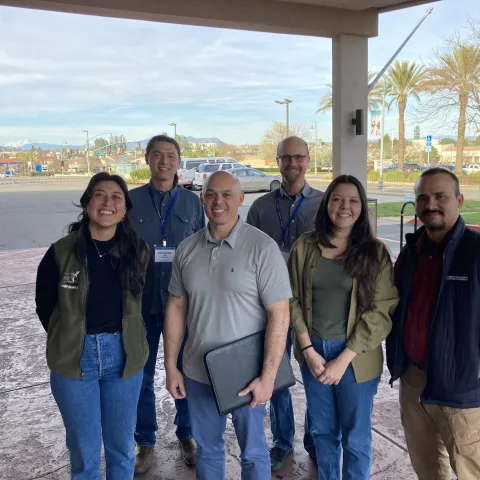
UC ANR colleagues smile for a group photo during a regional academics meeting
Blog

ANR Employee News

This blog shares news, information and resources relevant to UC ANR academics and staff across the state.
View Blog
Primary Image
Ricky Satomi (left) and Katie Reidy
Blog

Employee Spotlights

The Employee Spotlights blog shares the stories and work of just some of the outstanding UC ANR academics and staff who strive to make a positive impact in communities across California.
View Blog
Primary Image
Tomato plants
Napa Master Gardener Column: Article

Tomato Tips

March 21, 2026
By Cindy Watter, UC Master Gardener of Napa County.   For many people, spring begins with the UC Master Gardeners of Napa County tomato sale, which will be held on Saturday, April 11, this year.   Just as the tomato sale signals spring, a ripe tomato is practically the trademark of summer. …
View Article
UC Master Gardeners of Tulare and Kings County: Article

Aphids Spring to Life in Spring

March 21, 2026
Signs of spring are everywhere we look: trees and shrubs are full of blossoms, flowers are bursting into bloom, bees are buzzing all around, and aphids are stacking up on rose buds. What to do?  Aphids are a common occurrence in the spring. They rapidly appear in large numbers when the weather…
View Article
Primary Image
Lady beetle eating aphid. (Photo by Kathy Keatley Garvey)
Bug Squad: Article

The Aphid Eaters

March 20, 2026
By Kathy Keatley Garvey
 All hail the aphid eaters!Lady beetles, aka ladybugs, emerge in spring from winter hibernation, and do so with voracious appetites. Is your rose bush drawing aphids? Bring on the beetles.  The lady beetle eats some 50 aphids a day--what some may call "a 50-course meal." In it lifetime, it can…
View Article
Event Primary Image
Row of grapevines in a vineyards. Beginning of blossoming period.
UC Ag Experts Talk Webinar Series: Event

Webinar: Impact of Grapevine Nursery Cultural Practices on Trunk Diseases

Event Date
May 13, 2026

This webinar is part of the UC Ag Experts Talk series. Dr. Philippe Rolshausen, Professor Cooperative Extension Specialist in Subtropical Horticulture with the Dept. of Botany and Plant Sciences at UC Riverside, will give a general overview of production methods and disease certification program for…
UC Ag Experts Talk Webinar Series
View Event
Primary Image
water
Stanislaus County: Article

Evapotranspiration Weekly Report 3/19/26

March 20, 2026
By Sandi L Gudino
Please find the attached document to provide the previous week’s estimated water use report in terms of evapotranspiration for almonds, peaches, walnuts, established vineyard, alfalfa, and pasture in Stanislaus County. This report may be used as a guide in your irrigation schedule for the…
View Article