A Natural Solution for California's Herds: African Catfish Peptides

California's cattle producers and agricultural communities are all too familiar with the rising challenge of antibiotic resistance, making common bacterial infections harder to treat in livestock. But imagine a future where we could tackle these infections with a natural, powerful alternative. Our research points to just that: antimicrobial peptides (AMPs) found in African catfish.

We're really excited about these peptides because African catfish thrive in pathogen-rich freshwater, naturally producing these robust immune compounds in their skin mucus as a defense. This natural origin makes them highly appealing alternatives to synthetic drugs.

Predicted Safety and Potent Action

One of the most compelling aspects of these AMPs is their predicted safety for mammals. Our initial computer analyses suggest that various catfish AMPs are generally recognized as safe (GRAS). We predict they'll be absorbed in the human intestine without causing liver, brain, or heart toxicity. Furthermore, lab tests on a promising peptide, NACAP-II, confirmed it was non-hemolytic, meaning it didn't damage rabbit red blood cells—a strong indicator of its potential safety for mammalian cells.

Beyond safety, these peptides demonstrate effectiveness against problematic bacteria. One study revealed NACAP-II's strong activity against Extended-Spectrum Beta-Lactamase (ESBL)-producing Escherichia coli—a critical concern for both animal and human health due to its resistance to many common antibiotics. Another peptide, ACAP-IV, also showed antibacterial activity against E. coli and Staphylococcus aureus. We believe these AMPs work by directly disrupting bacterial cell membranes, a mechanism that makes it harder for bacteria to develop resistance compared to how they resist traditional antibiotics.
Colusa County: Article

Sacramento Valley Walnut News - Summer 2018

June 11, 2018
Early Walnut Tree Training and How to Use a Pressure Chamber for Irrigation Scheduling Workshop IPM Meetings Walnut Production Short Course Walnut Orchard Management - June through August Early Walnut Tree Leaf symptoms of overwatering walnut trees Growing the Valley Podcast...
View Article
Kern County: Article

Kern UCCE/DWR Weekly Crop Water Use Report 06-11-2018

June 11, 2018
Please see below link to access "How To Use Weekly Crop Water Use (ET) Reports to Assist Farm Water Management" How To Use Weekly Crop Water Use Report Please see below link to access "Weekly ET Report 06-11-18" ET Report 06-11-2018 Please see disclaimer link below: University of California Division...
View Article
Primary Image
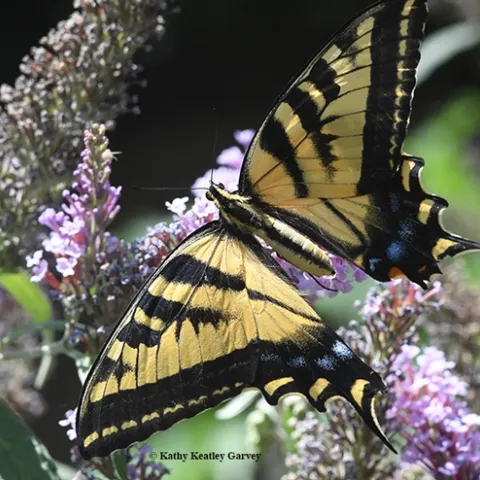
Meet Mr. Teddy Bear, a green-eyed blond trying to nourish himself on foxglove nectar. (Photo by Kathy Keatley Garvey)
Bug Squad: Article

Under Attack: European Wool Carder Bee Vs. Male Valley Carpenter Bee

June 11, 2018
By Kathy Keatley Garvey
Meet the competitors. In this corner, meet Mr. Teddy Bear. He's a blond, green-eyed carpenter bee, Xylocopa varipuncta, a native, and one of three species of carpenter bees commonly found from northern to southern California to western New Mexico. In the other corner, meet Mr. Bodyslam.
View Article
Primary Image
Teaching Youth Lessons.
UC CalFresh Fresno/Madera Counties: Article

Intern Reflection Series: Verena Zimmerman

June 11, 2018
UC CalFresh has an immense impact on the well being of local communities and is a valuable resource to in the Central Valley of California. My two week rotation offered many hands-on learning experiences that deepened my appreciation for and enhanced my skill set in nutrition education.
View Article
Cooperative Extension, Sutter-Yuba Counties: Article

Sacramento Valley Walnut News - Summer 2018

June 11, 2018
Early Walnut Tree Training and How to Use a Pressure Chamber for Irrigation scheduling Workshop IPM Meetings Walnut Production Short Course Walnut Orchard Management - June through August Early Walnut Tree Leaf symptoms of overwatering walnut trees Growing the Valley Podcast...
View Article
Santa Cruz County: Article

4-H Updates for June

June 11, 2018
Hello 4-H Families, A few quick updates for June coming your way! Leaders Workshop - June 16th (Saturday) - Flier attached with more details 4-H Council Meeting on June 21st, 6:45 pm at Aptos Grange - Voting on 2018-19 council budget and calendar 4-H enrollment will open on July 1st - Leaders will b...
View Article
Primary Image
Parsely sage rosemary and thyme
Master Food Preservers San Bernardino County: Article

Parsely, Sage, Rosemary, and Thyme (For the Spice It Up Class!)

June 11, 2018
Is that song running through your head yet? I call these the Big Four: Parsley, Sage, Rosemary and Thyme. Easy to grow in our area (southern California), common to find in pots, and tasty in recipes. They can be beautiful in the garden or pot.
View Article
Primary Image
pruning apple tree 2
UC Master Gardeners- Diggin' it in SLO: Article

Summer Pruning Fruit Trees

June 11, 2018
Summer Pruning Fruit Trees By Leonard Cicerello UCCE Master Gardener I just purchased my first fruit tree and I read about pruning fruit trees in summer. Is this advisable? Samantha T. Paso Robles Take time to inspect your fruit trees thoroughly during the summer and identify areas for improvement.
View Article
Primary Image
Bean field with soil compaction
Sacramento Valley Field Crops: Article

Strategies to Avoid and Manage Soil Compaction

June 11, 2018
By Sarah E Light
Soil compaction is often a problem in field crop production and occurs when soil particles are pressed together, reducing available pore space for air and water. About half the soil volume is composed of particles, the other half is soil pores.
View Article