A Natural Solution for California's Herds: African Catfish Peptides

California's cattle producers and agricultural communities are all too familiar with the rising challenge of antibiotic resistance, making common bacterial infections harder to treat in livestock. But imagine a future where we could tackle these infections with a natural, powerful alternative. Our research points to just that: antimicrobial peptides (AMPs) found in African catfish.

We're really excited about these peptides because African catfish thrive in pathogen-rich freshwater, naturally producing these robust immune compounds in their skin mucus as a defense. This natural origin makes them highly appealing alternatives to synthetic drugs.

Predicted Safety and Potent Action

One of the most compelling aspects of these AMPs is their predicted safety for mammals. Our initial computer analyses suggest that various catfish AMPs are generally recognized as safe (GRAS). We predict they'll be absorbed in the human intestine without causing liver, brain, or heart toxicity. Furthermore, lab tests on a promising peptide, NACAP-II, confirmed it was non-hemolytic, meaning it didn't damage rabbit red blood cells—a strong indicator of its potential safety for mammalian cells.

Beyond safety, these peptides demonstrate effectiveness against problematic bacteria. One study revealed NACAP-II's strong activity against Extended-Spectrum Beta-Lactamase (ESBL)-producing Escherichia coli—a critical concern for both animal and human health due to its resistance to many common antibiotics. Another peptide, ACAP-IV, also showed antibacterial activity against E. coli and Staphylococcus aureus. We believe these AMPs work by directly disrupting bacterial cell membranes, a mechanism that makes it harder for bacteria to develop resistance compared to how they resist traditional antibiotics.
Primary Image
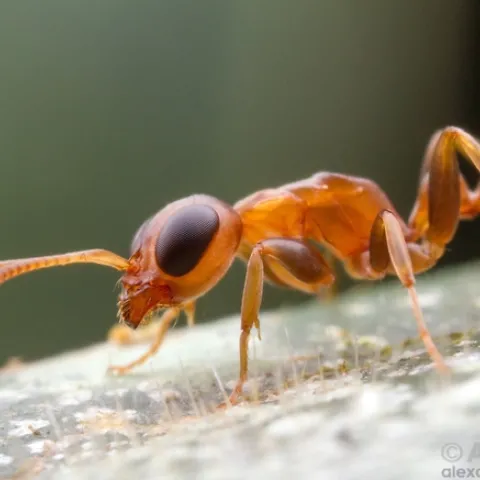
This is a big-eyed ant, Pseudomyrmex boopis. Alexander Wild, who received his doctorate in entomology from UC Davis and is now curator of entomology, University of Austin, Texas, captured this image in Armenia, Belize. See more of his images at alexanderwild.com. (Copyrighted by Alex Wild and used with permission)
Bug Squad: Article

Behold, the Big-Eyed Ant (And Brendon Boudinot Will Talk About It)

February 27, 2018
By Kathy Keatley Garvey
It's not just about the sting or those big eyes. Ant specialists and other researchers also hone in on big-eyed ants for their relationships with plants. Those attending a UC Davis seminar this week on big ants will learn all about them, including the phylogenetic morphology. Brendon Boudinot, a Ph.
View Article
Santa Cruz County: Article

4-H Newsletter 2/26/18

February 26, 2018
Hello 4-H Families, We have two very important deadlines coming up this week! The 4-H presentation day registration will be closing on February 28th at midnight! All 4-H adult leaders are required to complete the on-line leader training by February 28th! Any 4-H leader that has not completed the lea...
View Article
Primary Image
punica granatum flower ct[14651]
UC Master Gardeners- Diggin' it in SLO: Article

Pomegranate

February 26, 2018
Wonderful Pomegranate By Jutta Thoerner UCCE Master Gardener Punica granatum Planting zone: 7-10 Size: 15 to 20 feet tall Bloom:Showy orange-red blossoms in late spring which ripen into five inch red fruits.
View Article
Cooperative Extension Ventura County: Article

Winter 2018 Topics in Subtropics

February 26, 2018
South American Palm Weevil Threat Template to Estimate the Value of Tree Loss After the Fire and Before the Rain - What to Do...
View Article
Cooperative Extension Ventura County: Article

Winter 2018 Topics in Subtropics

February 26, 2018
South American Palm Weevil Threat Template to Estimate the Value of Tree Loss After the Fire and Before the Rain - What to Do...
View Article
Mariposa County: Article

March 2018

February 26, 2018
Here is the March 2018 newsletter full of information on upcoming events.
View Article