A Natural Solution for California's Herds: African Catfish Peptides

California's cattle producers and agricultural communities are all too familiar with the rising challenge of antibiotic resistance, making common bacterial infections harder to treat in livestock. But imagine a future where we could tackle these infections with a natural, powerful alternative. Our research points to just that: antimicrobial peptides (AMPs) found in African catfish.

We're really excited about these peptides because African catfish thrive in pathogen-rich freshwater, naturally producing these robust immune compounds in their skin mucus as a defense. This natural origin makes them highly appealing alternatives to synthetic drugs.

Predicted Safety and Potent Action

One of the most compelling aspects of these AMPs is their predicted safety for mammals. Our initial computer analyses suggest that various catfish AMPs are generally recognized as safe (GRAS). We predict they'll be absorbed in the human intestine without causing liver, brain, or heart toxicity. Furthermore, lab tests on a promising peptide, NACAP-II, confirmed it was non-hemolytic, meaning it didn't damage rabbit red blood cells—a strong indicator of its potential safety for mammalian cells.

Beyond safety, these peptides demonstrate effectiveness against problematic bacteria. One study revealed NACAP-II's strong activity against Extended-Spectrum Beta-Lactamase (ESBL)-producing Escherichia coli—a critical concern for both animal and human health due to its resistance to many common antibiotics. Another peptide, ACAP-IV, also showed antibacterial activity against E. coli and Staphylococcus aureus. We believe these AMPs work by directly disrupting bacterial cell membranes, a mechanism that makes it harder for bacteria to develop resistance compared to how they resist traditional antibiotics.
SJC and Delta Field Crops: Article

Alfalfa IPM Survey

November 7, 2016
By Michelle M Leinfelder-Miles
UC IPM Advisor, Pete Goodell, requests your assistance with an alfalfa IPM survey. How much IPM is being used in alfalfa in California? A new survey tool wants to help answer that question and we need your help.
View Article
Primary Image
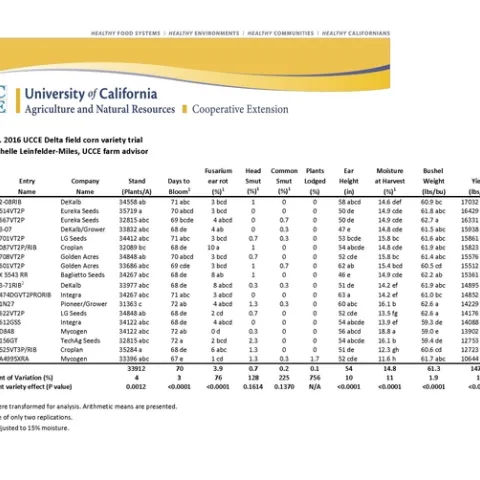
Table 1. 2016 UCCE Field Corn Variety Trial Results
SJC and Delta Field Crops: Article

2016 UCCE Field Corn Variety Trial Report

November 7, 2016
By Michelle M Leinfelder-Miles
Table 1 shows the results of the 2016 UCCE Delta field corn variety trial, located on Tyler Island. Three replicate blocks of eighteen varieties were planted on April 27th by air planter.
View Article
Primary Image
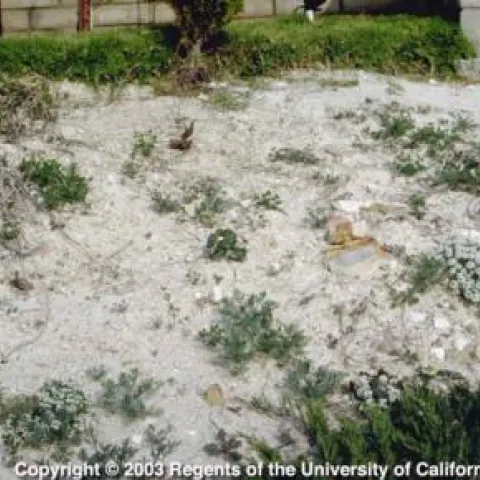
calcareous soil
Topics in Subtropics: Article

Calcareous Soil Confusion

November 7, 2016
By Ben A Faber
Calcareous soils have often more than 15% CaCO3 in the soil that may occur in various forms (powdery, nodules, crusts etc). They are relatively widespread in the drier areas of the earth.
View Article
Bug Squad: Article

How Much Do You Know About Entomology?

November 4, 2016
By Kathy Keatley Garvey
You have just moved into an apartment that has been vacant for weeks but whose prior owners had several cats and dogs. A very few days after you move in you are bitten by a huge number of cat fleas that seem to have appeared out of nowhere.
View Article
Primary Image
ACP adult and nymph
Topics in Subtropics: Article

Staying on Top of What's Going on with ACP

November 3, 2016
By Ben A Faber
Entomology Specialist and Lindcove Research and Education Center Director keeps her Asian Citrus Psyllid website for homeowners up-to-date at: http://ucanr.edu/sites/ACP/Homeowner_Options/Homeowner_Resources/ Check it out.
View Article
Bug Squad: Article

Why You Should Think 'Fall Planting' and 'Pollinators'

November 2, 2016
By Kathy Keatley Garvey
If want to beautify your yard, attract pollinators, and save money at the same time, then you'll want to attend the UC Davis Arboretum Plant Sale on Saturday, Nov. 5. It's the final clearance sale of the season, and it will take place from 9 a.m. to 1 p.m.
View Article
UC Weed Science (weed control, management, ecology, and minutia): Article

Help wanted: participation in herbicide-resistant weeds workshop

November 2, 2016
By Brad Hanson
Requesting growers and ag industry members to contribute to the national conversation on herbicide-resistant weeds As part of a national effort on developing research and regulatory priorities related to the challenging problems of herbicide-resistant weeds, the Weed Science Society of America is sp...
View Article