A Natural Solution for California's Herds: African Catfish Peptides

California's cattle producers and agricultural communities are all too familiar with the rising challenge of antibiotic resistance, making common bacterial infections harder to treat in livestock. But imagine a future where we could tackle these infections with a natural, powerful alternative. Our research points to just that: antimicrobial peptides (AMPs) found in African catfish.

We're really excited about these peptides because African catfish thrive in pathogen-rich freshwater, naturally producing these robust immune compounds in their skin mucus as a defense. This natural origin makes them highly appealing alternatives to synthetic drugs.

Predicted Safety and Potent Action

One of the most compelling aspects of these AMPs is their predicted safety for mammals. Our initial computer analyses suggest that various catfish AMPs are generally recognized as safe (GRAS). We predict they'll be absorbed in the human intestine without causing liver, brain, or heart toxicity. Furthermore, lab tests on a promising peptide, NACAP-II, confirmed it was non-hemolytic, meaning it didn't damage rabbit red blood cells—a strong indicator of its potential safety for mammalian cells.

Beyond safety, these peptides demonstrate effectiveness against problematic bacteria. One study revealed NACAP-II's strong activity against Extended-Spectrum Beta-Lactamase (ESBL)-producing Escherichia coli—a critical concern for both animal and human health due to its resistance to many common antibiotics. Another peptide, ACAP-IV, also showed antibacterial activity against E. coli and Staphylococcus aureus. We believe these AMPs work by directly disrupting bacterial cell membranes, a mechanism that makes it harder for bacteria to develop resistance compared to how they resist traditional antibiotics.
Wild About Wild Radish

May 10, 2010
By Kathy Keatley Garvey
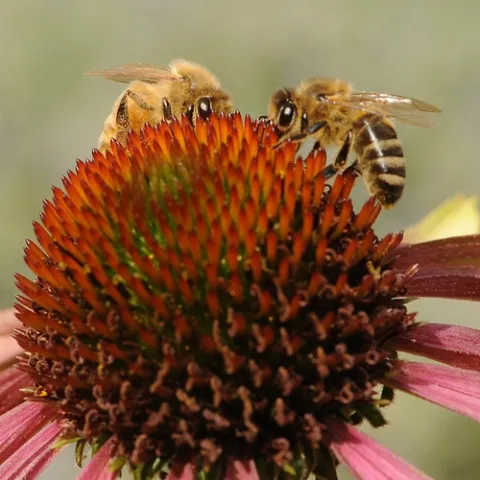
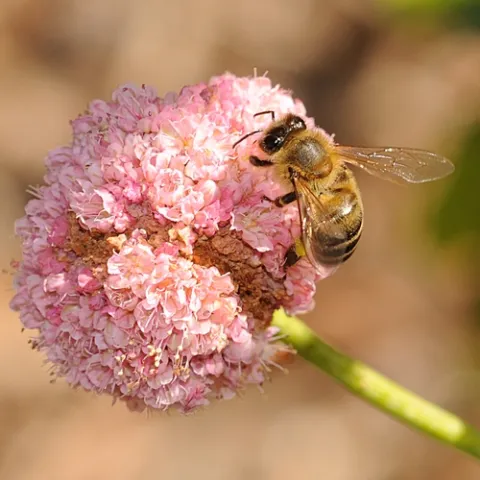
Honey bees are wild about the wild radish. It's not an invasive weed to them. You'll see bees foraging among stands of wild radish along roadsides, pastures and other disturbed areas.
View Article

A Taste of Honey

May 7, 2010
By Kathy Keatley Garvey
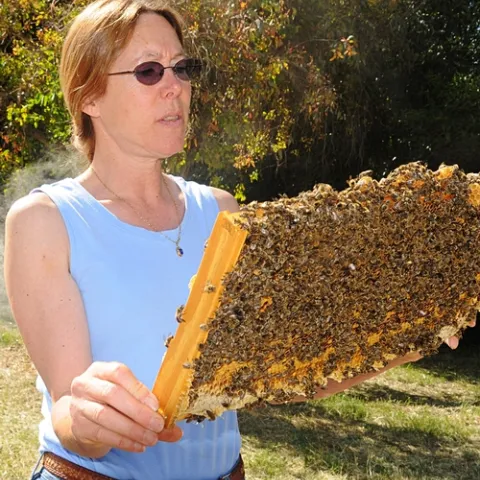
When the Antioch Charter Academy, a middle school in Contra Costa County, toured the Harry H. Laidlaw Jr. Honey Bee Research Facility at UC Davis on Tuesday, May 4, they learned all about honey bees and native bees.
View Article

A Honey of a Plant

May 6, 2010
By Kathy Keatley Garvey
It's not the prettiest of plants. It looks somewhat like a thistle. No matter. The honey bees love it. Lacy phacelia (Phacelia tanacetifolia), a leggy three-foot plant with clusters of light blue to purple flowers, attracts not only honey bees but syrphid flies, bumbles bees and other pollinators.
View Article

An Entomologist and an Artist

May 5, 2010
By Kathy Keatley Garvey
If youre a first-year graduate student in entomology, you spend much of your time buried in books or conferring with your major professor. Emily Bzdyk, who is pursuing her doctorate in entomology at UC Davis, does that, too--and more. She's heavily involved in art.
View Article

Not a Failure to Communicate

May 4, 2010
By Kathy Keatley Garvey
The female silkworm moth releases a sex pheromone, bombykol, that's very enticing to the male. He can detect it from miles away.
View Article
Bug Squad: Article

Bee-ing There

May 3, 2010
By Kathy Keatley Garvey
Bees at The Bee. Some 60 creative artists will be showing and selling their bee-themed work on Saturday, May 8 at the "Bees at The Bee" art show in the Sacramento Bee's outdoor courtyard, 2100 Q. St. The event, free and open to the public, will take place from 3 to 8 p.m.
View Article
Bug Squad: Article

The Good, the Bad and the Bugly

April 30, 2010
By Kathy Keatley Garvey
"The Good, the Bad, and the Bugly." That's one of the topics at the next meeting of the Northern California Entomology Society, to be held from 9:15 a.m. to 3 p.m., Thursday, May 6 in the Harry H. Laidlaw Jr. Honey Bee Research Facility at UC Davis. It promises to be lively. And bugly.
View Article
Bug Squad: Article

These Bees Are Carpenters

April 29, 2010
By Kathy Keatley Garvey
These bees are carpenters. These bees are art. Professor Jeffrey Granett, who retired from the UC Davis Department of Entomology in January 2007, now spends must of his time working on his art. He created a hanging piece for "The Bees at The Bee" art show, to be held from 3 to 8 p.m.
View Article
Bug Squad: Article

In Celebration of Bee Art

April 28, 2010
By Kathy Keatley Garvey
Mark your calendars. Saturday, May 8 is the "Bees at The Bee" art show. The art show, featuring the work of bee artists from throughout much of Northern California, is a benefit for honey bee research at the University of California, Davis.
View Article