A Natural Solution for California's Herds: African Catfish Peptides

California's cattle producers and agricultural communities are all too familiar with the rising challenge of antibiotic resistance, making common bacterial infections harder to treat in livestock. But imagine a future where we could tackle these infections with a natural, powerful alternative. Our research points to just that: antimicrobial peptides (AMPs) found in African catfish.

We're really excited about these peptides because African catfish thrive in pathogen-rich freshwater, naturally producing these robust immune compounds in their skin mucus as a defense. This natural origin makes them highly appealing alternatives to synthetic drugs.

Predicted Safety and Potent Action

One of the most compelling aspects of these AMPs is their predicted safety for mammals. Our initial computer analyses suggest that various catfish AMPs are generally recognized as safe (GRAS). We predict they'll be absorbed in the human intestine without causing liver, brain, or heart toxicity. Furthermore, lab tests on a promising peptide, NACAP-II, confirmed it was non-hemolytic, meaning it didn't damage rabbit red blood cells—a strong indicator of its potential safety for mammalian cells.

Beyond safety, these peptides demonstrate effectiveness against problematic bacteria. One study revealed NACAP-II's strong activity against Extended-Spectrum Beta-Lactamase (ESBL)-producing Escherichia coli—a critical concern for both animal and human health due to its resistance to many common antibiotics. Another peptide, ACAP-IV, also showed antibacterial activity against E. coli and Staphylococcus aureus. We believe these AMPs work by directly disrupting bacterial cell membranes, a mechanism that makes it harder for bacteria to develop resistance compared to how they resist traditional antibiotics.

Primary Image
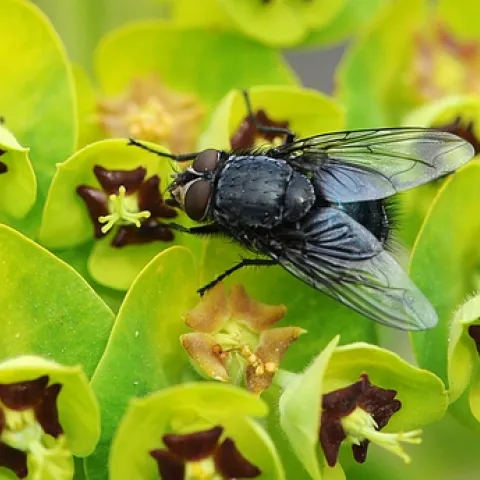
UP ON TOP--A tachinid rests on top of a lavender. This is a female of a Peleteria species, a common genus in southwestern United States. The genus is characterized by two prominent setae in front of the lower part of the eye.(Photo by Kathy Keatley Garvey)

Tiptoeing Through the Lavender

September 29, 2009
By Kathy Keatley Garvey
Ever seen a tachinid tiptoeing through the lavender? The tachinids are parasitic flies that lay their eggs in hosts such as Lepidoptera (butterfly) caterpillars. As larvae, they live in and kill their hosts. As adults, they sip nectar and other plant juices.
View Article
Primary Image
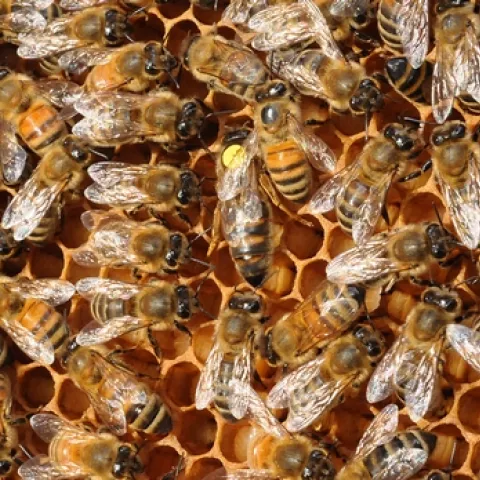
HONEY BEE pauses after nectaring the purple Penstamon and begins to extend her tongue. (Photo by Kathy Keatley Garvey)

Tongue in Cheek

September 28, 2009
By Kathy Keatley Garvey
The honey bee nectaring the Penstemon, aka Beardtongue, in Tomales, Calif., didn't seem to mind my presence. Perfect. The amber-colored bee was foraging among the purple two-lipped flowers.
View Article
Primary Image
MONARCH BUTTERFLY nectaring in the Luther Burbank Gardens, Santa Rosa. The Luther Burbank home is in the background. (Photo by Kathy Keatley Garvey)

It's in the Antennae

September 25, 2009
By Kathy Keatley Garvey
Surprise: it's in the antennae! Neurobiologists at the University of Massachusetts Medical School have long wondered how monarch butterflies (Danaus plexippus) can migrate from across eastern North America to a specific grove of fir trees in Mexico.
View Article
Primary Image
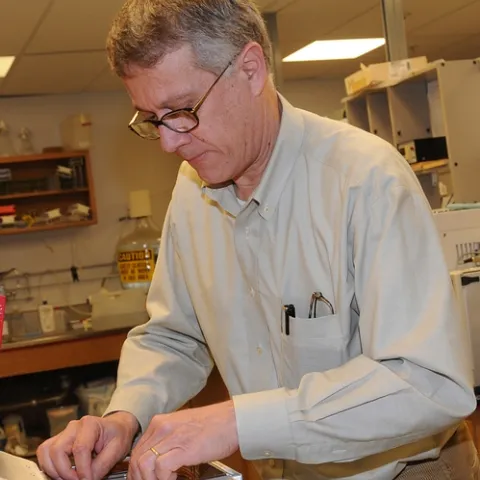
CHEMICAL ECOLOGIST Walter Leal (center) works with Aline Guidolin (left) and Diogo Vidal, two young scientists from Brazil. (Photos by Kathy Keatley Garvey)

Ag Ambassadors from Brazil

September 24, 2009
By Kathy Keatley Garvey
Two highly talented and enthusiastic university students from Brazil have joined the Walter Leal lab in the Department of Entomology, University of California, Davis, as part of a unique and growing international agricultural exchange program. The program is known as SUSPROT.
View Article
Primary Image
HONEY BEE nectars from a blue sage, Salvia guaranitica, shortly after a carpenter bee pierced the calyx. (Photo by Kathy Keatley Garvey)

Sage Advice

September 23, 2009
By Kathy Keatley Garvey
Sage advice: If you're thinking of planting a bee friendly garden, think sage. Also commonly known as salvia, this bee friendly plant belongs to the mint family, Lamiaceae. The Salvia genus includes some 900 species, so your choices are good.
View Article

Oh, Baby!

September 22, 2009
By Kathy Keatley Garvey
What's not to love about a baby bee? At one day old, the worker (female) bees are exquisite little creatures. Helpless, really. They can neither flee nor fight; they cannot fly and they cannot sting. No venom. That will come later. They're all big eyes, fluffy hair and downy softness.
View Article
Primary Image
POLLEN-PACKING honey bee buzzes over a pink begonia. (Photo by Kathy Keatley Garvey)

A Bee on The Bee-gonia

September 21, 2009
By Kathy Keatley Garvey
If there's one plant in our yard that the honey bees don't like, it's the begonia. Lavender, sage, catmint and sedum? Bring 'em on. Sunflowers, citrus and pomegranate? Yes! Yes! Yes! Rock purslane? Like rock candy. Oh, how about a little begonia, Ms. Honey Bee? Sorry, not interested.
View Article
Primary Image
A HONEY BEE nectars sedum, a favorite among gardeners and bees. This sedum is "Autumn Joy." (Photo by Kathy Keatley Garvey)

Reducing Pesticide Use

September 18, 2009
By Kathy Keatley Garvey
Good news! Entomologist Michael Parrella, professor and chair of the UC Davis Department of Entomology and a member of the UC Davis Department of Plant Sciences faculty, has just received one of three Pest Management Alliance Grants awarded by the California Department of Pesticide Regulation (DPR)...
View Article
Primary Image
A HONEY BEE nectars a dwarf tangerine bulbine (Bulbine frutescens) in the UC Davis Arboretum. (Photo by Kathy Keatley Garvey)

Bee-ing There for the Bees

September 17, 2009
By Kathy Keatley Garvey
Apimondia. No, it's not a rock band or a new dance move or a new Billboard hit. It's the name of a worldwide bee organization. The 41st World Apiculture Congress is meeting this week through Sunday, Sept. 20 in Montepellier, France, and the buzz is all about what's killing the honey bees.
View Article
Primary Image
BAXTER HOUSE, built in 1938, went up in flames on June 30 in a UC Davis firefighters' control burn. The grounds will now be a quarter-acre field of wildflowers called The Campus Buzzway. (Photo by Kathy Keatley Garvey)

It's All the Buzz

September 16, 2009
By Kathy Keatley Garvey
Rising soon from the ashes of the Baxter House fire will be the soothing colors of the Campus Buzzway. It's a story that began in May 1938 with a farmhouse-turned-lab-turned-eyesore. It will end with the honey bees' version of "A Field of Dreams"--the Campus Buzzway.
View Article