A Natural Solution for California's Herds: African Catfish Peptides

California's cattle producers and agricultural communities are all too familiar with the rising challenge of antibiotic resistance, making common bacterial infections harder to treat in livestock. But imagine a future where we could tackle these infections with a natural, powerful alternative. Our research points to just that: antimicrobial peptides (AMPs) found in African catfish.

We're really excited about these peptides because African catfish thrive in pathogen-rich freshwater, naturally producing these robust immune compounds in their skin mucus as a defense. This natural origin makes them highly appealing alternatives to synthetic drugs.

Predicted Safety and Potent Action

One of the most compelling aspects of these AMPs is their predicted safety for mammals. Our initial computer analyses suggest that various catfish AMPs are generally recognized as safe (GRAS). We predict they'll be absorbed in the human intestine without causing liver, brain, or heart toxicity. Furthermore, lab tests on a promising peptide, NACAP-II, confirmed it was non-hemolytic, meaning it didn't damage rabbit red blood cells—a strong indicator of its potential safety for mammalian cells.

Beyond safety, these peptides demonstrate effectiveness against problematic bacteria. One study revealed NACAP-II's strong activity against Extended-Spectrum Beta-Lactamase (ESBL)-producing Escherichia coli—a critical concern for both animal and human health due to its resistance to many common antibiotics. Another peptide, ACAP-IV, also showed antibacterial activity against E. coli and Staphylococcus aureus. We believe these AMPs work by directly disrupting bacterial cell membranes, a mechanism that makes it harder for bacteria to develop resistance compared to how they resist traditional antibiotics.
UC Master Food Preserver Program of Orange County: Page

Pests in the Pantry?

If you have insects invading your kitchen or pantry, or if you've ever opened stored food products and discovered pests inside, you'll want to watch this new video from UC IPM.
View Page
UC Master Food Preserver Program of Orange County: Page

Let's Talk Turkey

Food safety tips for the holiday turkey from FoodSafety infographic "Let's Talk Turkey" plus USDA "How to Safely Thaw a Turkey" and "Countdown to a Food-Safe Thanksgiving Day" FAQ
View Page
UC Master Food Preserver Program of Orange County: Page

Cooking for Groups

Food Safety when cooking for parties and large groups
View Page
Primary Image
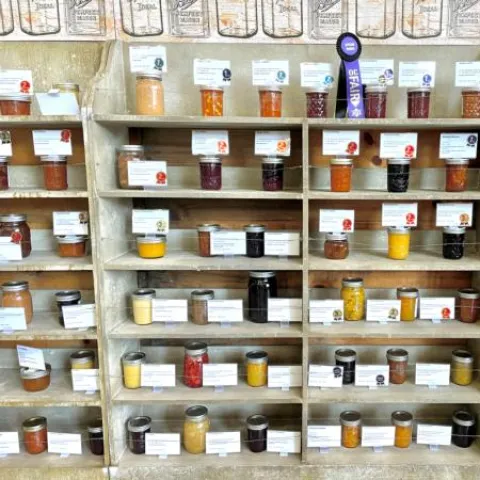
OC Fair canning entries
UC Master Food Preserver Program of Orange County: Page

About Food Preservation

Food Preservation: historical origins, commercial available, science behind safe home preservation
View Page
UC Master Food Preserver Program of Orange County: Page

Onions

Nov. 18, 2024 simplified layout, . June 2022 created. Onions by Joseph Mucira from Pixabay Onions (Allium cepa) are a member of the same family as garlic, leeks and shallots. The common bulb onion is a succulent vegetable composed of layers of fleshy modified leaves.
View Page
UC Master Food Preserver Program of Orange County: Page

Cold Storage

Reducing the temperature at which food is stored slows the growth of food spoilage microorganisms and enzymatic reactions within food. Many, but not all foods benefit from cold storage. (See Food Safety page for information about storing leftovers.
View Page
UC Master Food Preserver Program of Orange County: Page

Dehydration

Drying (dehydrating) food is one of the oldest and easiest methods of food preservation. Dehydration is the process of removing water or moisture from a food product. Removing moisture from foods makes them smaller and lighter.
View Page