A Natural Solution for California's Herds: African Catfish Peptides

California's cattle producers and agricultural communities are all too familiar with the rising challenge of antibiotic resistance, making common bacterial infections harder to treat in livestock. But imagine a future where we could tackle these infections with a natural, powerful alternative. Our research points to just that: antimicrobial peptides (AMPs) found in African catfish.

We're really excited about these peptides because African catfish thrive in pathogen-rich freshwater, naturally producing these robust immune compounds in their skin mucus as a defense. This natural origin makes them highly appealing alternatives to synthetic drugs.

Predicted Safety and Potent Action

One of the most compelling aspects of these AMPs is their predicted safety for mammals. Our initial computer analyses suggest that various catfish AMPs are generally recognized as safe (GRAS). We predict they'll be absorbed in the human intestine without causing liver, brain, or heart toxicity. Furthermore, lab tests on a promising peptide, NACAP-II, confirmed it was non-hemolytic, meaning it didn't damage rabbit red blood cells—a strong indicator of its potential safety for mammalian cells.

Beyond safety, these peptides demonstrate effectiveness against problematic bacteria. One study revealed NACAP-II's strong activity against Extended-Spectrum Beta-Lactamase (ESBL)-producing Escherichia coli—a critical concern for both animal and human health due to its resistance to many common antibiotics. Another peptide, ACAP-IV, also showed antibacterial activity against E. coli and Staphylococcus aureus. We believe these AMPs work by directly disrupting bacterial cell membranes, a mechanism that makes it harder for bacteria to develop resistance compared to how they resist traditional antibiotics.

Primary Image
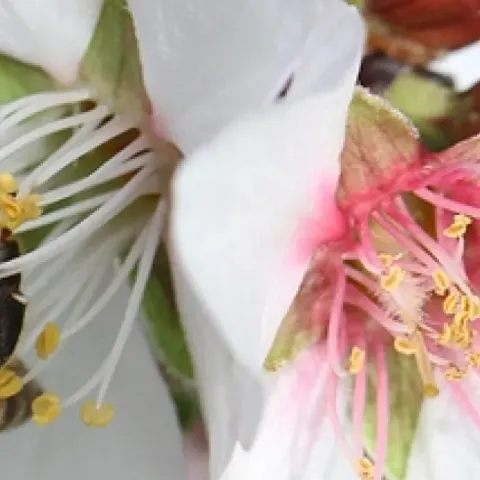
Honey bee pollinating almond blossom. (Photo by Kathy Keatley Garvey)
Bug Squad: Article

Hap-bee Thanksgiving!

November 27, 2025
By Kathy Keatley Garvey
 When you sit down at your Thanksgiving table today, thank the bees.“A substantial portion of the meal is pollinated by the honey bee,” the late Extension Apiculturist Eric Mussen (1944-2022), a member of the UC Davis Department of Entomology faculty and a noted authority on honey bees, told us…
View Article
Primary Image
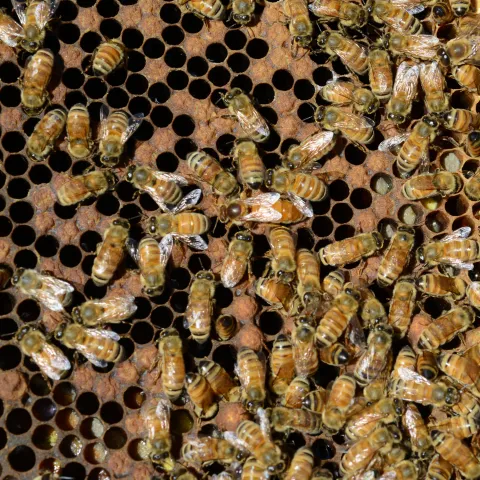
Queen bee and her colony
Bug Squad: Article

Zeroing in on Honey Bee Research

November 26, 2025
By Kathy Keatley Garvey
 How to keep honey bees healthy...UC Davis alumnus and Honey bee specialist Richard Martinez of the E. L. Niño lab will present his exit seminar, hosted by the UC Davis Department of Entomology and Nematology, on Wednesday, Dec. 3 in Room 122 of Briggs Hall.Martinez, who received his master's degree in…
View Article
Primary Image
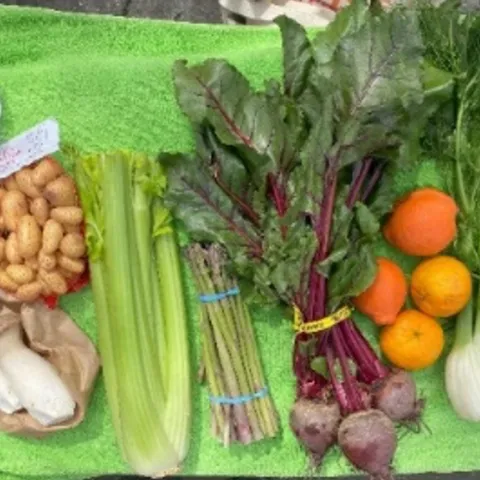
A collection of fresh produce laid out on a green towel.
Nutrition Policy Institute: Article

Food Purchase, Consumption, and Waste Practices Among GusNIP Participants in California: A Qualitative Exploration

November 26, 2025
By Molly Shea, Sridharshi C Hewawitharana, Samantha Sam-Chen, Ron Strochlic, Wendi Gosliner
Research Brief • November 2025 • Download PDF (331 KB)BackgroundThe California Nutrition Incentive Program (CNIP) provides Supplemental Nutrition Assistance Program (SNAP) shoppers with matching funds for the purchase of fruits and vegetables (FV) primarily at farmers’ markets. [i] In a 2022 study,…
View Article
Page

Contact Us

Contact Us PageThe "Contact Us" page should make it easy for visitors to reach the appropriate people and quickly find essential contact information. At a minimum, this page must include a “How to Reach Us” section with a valid email address, phone number, and physical mailing address.Additional options for…
View Page
Event Primary Image
Pixabay gifts
UC Master Food Preserver Program of Orange County: Event

Laguna Woods Library - Gifts From Your Kitchen

Event Date
Dec 12, 2025

Come to the Laguna Woods Library for a demonstration on two wonderful recipes to make for gifts that come from your kitchen. The Master Food Preservers of Orange County will make a Spiced Orange Jelly and give you a recipe for a Master Muffin Mix with several variations to delight your family and friends…
UC Master Food Preserver Program of Orange County
View Event
Event Primary Image
Pixabay Orange Jelly
UC Master Food Preserver Program of Orange County: Event

Farm & Food Lab - Preserving Winter

Event Date
Dec 6, 2025

Come to the Great Park Farm and Food Lab for a demonstration on two wonderful recipes to make for gifts that come from your kitchen. The UC Master Food Preservers of Orange County will make a Spiced Orange Jelly and give you a recipe for a Master Muffin Mix with several variations to delight your family and…
UC Master Food Preserver Program of Orange County
View Event