A Natural Solution for California's Herds: African Catfish Peptides

California's cattle producers and agricultural communities are all too familiar with the rising challenge of antibiotic resistance, making common bacterial infections harder to treat in livestock. But imagine a future where we could tackle these infections with a natural, powerful alternative. Our research points to just that: antimicrobial peptides (AMPs) found in African catfish.

We're really excited about these peptides because African catfish thrive in pathogen-rich freshwater, naturally producing these robust immune compounds in their skin mucus as a defense. This natural origin makes them highly appealing alternatives to synthetic drugs.

Predicted Safety and Potent Action

One of the most compelling aspects of these AMPs is their predicted safety for mammals. Our initial computer analyses suggest that various catfish AMPs are generally recognized as safe (GRAS). We predict they'll be absorbed in the human intestine without causing liver, brain, or heart toxicity. Furthermore, lab tests on a promising peptide, NACAP-II, confirmed it was non-hemolytic, meaning it didn't damage rabbit red blood cells—a strong indicator of its potential safety for mammalian cells.

Beyond safety, these peptides demonstrate effectiveness against problematic bacteria. One study revealed NACAP-II's strong activity against Extended-Spectrum Beta-Lactamase (ESBL)-producing Escherichia coli—a critical concern for both animal and human health due to its resistance to many common antibiotics. Another peptide, ACAP-IV, also showed antibacterial activity against E. coli and Staphylococcus aureus. We believe these AMPs work by directly disrupting bacterial cell membranes, a mechanism that makes it harder for bacteria to develop resistance compared to how they resist traditional antibiotics.

Primary Image
small farm map
Topics in Subtropics: Article

Small Farm Conference

February 14, 2024
By Ben A Faber
FEBRUARY 26 - MARCH 1 One of the most frequent questions we get about this event is: so, where exactly will the conference take place?
View Article
Primary Image
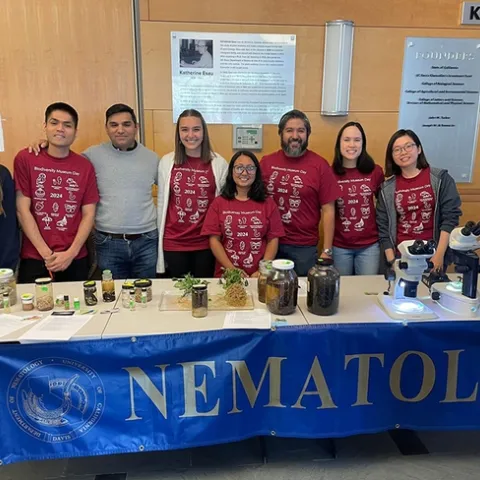
Ready to greet the crowds are (from left) Emma Kraft, undergraduate intern; Nick Latina, doctoral student, Plant Pathology; Shahid Siddique, associate professor and principal investigator; Alison Blundell, doctoral candidate, Plant Pathology; Pallavi Shakya, doctoral candidate, Plant Pathology; Bardo Castro, postdoctoral fellow; Veronica Casey, doctoral student, Entomology; and Ching-Jung Lin, doctoral candidate, Plant Pathology. (Photo courtesy of the Siddique lab)

Showcasing Animal and Plant Parasitic Nematodes

February 13, 2024
By Kathy Keatley Garvey
Nematologists answered scores of questions at the 13th annual UC Davis Biodiversity Day, a "Super Science Day" held Feb. 10. The Nematode Collection, showcased in the Katherine Esau Science Hall, drew hundreds of visitors wanting to know more about the organism commonly known as "roundworm.
View Article
Article

New password for Guest WiFi at ANR building in Davis

February 13, 2024
By Pamela S Kan-Rice
As part of our ongoing commitment to maintaining a secure and efficient network environment, we would like to inform you of some upcoming changes to our guest WiFi access in the ANR building at 2801 Second Street in Davis. On Feb.
View Article
UC Master Gardener Program Statewide Blog: Article

Pruning Roses and Cultivating Beauty

February 13, 2024
By Barbra Braaten
Pruning roses is not just a chore; it's an important practice for nurturing vibrant, healthy roses and fostering the beauty of your garden. In California, where the climate is favorable for growing roses, understanding the significance of pruning is key to achieving thriving and healthy roses.
View Article
Primary Image
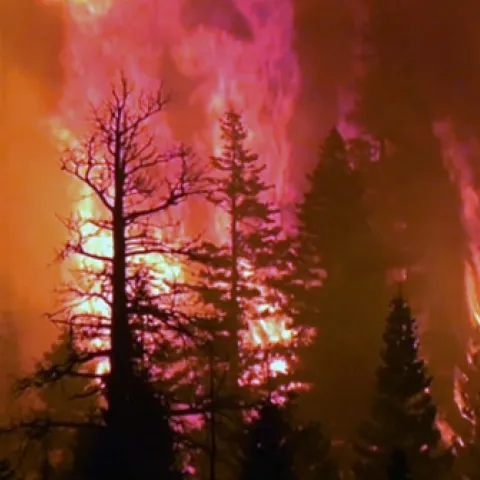
A series of wildfire experiments conducted at UC San Diego carry implications for aquatic ecosystems in areas such as the Sierra Nevada mountains. Photo credit: C.Wall
Blog - Forest Research and Outreach : Article

Wildfires Also Impact Aquatic Ecosystems

February 13, 2024
By Grace N Dean
In devastating cases dotting the globe in recent years, climate warming has led to an increase in the number and severity of destructive wildfires. Climate change projections indicate that environmental and economic damage from wildfires will spread and escalate in the years ahead.
View Article