A Natural Solution for California's Herds: African Catfish Peptides

California's cattle producers and agricultural communities are all too familiar with the rising challenge of antibiotic resistance, making common bacterial infections harder to treat in livestock. But imagine a future where we could tackle these infections with a natural, powerful alternative. Our research points to just that: antimicrobial peptides (AMPs) found in African catfish.

We're really excited about these peptides because African catfish thrive in pathogen-rich freshwater, naturally producing these robust immune compounds in their skin mucus as a defense. This natural origin makes them highly appealing alternatives to synthetic drugs.

Predicted Safety and Potent Action

One of the most compelling aspects of these AMPs is their predicted safety for mammals. Our initial computer analyses suggest that various catfish AMPs are generally recognized as safe (GRAS). We predict they'll be absorbed in the human intestine without causing liver, brain, or heart toxicity. Furthermore, lab tests on a promising peptide, NACAP-II, confirmed it was non-hemolytic, meaning it didn't damage rabbit red blood cells—a strong indicator of its potential safety for mammalian cells.

Beyond safety, these peptides demonstrate effectiveness against problematic bacteria. One study revealed NACAP-II's strong activity against Extended-Spectrum Beta-Lactamase (ESBL)-producing Escherichia coli—a critical concern for both animal and human health due to its resistance to many common antibiotics. Another peptide, ACAP-IV, also showed antibacterial activity against E. coli and Staphylococcus aureus. We believe these AMPs work by directly disrupting bacterial cell membranes, a mechanism that makes it harder for bacteria to develop resistance compared to how they resist traditional antibiotics.
Primary Image
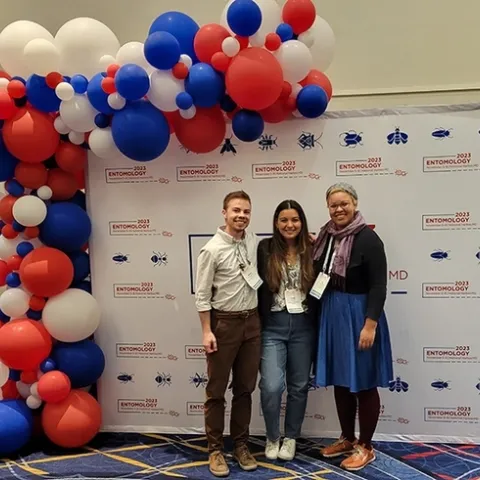
Fifth-year doctoral student Shawn Christensen of the Rachel Vannette lab, UC Davis Department of Entomology and Nematology
Entomology & Nematology News: Article

UC Davis Scientists Collaborate With 'Deep Look' on Bindweed Turret Bees

August 10, 2023
By Kathy Keatley Garvey
Microbiologist Shawn Christensen, a fifth-year doctoral candidate in the Rachel Vannette laboratory, UC Davis Department of Entomology and Nematology, and Vannette, his major professor, were among those collaborating with the producers of KQED Science's Deep Look for its wildlife video on bindweed t...
View Article
Article

Gender recognition training available

August 10, 2023
By Pamela S Kan-Rice
The Gender Recognition and Lived Name Policy (GRLN) ensures that all individuals are identified by their accurate gender identity and lived or preferred name on university-issued documents and in UC's information systems.
View Article
Primary Image
photo by Michelle Davis
Under the Solano Sun: Article

Mosquitoes

August 10, 2023
Mosquitoes are the winners in the global warming climate, thriving for longer periods of time in areas that are warmer and more humid.
View Article
Primary Image
UC Davis distinguished professor Diane Ullman (right) and assistant professor and urban landscape entomologist Emily Meineke taught the class.
Bug Squad: Article

A Mural Like No Other

August 9, 2023
By Kathy Keatley Garvey
The Secret Life of Vineyards depicts what you may never see: the life that inhabits a vineyard. A UC Davis team created the insect-themed ceramic-mosaic mural that was recently installed at the Matthiasson Winery, 3175 Dry Creek Road, Napa.
View Article
Primary Image
Sharon Lawler, professor emerita, UC Davis Department of Entomology and Nematology
Entomology & Nematology News: Article

Professor Emerita Sharon Lawler Weighs in on Mosquito Questions

August 9, 2023
By Kathy Keatley Garvey
Professor emerita Sharon Lawler of the UC Davis Department of Entomology and Nematology is quoted in a Pest Gnome study titled "2023's Most Vulnerable Counties for Mosquito-Borne Diseases," published Aug. 9. The article, noting that World Mosquito Day is Aug.
View Article
Nutrition Policy Institute News: Article

Policy brief urges continuation of the WIC Cash Value Benefit increase

August 9, 2023
By Danielle Lee, Lorrene D Ritchie
The Special Supplemental Nutrition Program for Women, Infants and Childrenalso known as WICserves nearly half of children born in the US at some point before their fifth birthday. WIC participation enhances food security, diet quality, and developmental outcomes of children.
View Article
UCCE in Santa Barbara County: Article

Fruit Tree Summer Pruning

August 9, 2023
The UC Master Gardeners of Santa Barbara County and Mesa Harmony Garden invite you to join us for a free workshop, Fruit-Tree Summer Pruning - Practical Tips and Hands-On Experience, to be held on Saturday, August 19, 2023, from 10 am-12 pm.
View Article
Nutrition Policy Institute News: Article

Increased Cash Value Benefit can increase the amount and diversity of fruits and vegetables redeemed by WIC participants

August 9, 2023
By Danielle Lee, Lorrene D Ritchie
Recent research shows that increased Cash Value Benefit amounts for Special Supplemental Nutrition Program for Women, Infants and Childrencommonly known as WICto purchase fruits and vegetables was associated with greater amounts and variety of fruits and vegetables purchased.
View Article