A Natural Solution for California's Herds: African Catfish Peptides

California's cattle producers and agricultural communities are all too familiar with the rising challenge of antibiotic resistance, making common bacterial infections harder to treat in livestock. But imagine a future where we could tackle these infections with a natural, powerful alternative. Our research points to just that: antimicrobial peptides (AMPs) found in African catfish.

We're really excited about these peptides because African catfish thrive in pathogen-rich freshwater, naturally producing these robust immune compounds in their skin mucus as a defense. This natural origin makes them highly appealing alternatives to synthetic drugs.

Predicted Safety and Potent Action

One of the most compelling aspects of these AMPs is their predicted safety for mammals. Our initial computer analyses suggest that various catfish AMPs are generally recognized as safe (GRAS). We predict they'll be absorbed in the human intestine without causing liver, brain, or heart toxicity. Furthermore, lab tests on a promising peptide, NACAP-II, confirmed it was non-hemolytic, meaning it didn't damage rabbit red blood cells—a strong indicator of its potential safety for mammalian cells.

Beyond safety, these peptides demonstrate effectiveness against problematic bacteria. One study revealed NACAP-II's strong activity against Extended-Spectrum Beta-Lactamase (ESBL)-producing Escherichia coli—a critical concern for both animal and human health due to its resistance to many common antibiotics. Another peptide, ACAP-IV, also showed antibacterial activity against E. coli and Staphylococcus aureus. We believe these AMPs work by directly disrupting bacterial cell membranes, a mechanism that makes it harder for bacteria to develop resistance compared to how they resist traditional antibiotics.
Central Coast Rangeland Coalition: Page

Brush Busting: Reclaiming and Maintaining Grasslands on the Central Coast

  October 16, 2025TomKat Ranch, Pescadero, CA PresentersLewis ReedMid-Pen Open Space DistrictJared ChildressCentral Coast Prescribed Burn AssociationBianca Soares ShaperoStar Creek Land StewardsStephanie LarsonUniversity of CA Cooperative ExtensionMark BiaggiTomKat RanchDocuments  …
View Page
Primary Image
Glenn County 4-H 2025 Window Display Press Release
Glenn County: Article

Glenn County 4-H 2025 Window Display Press Release

October 21, 2025
By Lea J Eddy
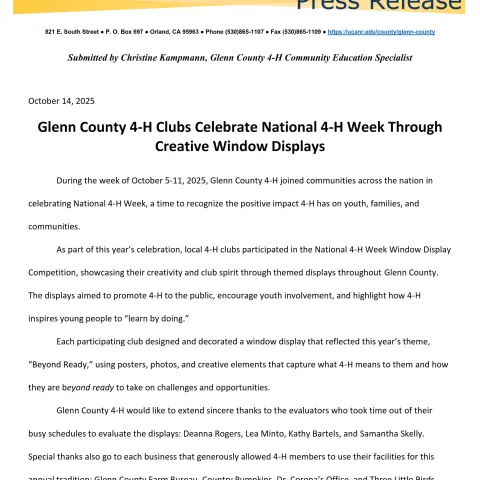
October 14, 2025 Glenn County 4-H Clubs Celebrate National 4-H Week Through Creative Window Displays During the week of October 5-11, 2025, Glenn County 4-H joined communities across the nation in celebrating National 4-H Week, a time to recognize the positive impact 4-H has on youth, families, and…
View Article
Primary Image
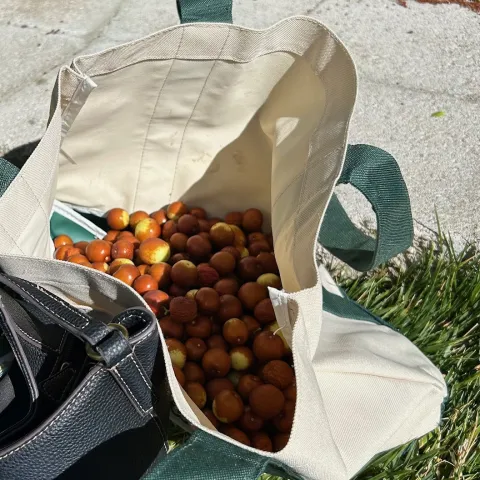
jujube fruits in a sack
Under the Solano Sun: Article

Jujube

October 21, 2025
By Jennifer M Baumbach
Blog by Karen MetzIn early September, I had the opportunity to visit a friend’s house and pick Chinese Jujubes, Ziziphus jujuba.  Ziziphus jujuba is native to Asia.  The tree was about 12 to 15 feet high.  She had been growing the tree for about 12 years. She thought this was about as large as…
View Article
Primary Image
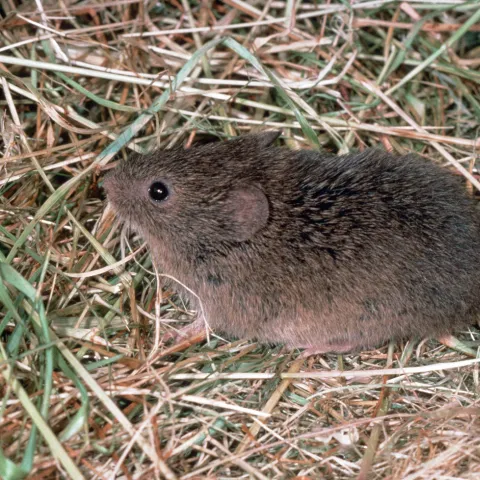
Vole. UC IPM Program
The Real Dirt: Article

Small Animal Pests

October 20, 2025
Vertebrate pests can pose a serious threat to the achievement of one’s “dream garden” by wreaking havoc on plants and vegetables literally overnight. They feed or gnaw on the roots of ornamental plants, vines, shrubs and trees, and even plastic water lines. In our area, pocket gophers, moles, voles and…
View Article
Primary Image
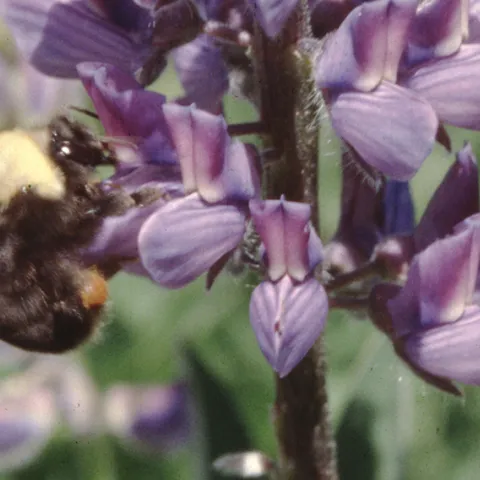
Franklin's bumble bee nectaring on lupine near Mt. Ashland in 1999. (Photo by Robbin Thorp)
Bug Squad: Article

Robbin Thorp and Franklin's Bumble Bee

October 20, 2025
By Kathy Keatley Garvey
 UC Davis Distinguished Emeritus Professor Robbin Thorp, an avid bumble bee conservationist, monitored Franklin's bumble bee, F Bombus franklini, for 21 years, until his death in 2019.The bee occupies only a narrow range of southern Oregon and northern California. Its range, a 13,300-square-mile area…
View Article
Workplace Inclusion and Belonging: Page

About Us

What is the Workplace Inclusion & Belonging Unit?The Workplace Inclusion & Belonging unit works collaboratively across UC Agriculture & Natural Resources to prioritize and integrate strategies throughout the organization to support equitable and inclusive policies, programs and partnerships to…
View Page
Event Primary Image
Key Performance Indicators
Grown in Marin: Event

How Small Meat Processors Use Metrics to Create Profits

Event Date
Oct 23, 2025

You already track production, labor, and yields—but are you tracking the right numbers? In this free webinar, NMPAN and Good Roots dive into their new, real case study about three different small meat processors who used simple Key Performance Indicators (KPIs) to identify where money was made – and…
Grown in Marin
View Event
Event Primary Image
New World Screwworm fly and larvae
Grown in Marin: Event

New World Screwworm – An Information Webinar for All Livestock Producers

Event Date
Nov 19, 2025

Livestock producers should know the risks of the New World Screwworm (NWS), how to recognize signs of NWS infestations and how to prepare for its possible introduction into California. NWS refers to a species of fly similar in size and appearance to the common blow fly but has maggots that burrow (screw…
Grown in Marin
View Event