A Natural Solution for California's Herds: African Catfish Peptides

California's cattle producers and agricultural communities are all too familiar with the rising challenge of antibiotic resistance, making common bacterial infections harder to treat in livestock. But imagine a future where we could tackle these infections with a natural, powerful alternative. Our research points to just that: antimicrobial peptides (AMPs) found in African catfish.

We're really excited about these peptides because African catfish thrive in pathogen-rich freshwater, naturally producing these robust immune compounds in their skin mucus as a defense. This natural origin makes them highly appealing alternatives to synthetic drugs.

Predicted Safety and Potent Action

One of the most compelling aspects of these AMPs is their predicted safety for mammals. Our initial computer analyses suggest that various catfish AMPs are generally recognized as safe (GRAS). We predict they'll be absorbed in the human intestine without causing liver, brain, or heart toxicity. Furthermore, lab tests on a promising peptide, NACAP-II, confirmed it was non-hemolytic, meaning it didn't damage rabbit red blood cells—a strong indicator of its potential safety for mammalian cells.

Beyond safety, these peptides demonstrate effectiveness against problematic bacteria. One study revealed NACAP-II's strong activity against Extended-Spectrum Beta-Lactamase (ESBL)-producing Escherichia coli—a critical concern for both animal and human health due to its resistance to many common antibiotics. Another peptide, ACAP-IV, also showed antibacterial activity against E. coli and Staphylococcus aureus. We believe these AMPs work by directly disrupting bacterial cell membranes, a mechanism that makes it harder for bacteria to develop resistance compared to how they resist traditional antibiotics.
Primary Image
Diagram demonstrating where to prune tomatoes
HOrT COCO-UC Master Gardener Program of Contra Costa: Article

Pruning: The Secret to Bigger and Tastier Tomatoes

June 5, 2023
By Help Desk Team
When I first started growing tomatoes, I was reluctant and nervous about pruning my tomato plants for fear I would be doing it incorrectly. After 9 years of growing, I have learned that it is one of the best practices to include in your plant care.
View Article
Primary Image
acp wax
Topics in Subtropics: Article

Talking Invasives over Lunch

June 5, 2023
By Ben A Faber
June 5 to 9, 2023 (12:00 to 1:00 pm each day) - Invasive Species Action Week Lunchtime Talks Invasive species are arriving in California with increasing frequency.
View Article
Primary Image
Brownish adult, yellow nymphs, and white wax of Asian citrus psyllids, Diaphorina citri Kuwayama. Photo by Michael E. Rogers, University of Florida.
Pests in the Urban Landscape: Article

Invasive Spotlight: Asian Citrus Psyllid and Huanglongbing Disease

June 4, 2023
By Lauren Fordyce
The Asian Citrus Psyllid (ACP) is a small, aphid-sized insect that poses a serious threat to California's citrus trees. This invasive pest can carry and transmit a fatal bacterial disease called Huanglongbing (HLB) to all citrus species.
View Article
Spill the Beans: Article

Tomatoes in Containers

June 4, 2023
by Donna Woodward The Tomatoes-in-Containers Trial We gardeners who have space to grow plants are fortunate. Many people would love to grow some vegetables, such as tomatoes, but have no garden space. We Napa MGs in the Field Test Committee felt we should do something to help these people.
View Article
Primary Image
Aggressive watergrass challenges California growers and researchers who seek effective control programs.
UC Weed Science (weed control, management, ecology, and minutia): Article

Weed Management in 2023: what can we expect?

June 4, 2023
By Consuelo B Baez Vega, Whitney B Brim-Deforest, Taiyu Guan
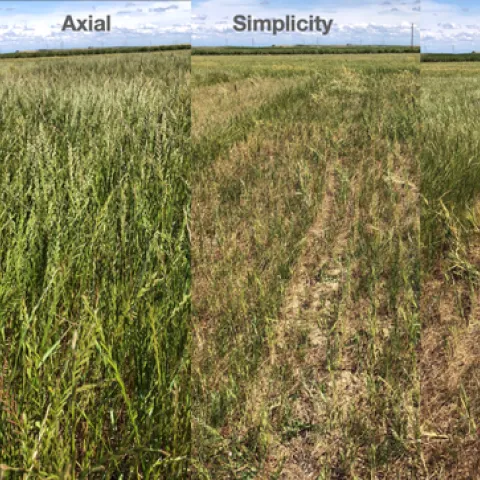
Coming out of 2022, where roughly half of all California rice fields were left fallowed last year, and others may have been fallowed for two seasons, many of us have questions about what weed management will look like in 2023.
View Article
UC Cooperative Extension Trinity County: Article

Cloverleaf June 2023

June 2, 2023
This issue contains: Quiz Bowl 2023 Trinity County Fair Range Camp 2023 Presentation Day Scholarships for Higher Education Small Animal Field Day 2023 California 4-H State Leadership Conference 2023 Horse Educational Contests
View Article
Primary Image
As a third grader, Jill Oberski is stretched out on the floor reading her "Audubon Field Guide to Insects and Spiders of North America." Another insect publication is within reach.
Bug Squad: Article

Myrmecologist Jill Oberski: A Dream Come True

June 2, 2023
By Kathy Keatley Garvey
Picture this. Jill Oberski is in the third grade, stretched out on the classroom floor reading her "Audubon Field Guide to Insects and Spiders of North America." Another insect publication is within reach. Fast forward to today: she's Dr. Jill Oberski.
View Article
Primary Image
Myrmecologist Jill Oberski answers questions at the Bohart Museum of Entomology's open house on ants, held May 21. (Photo by Kathy Keatley Garvey)
Entomology & Nematology News: Article

Myrmecologist Jill Oberski of Phil Ward Lab to Present Exit Seminar on June 7

June 2, 2023
By Kathy Keatley Garvey
Myrmecologist Jill Oberski, who just completed her doctoral dissertation, mentored by major professor Phil Ward, ant specialist and professor, UC Davis Department of Entomology and Nematology, will present her exit seminar on "Phylogenetics and Biogeography of the Pyramid Ants" at 4:10 p.m.
View Article