A Natural Solution for California's Herds: African Catfish Peptides

California's cattle producers and agricultural communities are all too familiar with the rising challenge of antibiotic resistance, making common bacterial infections harder to treat in livestock. But imagine a future where we could tackle these infections with a natural, powerful alternative. Our research points to just that: antimicrobial peptides (AMPs) found in African catfish.

We're really excited about these peptides because African catfish thrive in pathogen-rich freshwater, naturally producing these robust immune compounds in their skin mucus as a defense. This natural origin makes them highly appealing alternatives to synthetic drugs.

Predicted Safety and Potent Action

One of the most compelling aspects of these AMPs is their predicted safety for mammals. Our initial computer analyses suggest that various catfish AMPs are generally recognized as safe (GRAS). We predict they'll be absorbed in the human intestine without causing liver, brain, or heart toxicity. Furthermore, lab tests on a promising peptide, NACAP-II, confirmed it was non-hemolytic, meaning it didn't damage rabbit red blood cells—a strong indicator of its potential safety for mammalian cells.

Beyond safety, these peptides demonstrate effectiveness against problematic bacteria. One study revealed NACAP-II's strong activity against Extended-Spectrum Beta-Lactamase (ESBL)-producing Escherichia coli—a critical concern for both animal and human health due to its resistance to many common antibiotics. Another peptide, ACAP-IV, also showed antibacterial activity against E. coli and Staphylococcus aureus. We believe these AMPs work by directly disrupting bacterial cell membranes, a mechanism that makes it harder for bacteria to develop resistance compared to how they resist traditional antibiotics.
Cooperative Extension Ventura County: Article

Spring 2012

August 3, 2023
Focuses on international projects.
View Article
Nutrition Policy Institute News: Article

Study suggests a school district audit, feedback and coaching program can be successfully implemented to support improved elementary school physical education

August 3, 2023
By Danielle Lee, Hannah R Thompson
Some US state laws require schools to provide certified physical education, or PE, teachers and a minimum amount of PE to support students in achieving 60 minutes of daily physical activity. However, adherence to these laws is low, especially in elementary schools.
View Article
Primary Image
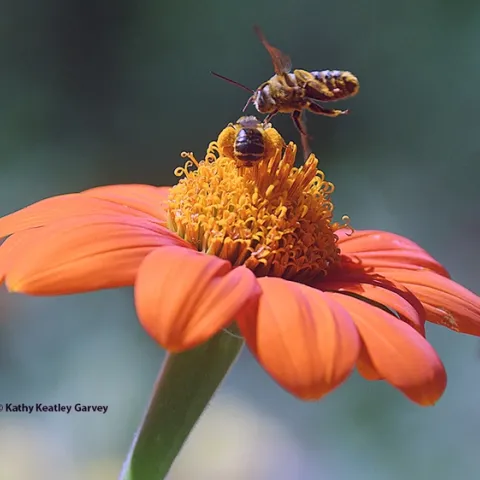
A male Melissodes agilis dives toward the female of his species, but she's not interested. (Photo by Kathy Keatley Garvey)
Bug Squad: Article

Defensive Measures: Leave Me Alone!

August 3, 2023
By Kathy Keatley Garvey
Have you ever seen the defensive antics of a female longhorned bee, sometimes called a sunflower bee, as she's trying to forage on flowers while a suitor is trying to get her attention?
View Article
Primary Image
AI generated picture via Canva.
Under the Solano Sun: Article

Music in the Garden

August 3, 2023
In thinking of what I want to share with my fellow master gardeners this month I realized it's not a gardening tip, an invasive pest or really anything educational. This post is more for the soul. This is my gardening playlist.
View Article
UC Master Gardener Program of Riverside County: Article

Garden Views, 2023.07 - Jul/Aug 2023

August 2, 2023
In This Issue: Riverside Countys Project on the Soboba Tribes Cultural Garden Wins Grand Prize! Search for Excellence Award (SFE); Pam Elias recognizes Soboba SFE Team; Susan Krings updates us on the new Palm Desert Grow Lab; Cynthia Morris-Sotelo shares 2022-2023 MG Data; Vern Shuttuck explains the...
View Article