A Natural Solution for California's Herds: African Catfish Peptides

California's cattle producers and agricultural communities are all too familiar with the rising challenge of antibiotic resistance, making common bacterial infections harder to treat in livestock. But imagine a future where we could tackle these infections with a natural, powerful alternative. Our research points to just that: antimicrobial peptides (AMPs) found in African catfish.

We're really excited about these peptides because African catfish thrive in pathogen-rich freshwater, naturally producing these robust immune compounds in their skin mucus as a defense. This natural origin makes them highly appealing alternatives to synthetic drugs.

Predicted Safety and Potent Action

One of the most compelling aspects of these AMPs is their predicted safety for mammals. Our initial computer analyses suggest that various catfish AMPs are generally recognized as safe (GRAS). We predict they'll be absorbed in the human intestine without causing liver, brain, or heart toxicity. Furthermore, lab tests on a promising peptide, NACAP-II, confirmed it was non-hemolytic, meaning it didn't damage rabbit red blood cells—a strong indicator of its potential safety for mammalian cells.

Beyond safety, these peptides demonstrate effectiveness against problematic bacteria. One study revealed NACAP-II's strong activity against Extended-Spectrum Beta-Lactamase (ESBL)-producing Escherichia coli—a critical concern for both animal and human health due to its resistance to many common antibiotics. Another peptide, ACAP-IV, also showed antibacterial activity against E. coli and Staphylococcus aureus. We believe these AMPs work by directly disrupting bacterial cell membranes, a mechanism that makes it harder for bacteria to develop resistance compared to how they resist traditional antibiotics.
Primary Image
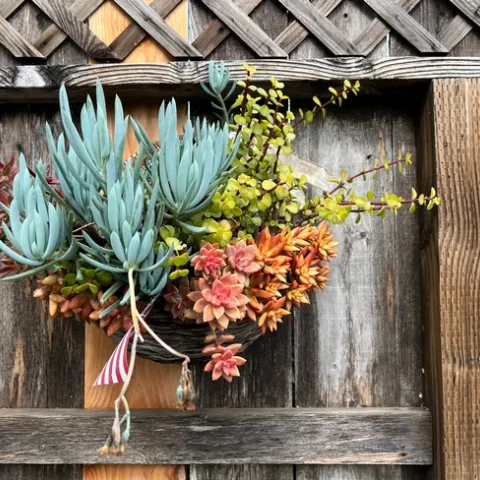
Torch aloe. photo by Karen Metz
Under the Solano Sun: Article

Pacific Grove

February 13, 2023
The third week of January we were able to return to one of our favorite areas, the Monterey Bay. We stayed in Pacific Grove just a few blocks above Lover's Point. After unpacking we quickly walked down to the point and then along the shore trail to Perkin's Park.
View Article
Primary Image
boxes of bee hives painted white.

Bees are buzzing

February 12, 2023
By Deanne Meyer
This last week started with us waking up to learn of the 7.8 magnitude earthquake that rocked Turkey and Syria. Drone footage, satellite imagery, news reports all show the devastation.
View Article
Primary Image
Kingsville boxwood (flikr.com -Mike)

Sports that anyone can play!

February 11, 2023
I'll bet you did not know that some of your plants have sports. Not the athletic kind, these sports are chance offshoots that are genetically different from the parent plant.
View Article
ANR Contracts & Grants Updates: Article

Upcoming USDA NIFA Funding Opportunities - March and April 2023

February 10, 2023
By Kathleen P Nolan
Dear Colleagues, NIFA has announced the Children, Youth, and Families at Risk Sustainable Community Projects (CYFAR SCP) funding program to marshal resources of the Land-grant and Cooperative Extension Systems so that, in collaboration with other organizations, they can develop and deliver education...
View Article
Primary Image
Doctoral candidate Christine Tabuloc working in the laboratory of molecular geneticist and physiologist Joanna Chui, professor and vice chair of the UC Davis Department of Entomology and Nematology. (Photo by Kathy Keatley Garvey)
Entomology & Nematology News: Article

Doctoral Candidate Christine Tabuloc's Exit Seminar on Feb. 15

February 10, 2023
By Kathy Keatley Garvey
Doctoral candidate Christine Tabuloc of the laboratory of molecular geneticist and physiologist Joanna Chui, professor and vice chair of the UC Davis Department of Entomology and Nematology, will present her exit seminar at 4:10 p.m., Wednesday, Feb. 15 in 122 Briggs Hall.
View Article
Salinas Valley Agriculture: Article

Central Coast Wine Grape Seminar

February 10, 2023
By Larry J Bettiga
CENTRAL COAST WINE GRAPE SEMINAR WHEN: Tuesday, March 7, 2023 WHERE: Monterey County Agricultural Center 1432 Abbott Street, Salinas, CA, 93901 TIME: Registration: 1:00 pm Meeting: 1:30 5:00 pm Agenda Determining Nitrogen Nutritional Requirements of Grapevines - Matthew Fidelibus, Viticulture Spec...
View Article
Primary Image
Milkweed seeds. Laura Lukes
The Real Dirt: Article

Magical, Mysterious Seeds

February 10, 2023
It's the time of year when gardeners begin planning their summer gardens and starting seeds indoors to get a head start on the growing season. No better time, then, to think about how amazing, enchanting, magical, and mysterious seeds really are. They can be densely nutritious or fatally poisonous.
View Article
UC Small Grains Blog: Article

How do I know the status of my wheat crop after heavy geese damage?

February 10, 2023
By Sarah E Light, Rachael Long, Michelle M Leinfelder-Miles, Mark E Lundy, Nicholas E Clark, Whitney B Brim-Deforest
Geese have been heavily foraging again in small grains and alfalfa fields this winter. Drought conditions led to heavy geese damage to Sacramento Valley fields in 2021. Why are they feeding heavily on crops again this year? Rice plays an important role in providing foraging habitat for geese.
View Article