A Natural Solution for California's Herds: African Catfish Peptides

California's cattle producers and agricultural communities are all too familiar with the rising challenge of antibiotic resistance, making common bacterial infections harder to treat in livestock. But imagine a future where we could tackle these infections with a natural, powerful alternative. Our research points to just that: antimicrobial peptides (AMPs) found in African catfish.

We're really excited about these peptides because African catfish thrive in pathogen-rich freshwater, naturally producing these robust immune compounds in their skin mucus as a defense. This natural origin makes them highly appealing alternatives to synthetic drugs.

Predicted Safety and Potent Action

One of the most compelling aspects of these AMPs is their predicted safety for mammals. Our initial computer analyses suggest that various catfish AMPs are generally recognized as safe (GRAS). We predict they'll be absorbed in the human intestine without causing liver, brain, or heart toxicity. Furthermore, lab tests on a promising peptide, NACAP-II, confirmed it was non-hemolytic, meaning it didn't damage rabbit red blood cells—a strong indicator of its potential safety for mammalian cells.

Beyond safety, these peptides demonstrate effectiveness against problematic bacteria. One study revealed NACAP-II's strong activity against Extended-Spectrum Beta-Lactamase (ESBL)-producing Escherichia coli—a critical concern for both animal and human health due to its resistance to many common antibiotics. Another peptide, ACAP-IV, also showed antibacterial activity against E. coli and Staphylococcus aureus. We believe these AMPs work by directly disrupting bacterial cell membranes, a mechanism that makes it harder for bacteria to develop resistance compared to how they resist traditional antibiotics.
Fresno County 4-H: Article

June-July 2022 Guidelines

June 17, 2022
In This Edition 2- Committee & Council Mtgs. 2- Happy New Year 2- Fresno- Beautified! 2- State Leadership Conf.
View Article
Monterey County: Article

4-H Leader's Council June 21st meeting 2022

June 17, 2022
Dear members of the Monterey County 4-H Leaders Council, On Tuesday, June 21st, the 4-H Leaders Council will hold its monthly meeting at 7pm. This in-person meeting will be at the Large Conference room at 1432 Abbott St, Salinas.
View Article
Primary Image
photos by Kathy Gunther
Under the Solano Sun: Article

It's Not a Violet!

June 17, 2022
In my research on African Violets, I have found so many wonderful other members of the Gesneriad family! The one that really has caught my eye are the Streptocarpus . The genus is native to Central, Eastern and Southern Africa, including Madagascar and the Comoro Islands.
View Article
Primary Image
This is a male trapdoor spider, a new species from the genus Promyrmekiaphila. Youths are invited to suggest names for this species in a contest to take place at the Bohart Museum open house on June 25. (Photo courtesy of the Jason Bond lab)
Entomology & Nematology News: Article

Bohart Museum/AAS Open House: Youths Invited to Name a New Species of Spider

June 17, 2022
By Kathy Keatley Garvey
One of the activities at the Bohart Museum of Entomology open house, "Eight-Legged Encounters," set from 1 to 4 p.m., Saturday, June 25, will be a "Name-That-Spider-Species" contest, open to students 18 and under. The focus: a male trapdoor spider, a new species from the genus Promyrmekiaphila.
View Article
Primary Image
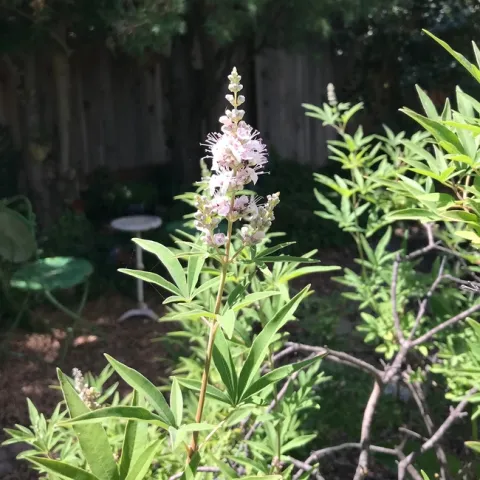
Pale green plant with light purple flowers.
The Stanislaus Sprout: Article

A Lavender Experience Workshop

June 17, 2022
By Anne E Schellman
Lavender has been used for centuries for many purposes. Lavender flowers can be found in bath salts, teas, baked goods, oils, and other products. This workshop is an exploration of the history of lavender and it's uses, and tips for how to grow it successfully in your garden.
View Article