A Natural Solution for California's Herds: African Catfish Peptides

California's cattle producers and agricultural communities are all too familiar with the rising challenge of antibiotic resistance, making common bacterial infections harder to treat in livestock. But imagine a future where we could tackle these infections with a natural, powerful alternative. Our research points to just that: antimicrobial peptides (AMPs) found in African catfish.

We're really excited about these peptides because African catfish thrive in pathogen-rich freshwater, naturally producing these robust immune compounds in their skin mucus as a defense. This natural origin makes them highly appealing alternatives to synthetic drugs.

Predicted Safety and Potent Action

One of the most compelling aspects of these AMPs is their predicted safety for mammals. Our initial computer analyses suggest that various catfish AMPs are generally recognized as safe (GRAS). We predict they'll be absorbed in the human intestine without causing liver, brain, or heart toxicity. Furthermore, lab tests on a promising peptide, NACAP-II, confirmed it was non-hemolytic, meaning it didn't damage rabbit red blood cells—a strong indicator of its potential safety for mammalian cells.

Beyond safety, these peptides demonstrate effectiveness against problematic bacteria. One study revealed NACAP-II's strong activity against Extended-Spectrum Beta-Lactamase (ESBL)-producing Escherichia coli—a critical concern for both animal and human health due to its resistance to many common antibiotics. Another peptide, ACAP-IV, also showed antibacterial activity against E. coli and Staphylococcus aureus. We believe these AMPs work by directly disrupting bacterial cell membranes, a mechanism that makes it harder for bacteria to develop resistance compared to how they resist traditional antibiotics.
Primary Image
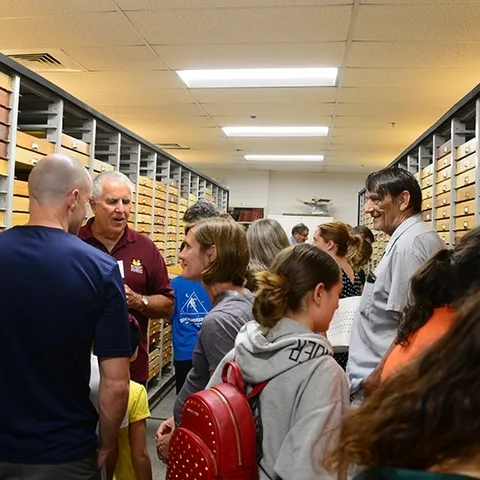
Postdoctoral researcher Severyn Korneyev, a Ukranian dipterist, created this fly diversity display as a traveling exhibit for the Bohart Museum of Entomology. (Photo by Kathy Keatley Garvey)
Bug Squad: Article

Fly Diversity Explained With Ukrainian Colors

May 3, 2022
By Kathy Keatley Garvey
When officials at the Bohart Museum of Entomology asked UC Davis students, graduate students and postdoctoral fellows if they would like to create a scientific traveling display case of insect specimens, one of those answering the call was postdoctoral researcher Severyn Korneyev, a Ukrainian entomo...
View Article
Primary Image
Trees Come First Under Drought and Water Restrictions
Landscape Horticulture Updates for Southern California: Article

Drought Resources for Keeping Trees Alive

May 3, 2022
By Janet S Hartin
University of California Cooperative Extension Drought Resources To Keep Your Plants Alive "Trees Come First Under Drought and Water Restrictions" Keeping Plants Alive Under Drought and Water Restrictions (English) https://anrcatalog.ucanr.edu/pdf/8553.
View Article
Primary Image
IMG 2396
UC Small Grains Blog: Article

May 17th: 2022 UC Davis Small Grains and Alfalfa/Forages Field Day

May 2, 2022
By Mark E Lundy
The 2022 UC Davis Small Grains and Alfalfa/Forages Field Day will be held: May 17th, 8:00 a.m. 1:00 p.m. with tours of Small Grains Breeding plots to follow in the afternoon LOCATION: Department of Plant Sciences Field Facility, UC Davis (2400 Hutchison Dr, Davis CA 38.5390, -121.
View Article
Nut Crops: Article

Variety Trial Field Day Chowchilla May 5th

May 2, 2022
Please see the attached flyer with details for the variety trial field day taking place this Thursday May 5th at 8 am. Avenue 26 & Rd 19 in Chowchilla send questions to Phoebe Gordon pegordon@ucanr.
View Article
Kern County: Article

Kern UCCE/DWR Weekly Crop Water Use Report 05-02-2022

May 2, 2022
Please see below link to access "How To Use Weekly Crop Water Use (ET) Reports to Assist Farm Water Management" How To Use Weekly Crop Water Use Report Please see below link to access "Weekly ET Report 05-02-2022" ET Report 05-02-2022 Please see disclaimer link below: University of California Divisi...
View Article
Primary Image
Lots of nectarines. photos by Cindy Yee
Under the Solano Sun: Article

Trying Harder

May 2, 2022
Every year I find excuses to avoid thinning our prolific nectarine tree. It is a tedious and time-consuming chore, and for me, conveniently postponed until too late. My laziness inevitably results in ripe fruit the size of big cherries.
View Article