A Natural Solution for California's Herds: African Catfish Peptides

California's cattle producers and agricultural communities are all too familiar with the rising challenge of antibiotic resistance, making common bacterial infections harder to treat in livestock. But imagine a future where we could tackle these infections with a natural, powerful alternative. Our research points to just that: antimicrobial peptides (AMPs) found in African catfish.

We're really excited about these peptides because African catfish thrive in pathogen-rich freshwater, naturally producing these robust immune compounds in their skin mucus as a defense. This natural origin makes them highly appealing alternatives to synthetic drugs.

Predicted Safety and Potent Action

One of the most compelling aspects of these AMPs is their predicted safety for mammals. Our initial computer analyses suggest that various catfish AMPs are generally recognized as safe (GRAS). We predict they'll be absorbed in the human intestine without causing liver, brain, or heart toxicity. Furthermore, lab tests on a promising peptide, NACAP-II, confirmed it was non-hemolytic, meaning it didn't damage rabbit red blood cells—a strong indicator of its potential safety for mammalian cells.

Beyond safety, these peptides demonstrate effectiveness against problematic bacteria. One study revealed NACAP-II's strong activity against Extended-Spectrum Beta-Lactamase (ESBL)-producing Escherichia coli—a critical concern for both animal and human health due to its resistance to many common antibiotics. Another peptide, ACAP-IV, also showed antibacterial activity against E. coli and Staphylococcus aureus. We believe these AMPs work by directly disrupting bacterial cell membranes, a mechanism that makes it harder for bacteria to develop resistance compared to how they resist traditional antibiotics.
Primary Image
Capture Don York KMJ580 December 27, 2021
Conservation Agriculture: Article

DeVincentis and Mitchell talk “cover crop water use” with KMJ580’s Don York on morning Ag Report

December 29, 2021
By Jeffrey P Mitchell
December 28, 2021 KMJ580's Don York, who produces the daily Ag Report on the Fresno-based radio station, interviewed Alyssa DeVincentis and Jeff Mitchell about work they and a larger team of researchers at UC Davis conducted on water-related impacts of winter cover crops throughout the Central Valle...
View Article
Primary Image
Mischievous garden gnomes
Garden Notes: Article

Maintaining a Senior Friendly Low Maintenance Yard

December 28, 2021
By Marceline D Sousa
The needs of the garden can easily lead to feeling overwhelmed. At one point or another, every aging gardener will feel the angst of not knowing where to begin. With each new season, there is the realization that what was managed last year may not be possible this year.
View Article
Primary Image
This image of a black-tailed bumble bee, Bombus melanopygus, was taken in Benicia on Jan. 25, 2020. (Photo by Kathy Keatley Garvey)
Bug Squad: Article

Wanted: The First Bumble Bee of the Year in Yolo or Solano Counties

December 28, 2021
By Kathy Keatley Garvey
Wanted: the first bumble bee of the year in Yolo or Solano Counties! If you're the first to photograph one and email it to the Bohart Museum of Entomology you'll win the prize: a coffee cup designed with an image of the endangered Franklin's bumble bee.
View Article
Primary Image
Chart
Entomology & Nematology News: Article

Winter Quarter Seminars Begin Jan. 5

December 27, 2021
By Kathy Keatley Garvey
The UC Davis Department of Nematology's winter quarter seminars will take place on Wednesdays at 4:10 p.m., beginning Jan. 5 and continuing through March 9, announced seminar coordinator and nematologist Shahid Siddique, assistant professor.
View Article
Primary Image
Randa Jabbour, first seminar speaker of the quarter
Bug Squad: Article

UC Davis Department of Entomology Rolling Out the Seminar Schedule

December 27, 2021
By Kathy Keatley Garvey
Ready for the new year? The UC Davis Department of Nematology's winter quarter seminars will take place on Wednesdays at 4:10 p.m., beginning Jan. 5 and continuing through March 9, announced seminar coordinator and nematologist Shahid Siddique, assistant professor.
View Article
Primary Image
Black Locust ‘twisty baby’
Spill the Beans: Article

Oops! I did it again

December 27, 2021
by Melody Kendall After working an hour or so doing some fall pruning in my garden, the song Oops I did it again' came to mind as I rushed into the house for a quick wash on my itching arms. It seems every time I work in my garden I forget that the gaillardia plant is a skin irritant.
View Article
Article

December in The Orchard: Frost and Peach Leaf Curl

December 24, 2021
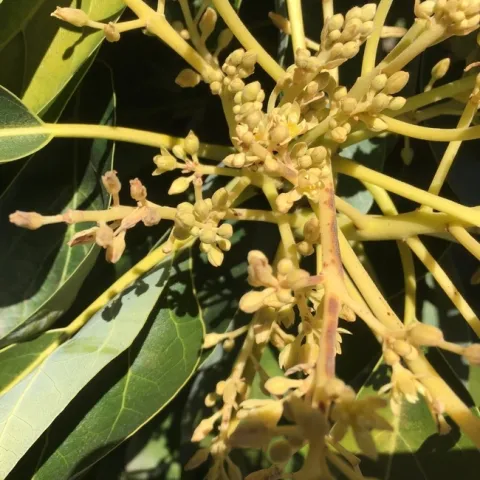
December is a slow month in The Orchard, but there are still a couple of things going on, both related to the start of winter. First up, we have had several nights of frost as well as ice on the birdbaths. That means the citrus and avocado trees are at risk.
View Article
Primary Image
Santa greets a monarch butterfly, Danaus plexippus. This one is a male. (Photo by Kathy Keatley Garvey)
Bug Squad: Article

It's Beginning to Look a Lot Like...Chrysalis

December 24, 2021
By Kathy Keatley Garvey
It's beginning to look a lot like...chrysalis. It didn't "look at all like chrysalis" this year in our pollinator garden in Vacaville, Calif. We spotted only one monarch--repeat, only one monarch--and it fluttered around and finally oviposited on our milkweed. The eggs vanished.
View Article