A Natural Solution for California's Herds: African Catfish Peptides

California's cattle producers and agricultural communities are all too familiar with the rising challenge of antibiotic resistance, making common bacterial infections harder to treat in livestock. But imagine a future where we could tackle these infections with a natural, powerful alternative. Our research points to just that: antimicrobial peptides (AMPs) found in African catfish.

We're really excited about these peptides because African catfish thrive in pathogen-rich freshwater, naturally producing these robust immune compounds in their skin mucus as a defense. This natural origin makes them highly appealing alternatives to synthetic drugs.

Predicted Safety and Potent Action

One of the most compelling aspects of these AMPs is their predicted safety for mammals. Our initial computer analyses suggest that various catfish AMPs are generally recognized as safe (GRAS). We predict they'll be absorbed in the human intestine without causing liver, brain, or heart toxicity. Furthermore, lab tests on a promising peptide, NACAP-II, confirmed it was non-hemolytic, meaning it didn't damage rabbit red blood cells—a strong indicator of its potential safety for mammalian cells.

Beyond safety, these peptides demonstrate effectiveness against problematic bacteria. One study revealed NACAP-II's strong activity against Extended-Spectrum Beta-Lactamase (ESBL)-producing Escherichia coli—a critical concern for both animal and human health due to its resistance to many common antibiotics. Another peptide, ACAP-IV, also showed antibacterial activity against E. coli and Staphylococcus aureus. We believe these AMPs work by directly disrupting bacterial cell membranes, a mechanism that makes it harder for bacteria to develop resistance compared to how they resist traditional antibiotics.
Primary Image
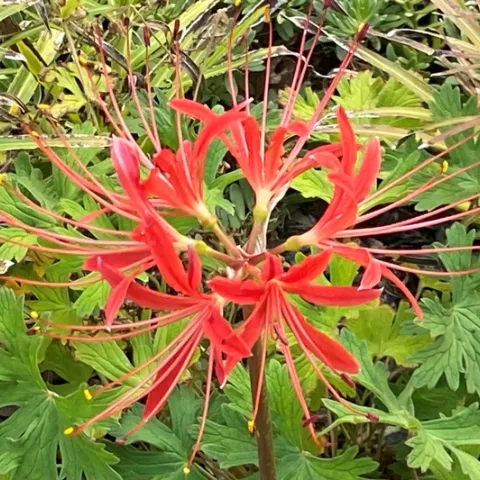
Street art usually focuses on such insects as bees, butterflies and dragonflies, but at Vacaville's Ulatis Creek Park, someone affixed this carpenter ant. (Photo by Kathy Keatley Garvey)
Bug Squad: Article

The Art of the Ant

July 2, 2021
By Kathy Keatley Garvey
We're used to admiring street art that showcases such iconic insects as lady beetles, dragonflies and butterflies, but carpenter ants? Carpenter ants? If you walk over the Ulatis Creek Bridge, Vacaville, to enter Andrews Park for the Fourth of July celebration on Sunday, you may be surprised.
View Article
Primary Image
Cindy McReynolds, recipient of UC Davis Davis Staff Assembly's 2021 Citation of Excellence Research Award. (Photo by Kathy Keatley Garvey)
Entomology & Nematology News: Article

Cindy McReynolds: UC Davis Staff Assembly's 'Citation of Excellence Research Award'

July 2, 2021
By Kathy Keatley Garvey
Cindy McReynolds, a 10-year outstanding research administrator and scientist in the laboratory of UC Davis distinguished professor Bruce Hammock, Department of Entomology and Nematology--and who just received her doctorate in pharmacology/toxicology--is the recipient of the UC Davis Staff Assembly's...
View Article
Primary Image
Gardening with kids. (outdoorfamiliesonline.com)
Napa Master Gardener Column: Article

Gardening Fun with Children.

July 2, 2021
By Carrie Strohl, UC Master Gardener of Napa County Gardening has always been a great way to grow food, connect with nature and stay physically active, and these benefits are no different for children.
View Article
Primary Image
healthy fat
Healthy Communities Blog: Article

Eating for health: It’s not what it “looks” like

July 2, 2021
By Rosa Vargas, Shannon Klisch
Contrary to the messages we are exposed to from popular culture, media, and public health about body size, focusing on how much a person weighs isn't necessarily an effective way to promote health.
View Article
Primary Image
Mimosa. photos by Rebecca Wallace
Under the Solano Sun: Article

From Invasive to Native

July 2, 2021
Or: An Ode to Albizia julibrissin (Persian silk tree/mimosa) Spring boughs adorned with delicate pink flowers attracted endless bees, butterflies, and hummingbirds. Dappled summer shade that opened to let in the winter sun. The perfect breezy spot to sit and observe nature.
View Article
Primary Image
W-GM-SHAL-MP.002
Garden Notes: Article

Pest of the Season

July 2, 2021
By Marceline D Sousa
Blossom End Rot: Blossom end rot is not a disease but a very common environmental disorder many gardeners see every summer. It affects tomatoes, peppers, and cucurbits. Plants with blossom end rot show small, light brown spots at the blossom end of immature fruit.
View Article
Primary Image
Bare LED bulb outside at night
Garden Notes: Article

Why the Milky Way Disappeared from View

July 2, 2021
Diurnal, or daylight pollinators such as bees and butterflies, have long been considered the champion workhorses in their field; however, a paradigm shift is slowly occurring that brings to the forefront the overwhelming contributions of nocturnal Lepidoptera pollinators: the moths.
View Article
Primary Image
Bird “netting” over bean seedlings made with repurposed chicken wire
Garden Notes: Article

Hints, Hacks, Common Sense, and Science

July 2, 2021
A surprising number of serious gardeners confess to at least one occasion of being stumped by a gardening problem with no obvious answer. There are a number of ways to find an answer, one of which is the SJC Master Gardener Help Line.
View Article