A Natural Solution for California's Herds: African Catfish Peptides

California's cattle producers and agricultural communities are all too familiar with the rising challenge of antibiotic resistance, making common bacterial infections harder to treat in livestock. But imagine a future where we could tackle these infections with a natural, powerful alternative. Our research points to just that: antimicrobial peptides (AMPs) found in African catfish.

We're really excited about these peptides because African catfish thrive in pathogen-rich freshwater, naturally producing these robust immune compounds in their skin mucus as a defense. This natural origin makes them highly appealing alternatives to synthetic drugs.

Predicted Safety and Potent Action

One of the most compelling aspects of these AMPs is their predicted safety for mammals. Our initial computer analyses suggest that various catfish AMPs are generally recognized as safe (GRAS). We predict they'll be absorbed in the human intestine without causing liver, brain, or heart toxicity. Furthermore, lab tests on a promising peptide, NACAP-II, confirmed it was non-hemolytic, meaning it didn't damage rabbit red blood cells—a strong indicator of its potential safety for mammalian cells.

Beyond safety, these peptides demonstrate effectiveness against problematic bacteria. One study revealed NACAP-II's strong activity against Extended-Spectrum Beta-Lactamase (ESBL)-producing Escherichia coli—a critical concern for both animal and human health due to its resistance to many common antibiotics. Another peptide, ACAP-IV, also showed antibacterial activity against E. coli and Staphylococcus aureus. We believe these AMPs work by directly disrupting bacterial cell membranes, a mechanism that makes it harder for bacteria to develop resistance compared to how they resist traditional antibiotics.
ANR Contracts & Grants Updates: Article

BARD Call for Proposals 2022

June 11, 2021
By Kathleen P Nolan
Dear Colleagues, The US-Israel Binational Agricultural Research and Development Fund (BARD) is accepting cooperative research proposals for the 2022 funding cycle. BARD supports mission-oriented cooperative agricultural research projects of mutual interest to the United States and Israel.
View Article
Primary Image
2021 June10
Ranching in the Sierra Foothills: Article

Looking Down the Road

June 11, 2021
By Daniel K Macon
Ranching, like any other agricultural business, requires a considerable amount of planning. Unlike some farming businesses, however, ranching also requires a certain level of comfort with conditions that are beyond our control.
View Article
Primary Image
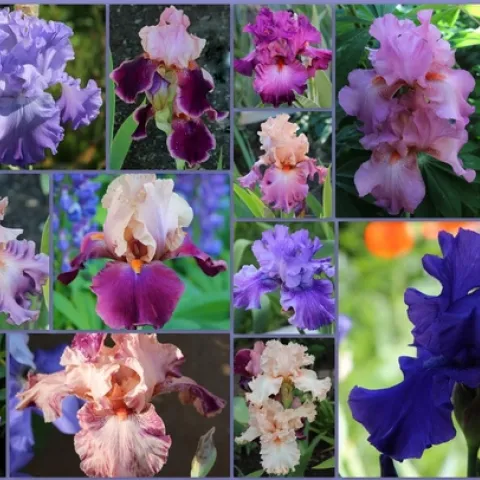
Bearded iris come in dozens of colors! (susannespicker.blogspot.com)
Napa Master Gardener Column: Article

Bearded Iris.

June 11, 2021
By Gayle Keane, U. C. Master Gardener of Napa County For me one of the most welcome sights of spring is when my bearded iris bloom. I particularly love the combination of bright blue and lemon-yellow blossoms. But iris come in almost every color of the rainbow, even the dusky colors of autumn.
View Article
Primary Image
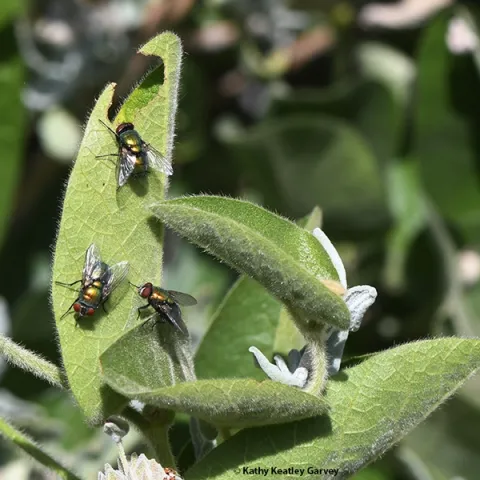
It's Friday Fly Day, so how about three green bottle flies on a catmint leaf? Imsge taken in Vacaville. (Photo by Kathy Keatley Garvey)
Bug Squad: Article

Happy Fly Day Friday!

June 11, 2021
By Kathy Keatley Garvey
Happy Fly Day Friday! If you've ever wondered why entomologists and insect enthusiasts post images of flies on Friday, not to worry. They consider this "Fly Day." The Urban Dictionary defines Fly Day as "the day of the week when contract employees fly from their work site to their home location.
View Article
Monterey County: Article

4-H Leader's Council June 15th, meeting 2021

June 11, 2021
Dear Members of the Monterey County 4-H Leaders Council, On Tuesday, June 15th, the 4-H Leaders Council will hold its monthly meeting at 7pm. This in-person meeting will be at the Sheriffs Posse Grounds, 395 Old Natividad Rd, Salinas, CA 93902.
View Article
Primary Image
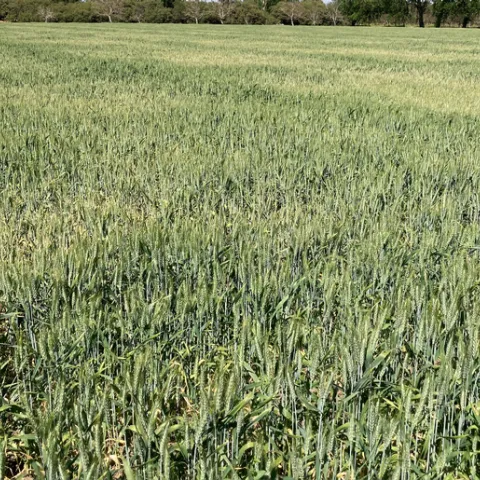
Figure 6: Patchy patterns caused by drought stress and variations in soil. Knowing where textural changes occur in a field can help catch symptoms of stress early
UC Small Grains Blog: Article

Irrigation for wheat and other small grains in a drought year

June 11, 2021
Dry conditions this year have generated common questions from growers such as when should I irrigate to maximize yield? and will I be able to take this crop to seed? Many of the principles that dictate irrigation strategies in wheat are similar to those of other crops.
View Article
Nutrition Policy Institute News: Article

NPI researchers present on critical role of WIC during COVID-19 pandemic at the American Society for Nutrition's annual conference, Nutrition 2021

June 11, 2021
By Danielle Lee
The federal Special Supplemental Nutrition Program for Women, Infants and Children (WIC) provides supplemental foods, health care referrals, nutrition education, and breastfeeding support for low-income women, infants and children up to age five who are at nutritional risk.
View Article