A Natural Solution for California's Herds: African Catfish Peptides

California's cattle producers and agricultural communities are all too familiar with the rising challenge of antibiotic resistance, making common bacterial infections harder to treat in livestock. But imagine a future where we could tackle these infections with a natural, powerful alternative. Our research points to just that: antimicrobial peptides (AMPs) found in African catfish.

We're really excited about these peptides because African catfish thrive in pathogen-rich freshwater, naturally producing these robust immune compounds in their skin mucus as a defense. This natural origin makes them highly appealing alternatives to synthetic drugs.

Predicted Safety and Potent Action

One of the most compelling aspects of these AMPs is their predicted safety for mammals. Our initial computer analyses suggest that various catfish AMPs are generally recognized as safe (GRAS). We predict they'll be absorbed in the human intestine without causing liver, brain, or heart toxicity. Furthermore, lab tests on a promising peptide, NACAP-II, confirmed it was non-hemolytic, meaning it didn't damage rabbit red blood cells—a strong indicator of its potential safety for mammalian cells.

Beyond safety, these peptides demonstrate effectiveness against problematic bacteria. One study revealed NACAP-II's strong activity against Extended-Spectrum Beta-Lactamase (ESBL)-producing Escherichia coli—a critical concern for both animal and human health due to its resistance to many common antibiotics. Another peptide, ACAP-IV, also showed antibacterial activity against E. coli and Staphylococcus aureus. We believe these AMPs work by directly disrupting bacterial cell membranes, a mechanism that makes it harder for bacteria to develop resistance compared to how they resist traditional antibiotics.
Primary Image
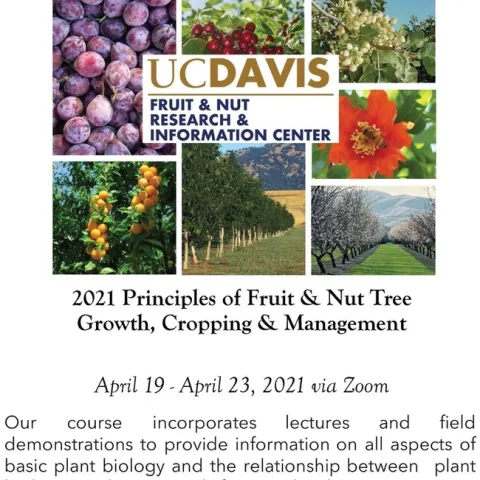
Students graduate from nutrition classes offered by EFNEP in partnership with Project Access in Orange County.
Healthy Communities Blog: Article

Federal nutrition programs respond to COVID-19

February 1, 2021
By Jeannette Warnert
In the spring of 2020, UC Agriculture and Natural Resources' Expanded Food and Nutrition Education Program (EFNEP) and the CalFresh Healthy Living, UC (CFHL UC) Program faced the unprecedented experience of shelter-in-place and school closures due to COVID-19.
View Article
Primary Image
Los Naturalistas
California Naturalist: Article

¡Los Naturalistas!

February 1, 2021
By Eliot T Freutel
Southern California Mountains Foundation Urban Conservation Corps receive the Corps Network's Project of the Year Award.
View Article
LANDSCAPE LUSH: Article

Free Webinar

February 1, 2021
Click the link below for the flyer which has more info and the link to register.
View Article
Primary Image
Dried Fruit February
Healthy Central Sierra: Article

February's Harvest of the Month: Dried Fruit

February 1, 2021
In February fresh produce is not as abundant as other months of the year, particularly fresh fruit. But this is an excellent time to embrace the many different types of dried fruits that are available throughout the whole year.
View Article
Primary Image
Creeping Bentgrass Growing
Under the Solano Sun: Article

Bermuda Not a Vacation

February 1, 2021
Bermuda Is it a vacation place or a weed in your yard? Cynodon dactylon better known as Bermudagrass, wiregrass, devilgrass, dogstooth grass and/or the grass from H-E- double-L. Bermuda is often confused as bentgrass or crabgrass.
View Article
Primary Image
“If it’s growing close to your house, there’s a potential it could send its rhizomes and break through your foundation,” says Jatinder Aulakh, an assistant weed scientist at the Connecticut Agricultural Experiment Station. Photo from Japanese Knotweed Solutions, Ltd.
UC Weed Science (weed control, management, ecology, and minutia): Article

Oh, No, Not Knotweed!

February 1, 2021
By Gale Perez
Thanks to our friend at Cornell (Lynn Sosnoskie) for sharing the article,"Oh, No, Not Knotweed!" by Henry Grabar from the Pocket Worthy website. Oh, No, Not Knotweed! It's been over four years since I bought hypodermic needles at a CVS, squatted in my backyard, and drew them full of glyphosate.
View Article
Primary Image
Dracaena or dragon tree houseplant. (A. Schellman)

Leach Your Houseplants to Avoid Salt Problems

February 1, 2021
By Anne E Schellman
Your outdoor garden plants may not need a lot of attention on these cold winter days, but have you taken a close look at your indoor plants recently? A house plant with brown leaf tips, wilted leaves, lower leaves that are dropping and little or no new growth may be in trouble.
View Article
Primary Image
biochar
Spill the Beans: Article

Biochar

February 1, 2021
by Rainer Hoenicke Notes on Biochar and Its Role in Soil Health If you could continually turn a lot of organic material into biochar, you could, over time, reverse the history of the last two hundred yearsWe can, literally, start sucking some of the carbon that our predecessors have poured into the...
View Article