A Natural Solution for California's Herds: African Catfish Peptides

California's cattle producers and agricultural communities are all too familiar with the rising challenge of antibiotic resistance, making common bacterial infections harder to treat in livestock. But imagine a future where we could tackle these infections with a natural, powerful alternative. Our research points to just that: antimicrobial peptides (AMPs) found in African catfish.

We're really excited about these peptides because African catfish thrive in pathogen-rich freshwater, naturally producing these robust immune compounds in their skin mucus as a defense. This natural origin makes them highly appealing alternatives to synthetic drugs.

Predicted Safety and Potent Action

One of the most compelling aspects of these AMPs is their predicted safety for mammals. Our initial computer analyses suggest that various catfish AMPs are generally recognized as safe (GRAS). We predict they'll be absorbed in the human intestine without causing liver, brain, or heart toxicity. Furthermore, lab tests on a promising peptide, NACAP-II, confirmed it was non-hemolytic, meaning it didn't damage rabbit red blood cells—a strong indicator of its potential safety for mammalian cells.

Beyond safety, these peptides demonstrate effectiveness against problematic bacteria. One study revealed NACAP-II's strong activity against Extended-Spectrum Beta-Lactamase (ESBL)-producing Escherichia coli—a critical concern for both animal and human health due to its resistance to many common antibiotics. Another peptide, ACAP-IV, also showed antibacterial activity against E. coli and Staphylococcus aureus. We believe these AMPs work by directly disrupting bacterial cell membranes, a mechanism that makes it harder for bacteria to develop resistance compared to how they resist traditional antibiotics.
Primary Image
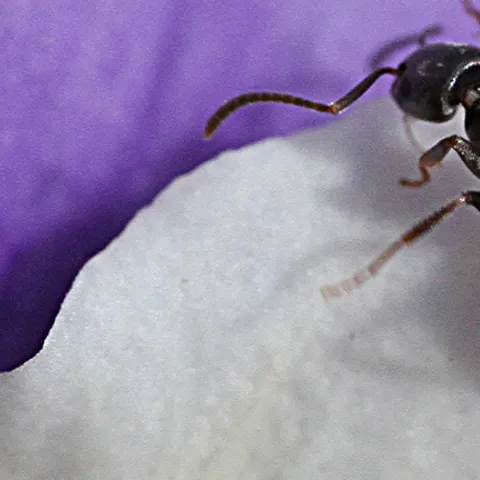
Tapinoma sessile, also known as the odorous house ant. It is a very common species, but tends to be pushed aside by the introduced Argentine ant, according to UC Davis ant specialist Phil Ward

Got an Ant Question?

September 8, 2025
By Kathy Keatley Garvey
 Got an ant question?Professor Phil Ward, a myrmecologist or ant scientist with the UC Davis Department of Entomology and Nematology, will be featured at the Davis Science Café on Wednesday, Sept. 10. Billed as "A Conversation with Professor Phil Ward," the event begins at 5:30 p.m. in the G Street…
View Article
UC Oaks: Article

The Role of Fire in California’s Oak Woodlands

September 8, 2025
By Michael Jones
by Richard StandifordOaks ’n Folks – Volume 9, Issue 2 – September 1994IntroductionFire is a natural part of California’s oak woodland ecosystem. It has also served as an important management tool since Native Americans first inhabited these areas. Fire plays a role in the development of oak woodland stand…
View Article
UC Oaks: Article

Protecting Homes from Wildfire in Oak Woodlands

September 8, 2025
By Michael Jones
by Richard StandifordOaks ’n Folks – Volume 7, Issue 2 – September 1992IntroductionUrbanization in California’s oak woodlands is taking place at unprecedented rates. Areas that were previously extensively managed for livestock production, with only a few homes spread out over thousands of acres, now contain…
View Article
UC Oaks: Article

Assessing Fire Damaged Coast Live Oaks

September 8, 2025
By Michael Jones
by Richard StandifordOaks ’n Folks – Volume 6, Issue 3 – December 1991The recent fires in the Oakland and Berkeley hills that claimed several thousand homes and caused several billion dollars in property damage, occurred partly in oak woodlands dominated by the coast live oak (Quercus agrifolia). As…
View Article
UC Oaks: Article

Fire and Blue Oaks

September 8, 2025
By Michael Jones
by James BartolomeOaks ’n Folks – Volume 5, Issue 1 – June, 1990IntroductionWe see roadside fires burn woodlands every year, but how did past fires affect oaks? Recent research has changed the way ecologists and land managers view fire.Blue oaks have several adaptations to withstand fire. Best known is an…
View Article
UC Organic Agriculture Institute: Event

2025 Mariposa Agrinature Tour

Event Date
Oct 11, 2025

Designated sites for farm tours: Raw Roots Farm, Sierra Cider, Casto Oaks, a small homestead off Agua Fria, Sierra Foothills Conservancy plus more. Opportunities for vendors , artists, non-profits, etc. who are aligned with farming and gardening, nature, land stewardship and conservation values and…
UC Organic Agriculture Institute
View Event
UC Oaks: Article

Some Native Oaks Succumb to Drought in Coastal Central California

September 8, 2025
By Michael Jones
by Bill Tietje, Bill Weitkamp, Sergio Garcia, and Wayne JensenOaks ‘n Folks – Volume 8, Issue 2 – November 1993IntroductionWith the “miracle March” of 1992 and the “fabulous February” coupled with generally excellent rains of 1992/93, it appears one of the most severe and widespread California droughts this…
View Article
UC Oaks: Article

The Effects of Drought on California Oaks

September 8, 2025
By Michael Jones
by Doug McCrearyOaks ‘n Folks – Volume 6, Issue 1 – April 1991IntroductionWith springtime upon us it appears that the 1990-1991 rainfall levels will be far below normal in much of California in spite of the heavy March rains. Coupled with the fact that this will be the fifth consecutive dry year in many…
View Article
UC Oaks: Article

Snow Damages Foothill Oaks

September 8, 2025
By Michael Jones
by Doug McCrearyOaks ‘n Folks – Volume 5, Issue 1 – June, 1990IntroductionIn the middle of February, a cold arctic storm swept through California, dumping record amounts of snow in the Northern California Sierra Foothills. Low elevation areas that may go 10 years without a trace of snow were inundated with 6…
View Article