A Natural Solution for California's Herds: African Catfish Peptides

California's cattle producers and agricultural communities are all too familiar with the rising challenge of antibiotic resistance, making common bacterial infections harder to treat in livestock. But imagine a future where we could tackle these infections with a natural, powerful alternative. Our research points to just that: antimicrobial peptides (AMPs) found in African catfish.

We're really excited about these peptides because African catfish thrive in pathogen-rich freshwater, naturally producing these robust immune compounds in their skin mucus as a defense. This natural origin makes them highly appealing alternatives to synthetic drugs.

Predicted Safety and Potent Action

One of the most compelling aspects of these AMPs is their predicted safety for mammals. Our initial computer analyses suggest that various catfish AMPs are generally recognized as safe (GRAS). We predict they'll be absorbed in the human intestine without causing liver, brain, or heart toxicity. Furthermore, lab tests on a promising peptide, NACAP-II, confirmed it was non-hemolytic, meaning it didn't damage rabbit red blood cells—a strong indicator of its potential safety for mammalian cells.

Beyond safety, these peptides demonstrate effectiveness against problematic bacteria. One study revealed NACAP-II's strong activity against Extended-Spectrum Beta-Lactamase (ESBL)-producing Escherichia coli—a critical concern for both animal and human health due to its resistance to many common antibiotics. Another peptide, ACAP-IV, also showed antibacterial activity against E. coli and Staphylococcus aureus. We believe these AMPs work by directly disrupting bacterial cell membranes, a mechanism that makes it harder for bacteria to develop resistance compared to how they resist traditional antibiotics.
Primary Image
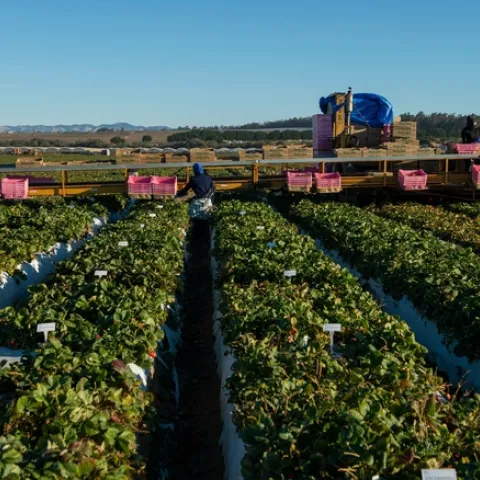
People who work on farms wear personal protective equipment to protect themselves from COVID-19, pesticides, dust and other health hazards.
UC Weed Science (weed control, management, ecology, and minutia): Article

PPE in short supply for farm work during the COVID-19 crisis

April 22, 2020
By Whitney B Brim-Deforest
While most Californians are staying home to slow the spread of the novel coronavirus, California farmers, farmworkers and other agricultural professionals are out in the fields and packing houses working to produce food.
View Article
Primary Image
At http://ucanr.edu/COVID19communityresources, helpful links are compiled, including the Cal Ag Tour page to help consumers purchase directly from local farms and ranches.
ANR Employee News: Article

UC ANR compiles resources to help cope with COVID-19 crisis

April 22, 2020
By Jeannette Warnert
While United States leaders continue to grapple with the worldwide COVID-19 pandemic, many Californians have concerns about basic needs and safety connected with the illness and subsequent shelter-in-place guidelines.
View Article
Primary Image
COVID 19nv
Noticias: Article

Medidas preventivas y cuidado de la salud en la era de COVID-19

April 22, 2020
By Basilisa M Rawleigh
Las primeras seales de incertidumbre detonaron en los supermercados. De pronto, una legin de consumidores arranc con la compra excesiva de papel higinico y botellas de agua. Al tiempo que algunos bsicos como cebollas y pltanos, antes siempre disponibles, de momento escasearon.
View Article
Primary Image
A milk plant that packages milk in small cartons for schools will face challenges to quickly redesign its operations to supply gallon and half-gallon jugs for retail stores while schools are closed.
Food Blog: Article

Why are farmers destroying crops while store shelves are empty?

April 22, 2020
By Pamela S Kan-Rice
Empty grocery store shelves are troubling enough to California consumers who are accustomed to abundant supplies. To hear about farmers dumping milk, crushing eggs and plowing under crops when demand for food is strong just doesn't make sense to most consumers.
View Article
Kern County: Article

Kern UCCE/DWR Weekly Crop Water Use Report 04-20-2020

April 22, 2020
Please see below link to access "How To Use Weekly Crop Water Use (ET) Reports to Assist Farm Water Management" How to Use Weekly Crop Water Use Report Please see below link to access "Weekly ET Report 04-20-2020" ET Report 04-20-2020 Please see disclaimer link below: University of California Divisi...
View Article
Primary Image
digger bee on manzanita flowers
UCCE Master Gardeners of San Bernardino County Blogs: Article

Happy 50th Earth Day!

April 22, 2020
One day, about two years ago, I spent an afternoon in a grove of apple trees, looking at bees. The trees on Lake Arrowhead's Orchard Bay, I learned, pre-date the existence of the lake, which was born in 1915 with the damming of Little Bear Creek (a tributary of the Mojave River).
View Article
Primary Image
UC Davis distinguished professor James R.Carey will share his expertise on scientific modeling at the COVID-19 webinar. (Photo by Kathy Keatley Garvey)
Entomology & Nematology News: Article

James R. Carey to Share Scientific Modeling Expertise at COVID-19 Webinar

April 22, 2020
By Kathy Keatley Garvey
James R. Carey, UC Davis distinguished professor of entomology, will share his scientific modeling expertise at the UC Davis-based COVID-19 webinar on Thursday afternoon, April 23. The webinar, to be broadcast on Zoom and YouTube Live from 1:30 to 4 p.m.
View Article
Article

Spring 2020

April 22, 2020
Tips to Lower Your Risk of Getting Sick; Social Distancing and Keeping Children Engaged; Program Opportunities...
View Article
Primary Image
photo by Kathy Low
Under the Solano Sun: Article

Lizards

April 22, 2020
The past few years I've seen more lizards (Sceloporus) running across my yard starting in the spring and lasting through the fall since lizards hibernate during the winter. The most common lizards in our area are fence lizards, also known as the blue belly lizard (Sceloporus occidentalis).
View Article
Salinas Valley Agriculture: Article

ZOOM information for INSV-Thrips Webinar

April 22, 2020
Alejandro Del Pozo-Valdivia is inviting you to a scheduled Zoom meeting. Topic: 2020 Salinas Valley INSV - Thrips Webinar Time: Apr 22, 2020 10:00 AM Pacific Time (US and Canada) Join Zoom Meeting https://ucanr.zoom.
View Article