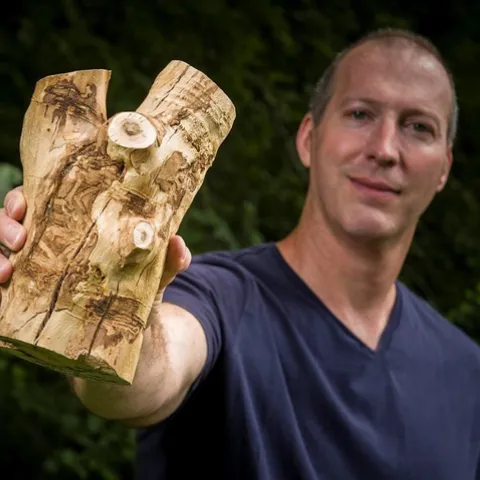
A Natural Solution for California's Herds: African Catfish Peptides

California's cattle producers and agricultural communities are all too familiar with the rising challenge of antibiotic resistance, making common bacterial infections harder to treat in livestock. But imagine a future where we could tackle these infections with a natural, powerful alternative. Our research points to just that: antimicrobial peptides (AMPs) found in African catfish.

We're really excited about these peptides because African catfish thrive in pathogen-rich freshwater, naturally producing these robust immune compounds in their skin mucus as a defense. This natural origin makes them highly appealing alternatives to synthetic drugs.

Predicted Safety and Potent Action

One of the most compelling aspects of these AMPs is their predicted safety for mammals. Our initial computer analyses suggest that various catfish AMPs are generally recognized as safe (GRAS). We predict they'll be absorbed in the human intestine without causing liver, brain, or heart toxicity. Furthermore, lab tests on a promising peptide, NACAP-II, confirmed it was non-hemolytic, meaning it didn't damage rabbit red blood cells—a strong indicator of its potential safety for mammalian cells.

Beyond safety, these peptides demonstrate effectiveness against problematic bacteria. One study revealed NACAP-II's strong activity against Extended-Spectrum Beta-Lactamase (ESBL)-producing Escherichia coli—a critical concern for both animal and human health due to its resistance to many common antibiotics. Another peptide, ACAP-IV, also showed antibacterial activity against E. coli and Staphylococcus aureus. We believe these AMPs work by directly disrupting bacterial cell membranes, a mechanism that makes it harder for bacteria to develop resistance compared to how they resist traditional antibiotics.

Primary Image
loquat killing beetle
Topics in Subtropics: Article

Tough Times for Loquats?

September 16, 2019
By Ben A Faber
Loquat is an evergreen tree with delicious fruit. Too bad some varieties have big seeds, but in some countries like Spain and China they are a big deal. At one point, Orange County had 500 acres of trees Big Jim', Gold Nugget', Victory', Mammoth'..
View Article
ANR Adventures: Article

Conflict is the theme this week

September 16, 2019
By Wendy Powers
Please welcome Cindy Renee Kron who started today as an IPM Advisor, based in Santa Rosa, with programmatic responsibilities in Sonoma, Napa, Mendocino, and Lake Counties. Cindy fills a position that is one of the last from the 2016 Position Call.
View Article
Primary Image
tomato ripe...
HOrT COCO-UC Master Gardener Program of Contra Costa: Article

Heirloom Tomatoes Not Ripening

September 16, 2019
Advice from the Help Desk of the UC Master Gardener Program of Contra Costa County Client's Request: I purchased a Yellow Rainbow Beefsteak Tomato Plant at your annual sale in Walnut Creek this year. The plant has grown quite big and has about four tomatoes on the plant.
View Article
Article

How to cope with Japanese maple dieback

September 15, 2019
I've had questions recently from friends about problems with their prized Japanese maples. Unfortunately, maple dieback seems to be a common problem of late throughout the Bay Area.
View Article
Primary Image
The late Robbin Thorp, distingished emeritus professor of entomology, monitored the bee garden for bee species. He detected more than 80 different species through the years. This image was taken on April 15, 2011. (Photo by Kathy Keatley Garvey)

Bee Garden to Mark 10th Anniversary

September 14, 2019
By Kathy Keatley Garvey
It was the fall of 2009 when a half-acre bee garden on Bee Biology Road, UC Davis campus, sprang to life. Headlines on colony collapse disorder dominated the news media, as scientists declared "honey bees are in trouble.
View Article
Primary Image
Eye-to-eye with a gravid (pregnant) tsetse fly, Glossina morsitans morsitans. (Photo by Kathy Keatley Garvey)
Bug Squad: Article

Geoffrey Attardo's Landmark Research on Genomics of Tsetse Flies

September 13, 2019
By Kathy Keatley Garvey
You probably don't think much about the blood-sucking tsetse fly--unless you're living in Africa or are planning to travel there. But if you're UC Davis entomologist-geneticist Geoffrey Attardo, you do. He led landmark research published Sept.
View Article
Primary Image
Presentation1

Field Survey of Rice Diseases Ongoing

September 13, 2019
By Luis Espino
UC Cooperative Extension is conducting a survey of rice diseases this fall. The objective of the survey is to document the incidence of rice diseases in Sacramento Valley rice fields so that the Air Resources Board agrees to continue to allow the rice industry to burn up to 25% of the acreage.
View Article
Primary Image
Photo by Jacqueline Adams Shubitowski
UC Master Gardeners- Diggin' it in SLO: Article

Fall Festival!!

September 13, 2019
Fall Festival Fun By Ardis Neilsen UCCE Master Gardener Have you ever wanted to create a succulent mini-garden? Do you have plant questions? Want to learn how to safely manage garden pests?
View Article