A Natural Solution for California's Herds: African Catfish Peptides

California's cattle producers and agricultural communities are all too familiar with the rising challenge of antibiotic resistance, making common bacterial infections harder to treat in livestock. But imagine a future where we could tackle these infections with a natural, powerful alternative. Our research points to just that: antimicrobial peptides (AMPs) found in African catfish.

We're really excited about these peptides because African catfish thrive in pathogen-rich freshwater, naturally producing these robust immune compounds in their skin mucus as a defense. This natural origin makes them highly appealing alternatives to synthetic drugs.

Predicted Safety and Potent Action

One of the most compelling aspects of these AMPs is their predicted safety for mammals. Our initial computer analyses suggest that various catfish AMPs are generally recognized as safe (GRAS). We predict they'll be absorbed in the human intestine without causing liver, brain, or heart toxicity. Furthermore, lab tests on a promising peptide, NACAP-II, confirmed it was non-hemolytic, meaning it didn't damage rabbit red blood cells—a strong indicator of its potential safety for mammalian cells.

Beyond safety, these peptides demonstrate effectiveness against problematic bacteria. One study revealed NACAP-II's strong activity against Extended-Spectrum Beta-Lactamase (ESBL)-producing Escherichia coli—a critical concern for both animal and human health due to its resistance to many common antibiotics. Another peptide, ACAP-IV, also showed antibacterial activity against E. coli and Staphylococcus aureus. We believe these AMPs work by directly disrupting bacterial cell membranes, a mechanism that makes it harder for bacteria to develop resistance compared to how they resist traditional antibiotics.

Primary Image
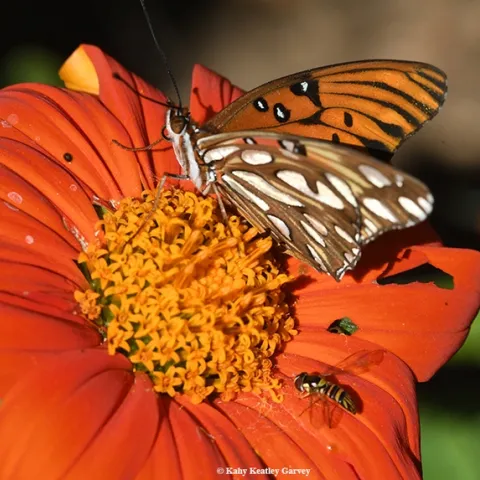
A male Valley carpenter bee, Xylocopa varipuncta, nectaring on a tower of jewels, Echium wildpretii, in Vacaville, Calif. (Photo by Kathy Keatley Garvey)
Bug Squad: Article

The Boys Are Back in Town!

May 7, 2019
By Kathy Keatley Garvey
The boys are back in town. After the long winter and rainy spring, the boys are back in town. That would be the male Valley carpenter bees, Xylocopa varipuncta, or what Robbin Thorp, distinguished emeritus professor of entomology at UC Davis, calls "the teddy bear bees.
View Article
Primary Image
Citrus101
News from UC ANR South Coast REC and Beyond: Article

Citrus 101

May 7, 2019
By Tamara J Majcherek
In collaboration with TAPS Brewery and Barrel Rooms release of My Zest Friends' IPA, UC ANR Staff with assistance from UCCE MG, Greg Rager hosted an intimate evening with patrons discussing citrus everything from the different varieties, how to grow and care for them, along with pest issues to be a...
View Article
Primary Image
480
Ranching in the Sierra Foothills: Article

Too Much Fuel: Targeting our Grazing Strategically

May 7, 2019
By Daniel K Macon
Every spring, there comes a stretch of time when I wish we had 10 times as many sheep. Since we're stocked at a level where we're comfortable we'll have enough grass in bad years (and in the autumn months - see my December 2018 post, Fall Feed...
View Article
Primary Image
FFA students visit South Coast REC.
UC ANR South Coast REC Field Events, Workshops, and Extension: Article

FFA Students visit South Coast REC

May 7, 2019
By Tamara J Majcherek
On April 26th, UC ANR South Coast REC hosted students from the FFA Statewide Conference visiting from across the state. South Coast REC staff, assisted by UCCE Master Gardener volunteers, provide a tour of the Center followed by a walk through the citrus trees for a talk and taste.
View Article
Article

Volume 69

May 7, 2019
Spring Clean Your Kitchen; Refrigerator Cleaning; Pantry Cleaning...
View Article

Small Grains and Alfalfa Field Day-May 15th!

May 7, 2019
By Sarah E Light
A reminder to please join us for our annual UC Small Grains/Alfalfa-Forages Field Day next week! This event is on May 15th at the University of California, Davis Department of Plant Sciences Field Headquarters from 8AM 4:30PM.
View Article
Primary Image
lupine-tina s 2019
Under the Solano Sun: Article

Lupine

May 7, 2019
Lupine or lupin from the Latin word lupus meaning wolf, although I can't see anything wolf-fish about this stunning beauty. Previously, I wrote about nitrogen-fixing plants. Plants that take nitrogen from the air and fix it to be available for plants as fertilizer.
View Article
Primary Image
Photo By Tami Reece
UC Master Gardeners- Diggin' it in SLO: Article

Berries

May 7, 2019
Berries By Tami Reece UCCE Master Food Preserver It looks like I am going to have an overabundance of berries this year. How can I preserve them other than making jam? Courtney M. Paso Robles Jam or jelly always seems to be the go-to for berries and can make great birthday and holiday gifts.
View Article