A Natural Solution for California's Herds: African Catfish Peptides

California's cattle producers and agricultural communities are all too familiar with the rising challenge of antibiotic resistance, making common bacterial infections harder to treat in livestock. But imagine a future where we could tackle these infections with a natural, powerful alternative. Our research points to just that: antimicrobial peptides (AMPs) found in African catfish.

We're really excited about these peptides because African catfish thrive in pathogen-rich freshwater, naturally producing these robust immune compounds in their skin mucus as a defense. This natural origin makes them highly appealing alternatives to synthetic drugs.

Predicted Safety and Potent Action

One of the most compelling aspects of these AMPs is their predicted safety for mammals. Our initial computer analyses suggest that various catfish AMPs are generally recognized as safe (GRAS). We predict they'll be absorbed in the human intestine without causing liver, brain, or heart toxicity. Furthermore, lab tests on a promising peptide, NACAP-II, confirmed it was non-hemolytic, meaning it didn't damage rabbit red blood cells—a strong indicator of its potential safety for mammalian cells.

Beyond safety, these peptides demonstrate effectiveness against problematic bacteria. One study revealed NACAP-II's strong activity against Extended-Spectrum Beta-Lactamase (ESBL)-producing Escherichia coli—a critical concern for both animal and human health due to its resistance to many common antibiotics. Another peptide, ACAP-IV, also showed antibacterial activity against E. coli and Staphylococcus aureus. We believe these AMPs work by directly disrupting bacterial cell membranes, a mechanism that makes it harder for bacteria to develop resistance compared to how they resist traditional antibiotics.
Primary Image
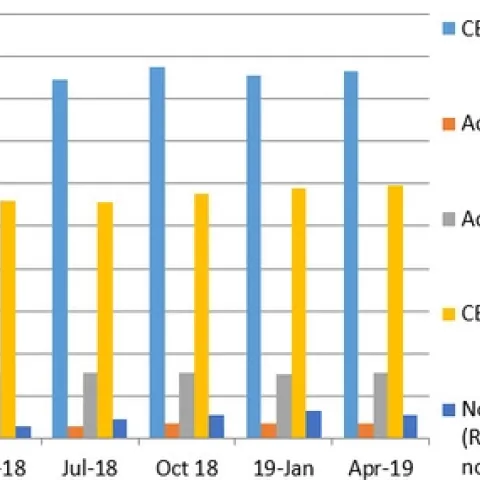
Dimondback moth captures collected on 5-7-19

Latest information on pest populations in vegetables

May 11, 2019
We are happy to announce that the diamondback moth capture data, presented as maps, is now housed in our own University of California Cooperative Extension Monterey website. To access to these maps, simply click on the link below: http://cemonterey.ucanr.
View Article
Primary Image
Dixon 4-H'er Ryan Anenson of the Tremont 4-H Club created this award-winning educational display, "None of Your Beeswax" for the Dixon May Fair. (Photo by Kathy Keatley Garvey)
Bug Squad: Article

'Bee-ing' There at the Dixon May Fair

May 10, 2019
By Kathy Keatley Garvey
"You can learn a lot from these displays," a fairgoer at the 144th annual Dixon May Fair commented. She was looking at an educational display with the catchy title, "None of Your Beeswax," the work of Ryan Anenson of the Tremont 4-H Club, Dixon, whose projects include beekeeping.
View Article
Cooperative Extension San Joaquin County: Article

May 2019 Field Notes Newsletter

May 10, 2019
In this issue: Livestock's Impact on Greenhouse Gases Bacterial Blossom and Leaf Blast and Canker of Almond Trees Impact of Warm-season Legume Cover Crop on Soil Properties Calendar of Events...
View Article
Stanislaus County: Article

Evapotranspiration Report - 05/09/2019

May 10, 2019
Hello all, Please find the attached document to provide the previous weeks estimated water use report in terms of evapotranspiration for almonds, peaches, walnuts, established vineyard, alfalfa, and pasture in Stanislaus County.
View Article
Primary Image
grow something different to eat

Utterly Unusual Plants

May 10, 2019
I'm always on the lookout for unusual plants, vegetables, and fruits to grow, so imagine my surprise when I found the book of my dreams, Grow Something Different To Eat (weird and wonderful heirloom fruits and vegetables) by Matthew Biggs.
View Article
Primary Image
photo-1450294655903-4489dd7ad3a5

Introduction

May 10, 2019
By Valerie Perez
Hello, My name is Valerie Perez and I was hired by the Santa Cruz UC Cooperative Extension office as a Community Education Specialist (CES). I recently graduated from Cal Poly San Luis Obispo, where I received my bachelors in Agricultural Business.
View Article
Primary Image
View from Modoc Co. Airbnb
Agritourism Connections: Article

How to Use Airbnb to Add Value to Your Small Farm or Ranch

May 10, 2019
I have been an Airbnb host for nearly four years now, meeting people from all over the world and sharing my rural way of life. I currently own a 3 bedroom/2 bath house on 10 acres in Modoc County, CA. Modoc County is in the northeast corner of California bordering Nevada and Oregon.
View Article