A Natural Solution for California's Herds: African Catfish Peptides

California's cattle producers and agricultural communities are all too familiar with the rising challenge of antibiotic resistance, making common bacterial infections harder to treat in livestock. But imagine a future where we could tackle these infections with a natural, powerful alternative. Our research points to just that: antimicrobial peptides (AMPs) found in African catfish.

We're really excited about these peptides because African catfish thrive in pathogen-rich freshwater, naturally producing these robust immune compounds in their skin mucus as a defense. This natural origin makes them highly appealing alternatives to synthetic drugs.

Predicted Safety and Potent Action

One of the most compelling aspects of these AMPs is their predicted safety for mammals. Our initial computer analyses suggest that various catfish AMPs are generally recognized as safe (GRAS). We predict they'll be absorbed in the human intestine without causing liver, brain, or heart toxicity. Furthermore, lab tests on a promising peptide, NACAP-II, confirmed it was non-hemolytic, meaning it didn't damage rabbit red blood cells—a strong indicator of its potential safety for mammalian cells.

Beyond safety, these peptides demonstrate effectiveness against problematic bacteria. One study revealed NACAP-II's strong activity against Extended-Spectrum Beta-Lactamase (ESBL)-producing Escherichia coli—a critical concern for both animal and human health due to its resistance to many common antibiotics. Another peptide, ACAP-IV, also showed antibacterial activity against E. coli and Staphylococcus aureus. We believe these AMPs work by directly disrupting bacterial cell membranes, a mechanism that makes it harder for bacteria to develop resistance compared to how they resist traditional antibiotics.
Primary Image
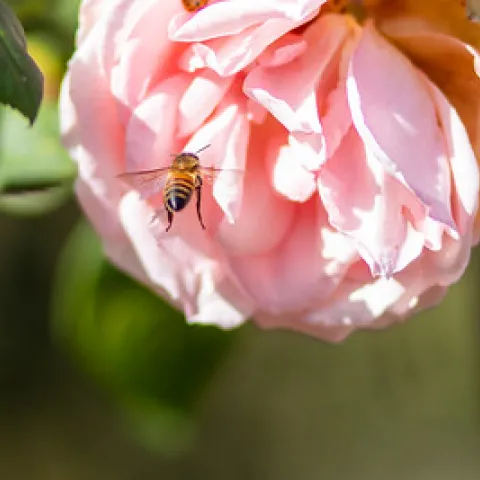
pink rose with bumble bee pollinator
UC Master Gardeners of El Dorado County: Article

Central Sierra: Welcoming Pollinators into Your Garden

August 20, 2025
By Robin E Martin
Pollinators benefit our gardens and the environmentSupporting pollinators is easy and beautiful here in the foothills. Fragrant blossoms attract bees, butterflies, and hummingbirds in our gardens. The pollinators support the health of our flora, both the gardens that we plant, and the commercial crops grown…
View Article
UC Rice Blog: Article

Drill seeding: How deep is too deep?

August 20, 2025
By Alex Ceseski
How deep is too deep to drill rice in California? I’ll get the obvious answer out of the way first: it depends! If you’re thinking of trying out drill seeding in the future, there’s going to be a learning curve. Much like with water-seeded rice, your variety selection matters as much as the weather,…
View Article
The Stanislaus Sprout: Article

Saving Seeds

August 19, 2025
By Anne E Schellman
 I’ve enjoyed gardening for years. I started by visiting my local garden center each spring and carefully selecting containers of already started plants. I quickly realized that I didn’t need 6 zucchini plants – seriously, with only 2 adults I could have been a cartoon for “gifting” the excess. I also…
View Article
Primary Image
Honey bee in flight. (Photo by Kathy Keatley Garvey)
Bug Squad: Article

What's Buzzworthy?

August 19, 2025
By Kathy Keatley Garvey
 If you missed it, World Honey Bee Day was Aug. 16.But, frankly, it's a day that should be observed every day, not just the third Saturday in August.The celebrated day appears on the National Day Calender as "The day (that) recognizes both the honey bee and the beekeepers who tend the hives. It also…
View Article
Primary Image
a variety of small garden containers illustrates filler, spiller
UC Master Gardeners of El Dorado County: Article

Central Sierra: Container Gardening Basics

August 19, 2025
By Robin E Martin
Container Magic – Helpful How-to Tips on Planting Your Garden in a Container Container gardening is a fun and easy way to beautify a yard or small garden space. Containers are perfect for most environments and people of all gardening levels. They are portable and offer endless possibilities. Choose…
View Article
UC Weed Science (weed control, management, ecology, and minutia): Article

DPR License Category D, where Agriculture is also not Agriculture and is Wildlands too

August 19, 2025
By Chris J McDonald
In California, the Department of Pesticide Regulation (DPR) has a license and certification system which allows for professionals to apply pesticides as a part of their job duties. While everyone using pesticides must follow all directions on the pesticide label, as well as any additional state or local…
View Article