A Natural Solution for California's Herds: African Catfish Peptides

California's cattle producers and agricultural communities are all too familiar with the rising challenge of antibiotic resistance, making common bacterial infections harder to treat in livestock. But imagine a future where we could tackle these infections with a natural, powerful alternative. Our research points to just that: antimicrobial peptides (AMPs) found in African catfish.

We're really excited about these peptides because African catfish thrive in pathogen-rich freshwater, naturally producing these robust immune compounds in their skin mucus as a defense. This natural origin makes them highly appealing alternatives to synthetic drugs.

Predicted Safety and Potent Action

One of the most compelling aspects of these AMPs is their predicted safety for mammals. Our initial computer analyses suggest that various catfish AMPs are generally recognized as safe (GRAS). We predict they'll be absorbed in the human intestine without causing liver, brain, or heart toxicity. Furthermore, lab tests on a promising peptide, NACAP-II, confirmed it was non-hemolytic, meaning it didn't damage rabbit red blood cells—a strong indicator of its potential safety for mammalian cells.

Beyond safety, these peptides demonstrate effectiveness against problematic bacteria. One study revealed NACAP-II's strong activity against Extended-Spectrum Beta-Lactamase (ESBL)-producing Escherichia coli—a critical concern for both animal and human health due to its resistance to many common antibiotics. Another peptide, ACAP-IV, also showed antibacterial activity against E. coli and Staphylococcus aureus. We believe these AMPs work by directly disrupting bacterial cell membranes, a mechanism that makes it harder for bacteria to develop resistance compared to how they resist traditional antibiotics.
Kern County: Article

Backyard Livestock Workshop

March 12, 2019
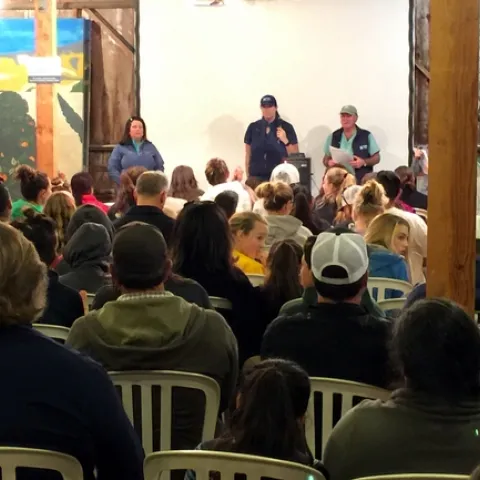
Saturday, March 16, 2019 - UCCE Kern County Conference Room Healthy Animals, Healthy People A public educational workshop for backyard livestock owners hosted by the University of California See attached for agenda and registration link...
View Article
Cooperative Extension, Sutter-Yuba Counties: Article

Walnut Training Systems Field Meeting is on for tomorrow March 13th

March 12, 2019
Walnut Training Systems Wednesday, March 13, 2019 | 10 am - 11:45 128 Nichols Road, Wheatland, CA 95692 We will discuss various walnut training systems, and see 2-year-old unheaded Durham trees, 4-year-old Chandler trees, and discuss 3-year-old Solano yields. 1.
View Article
Primary Image
photos by Tina Saravia
Under the Solano Sun: Article

Wood Chips

March 12, 2019
Beautiful wood chips galore! I've been waiting for months. Then one day, in a seemingly serendipitous circumstance, I got a giant load of wood chips. We happened to be walking in the neighborhood in the middle of the day, which we don't usually do. The tree trimmers were just arriving.
View Article
Livestock & Range: Article

Prescribed Burn Meeting Wed 3/13 in Hollister – Reminder

March 11, 2019
By Devii R Rao
Greetings This is a reminder that UC Cooperative Extension and San Benito Working Landscapes Group are co-hosting a prescribed burn meeting on Wednesday, March 13th from 2:30-4:30 pm at the Veterans Memorial Building, 649 San Benito Street, Room 218, in Hollister.
View Article
Primary Image
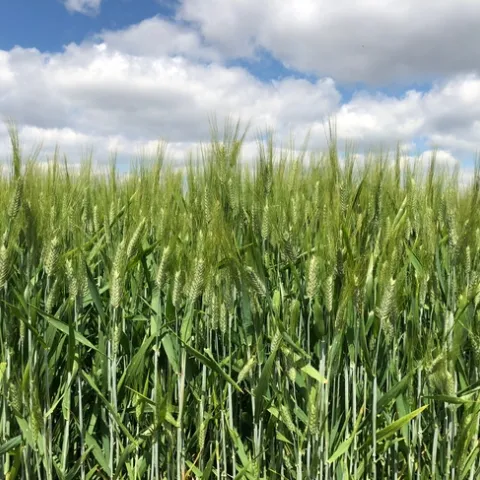
Image 1: Stripe Rust Puccini striiformis uredinia emerging from wheat leaf.
Sacramento Valley Field Crops: Article

Stripe Rust: be on the lookout

March 11, 2019
Winter temperatures this year have fluctuated from above average early in the season to slightly below average in February. Along with generally warmer temperatures, rain and humidity have been higher than average.
View Article
UC Cooperative Extension Imperial County: Article

March 2019

March 11, 2019
DOWNY MILDEWS OF VEGETABLES IN IMPERIAL COUNTY INSECTICIDE EFFICACY RESULTS FOR BLUE ALFALFA APHID AND PEA APHIDS, 2018 ROOT-KNOT NEMATODE RESISTANCE IN BELL PEPPER 2019 AGRONOMIC CROPS & IRRIGATION WATER MANAGEMENT FIELD DAY FLYER - APRIL 11, 2019 LIVESTOCK RESEARCH BRIEF IMPERIAL VALLEY CIMIS REPO...
View Article
Primary Image
Spotted-wing drosophila, Drosophila suzukii, infesting a raspberry. (Photo by Kathy Keatley Garvey)
Bug Squad: Article

What a Difference These Four UC Davis Entomologists Are Making!

March 11, 2019
By Kathy Keatley Garvey
They study bees, ants, fruit flies and spider flies. And that's just a small portion of what they do. And what a difference they're making! Four UC Davis entomologists won awards from the Pacific Branch, Entomological Society of America (PBESA).
View Article