A Natural Solution for California's Herds: African Catfish Peptides

California's cattle producers and agricultural communities are all too familiar with the rising challenge of antibiotic resistance, making common bacterial infections harder to treat in livestock. But imagine a future where we could tackle these infections with a natural, powerful alternative. Our research points to just that: antimicrobial peptides (AMPs) found in African catfish.

We're really excited about these peptides because African catfish thrive in pathogen-rich freshwater, naturally producing these robust immune compounds in their skin mucus as a defense. This natural origin makes them highly appealing alternatives to synthetic drugs.

Predicted Safety and Potent Action

One of the most compelling aspects of these AMPs is their predicted safety for mammals. Our initial computer analyses suggest that various catfish AMPs are generally recognized as safe (GRAS). We predict they'll be absorbed in the human intestine without causing liver, brain, or heart toxicity. Furthermore, lab tests on a promising peptide, NACAP-II, confirmed it was non-hemolytic, meaning it didn't damage rabbit red blood cells—a strong indicator of its potential safety for mammalian cells.

Beyond safety, these peptides demonstrate effectiveness against problematic bacteria. One study revealed NACAP-II's strong activity against Extended-Spectrum Beta-Lactamase (ESBL)-producing Escherichia coli—a critical concern for both animal and human health due to its resistance to many common antibiotics. Another peptide, ACAP-IV, also showed antibacterial activity against E. coli and Staphylococcus aureus. We believe these AMPs work by directly disrupting bacterial cell membranes, a mechanism that makes it harder for bacteria to develop resistance compared to how they resist traditional antibiotics.

Outstanding in the Field: Views from North Coast Rangeland: Article

Prescriptive Grazing as a Vegetation Management Tool

February 22, 2019
Prescriptive Grazing as a Vegetation Management Tool Stephanie Larson & John Gorman Working landscape ecosystems provide benefits to the landowner and to all life forms living or passing through that land.
View Article
Primary Image
David Towle
ANR Employee News: Article

In memoriam: David Towle

February 22, 2019
By Pamela S Kan-Rice
David Towle, former assistant director of the Research and Extension Center- Administrative Office system, passed away on Feb. 13, 2019, surrounded by his loving family. He was 73.
View Article
Primary Image
If you use the labor readiness self-assessment tool listed below, part of your results will include a capture graph like this and a detailed interpretation of each labor-related area and how you can improve.
Farming in the Foothills: Article

Everything You Want to Know About Labor but Are Afraid to Ask

February 22, 2019
By Cindy Fake
Do you have questions about hiring farm employees? Are you considering making the jump from farmer to owner-operator? We have compiled a few key questions you might want to ask yourself if you answered yes to either of those two questions.
View Article
Primary Image
avocado body rot1
Topics in Subtropics: Article

Avocado Disease on High

February 22, 2019
By Ben A Faber
And maybe a lot of other problems like Shot Hole Borer-Fusarium Dieback in Avocado and other California tree species and maybe Huanglongbing in citrus. GAINESVILLE, Fla.
View Article
Primary Image
Blue Oak leaves and acorn shells. Photo by Eugene Zelenko.
The Real Dirt: Article

The Blue Oak

February 22, 2019
Finding an Ecological Niche: Selected Foothill Woodland and Chaparral Species, Part 1 of 3: The Blue Oak By Laura Lukes, UC Master Gardener of Butte County, February 22, 2019 [Note: Blue oak (Quercus douglasii), gray pine (Pinus sabiniana), and buckeye (Aesculus californica) are three species that t...
View Article
Primary Image
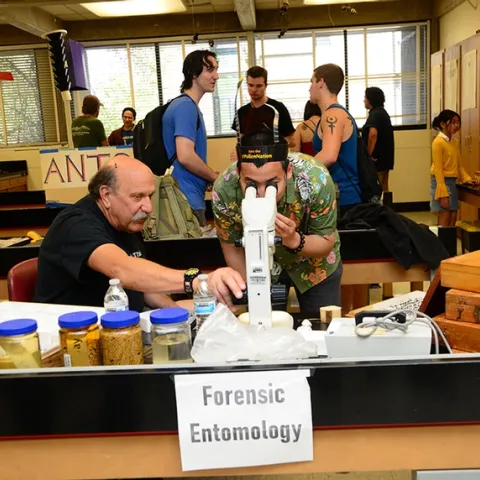
UC Davis doctoral student and nematologist Christopher Pagan shows nematode specimens to visitors at the UC Davis Biodiversity Museum Day. (Photo by Kathy Keatley Garvey)
Bug Squad: Article

More Nematodes in Outer Space?

February 21, 2019
By Kathy Keatley Garvey
More nematodes in outer space? It's true. The U.S. Department of Agriculture's (USDA) Agricultural Research Service (ARS) and Pheronym, a company in Alachua, Fla.
View Article
Ranching in the Sierra Foothills: Article

Leptospirosis Study at UC Davis

February 21, 2019
By Daniel K Macon
While Leptospirosis is a bacterial infection that can occurs worldwide, it is more common in tropical and sub-tropical areas. For example, Leptospirosis is a relatively frequent disease in Mexico.
View Article